7 Reasons to Hire Best Laravel Developers for Your Business

In today’s digital-first world, your website or web application is often your customer’s first impression of your business. A beautifully designed platform isn’t enough if it fails to perform smoothly, load quickly, or scale as your business grows. Behind every effective web solution is not just an idea, but a smart framework and a skilled development team.

One of the most trusted frameworks used globally for web development is Laravel. But even the best tools can fall short in the hands of inexperienced developers. That’s why hiring the best Laravel developers isn’t just a technical decision – it’s a strategic business move. When you hire Laravel developers, you benefit from quick onboarding, flexible hiring models, and the ability to scale your team as needed. The process to hire Laravel or hire a Laravel developer gives your business a strategic advantage by ensuring you have access to top talent for custom solutions. By hiring expert Laravel developers and skilled professionals for your project, you ensure your web application is scalable, secure, and feature-rich. Experienced Laravel developers offer a wide range of Laravel development services, from custom application development to ongoing support and maintenance.

Before we dive into the reasons why this matters, let’s understand Laravel better.

What Is Laravel?

Laravel is a PHP-based web development framework that helps developers build powerful, secure, and scalable web applications faster. Compared to other PHP frameworks, the Laravel framework stands out for its elegant syntax, comprehensive features, and strong community support. PHP, being one of the most used server-side programming languages, forms the foundation, while Laravel builds on top of it with more structure and pre-built features.

Laravel provides developers with ready-to-use libraries, logical coding practices, and security features out of the box. Its MVC architecture enables the development of robust web applications by promoting organized code structure, seamless integration of frontend technologies, and adherence to best practices. Think of it like a toolkit for building modern websites and web apps efficiently. It’s like having a fully stocked kitchen; a good chef (developer) can prepare a great dish faster with the right tools, and Laravel is exactly that for web development.

Laravel is also ideal for building custom web applications tailored to unique business needs.

How Laravel Works

Laravel follows a system called MVC architecture (Model-View-Controller), which enables organized development, scalability, and improved security for robust web applications.

  • Model: Manages the data and logic (like your business rules).
  • View: Handles what users see on the screen (like the design and interface).
  • Controller:Acts like a manager that handles requests and connects Models with Views.
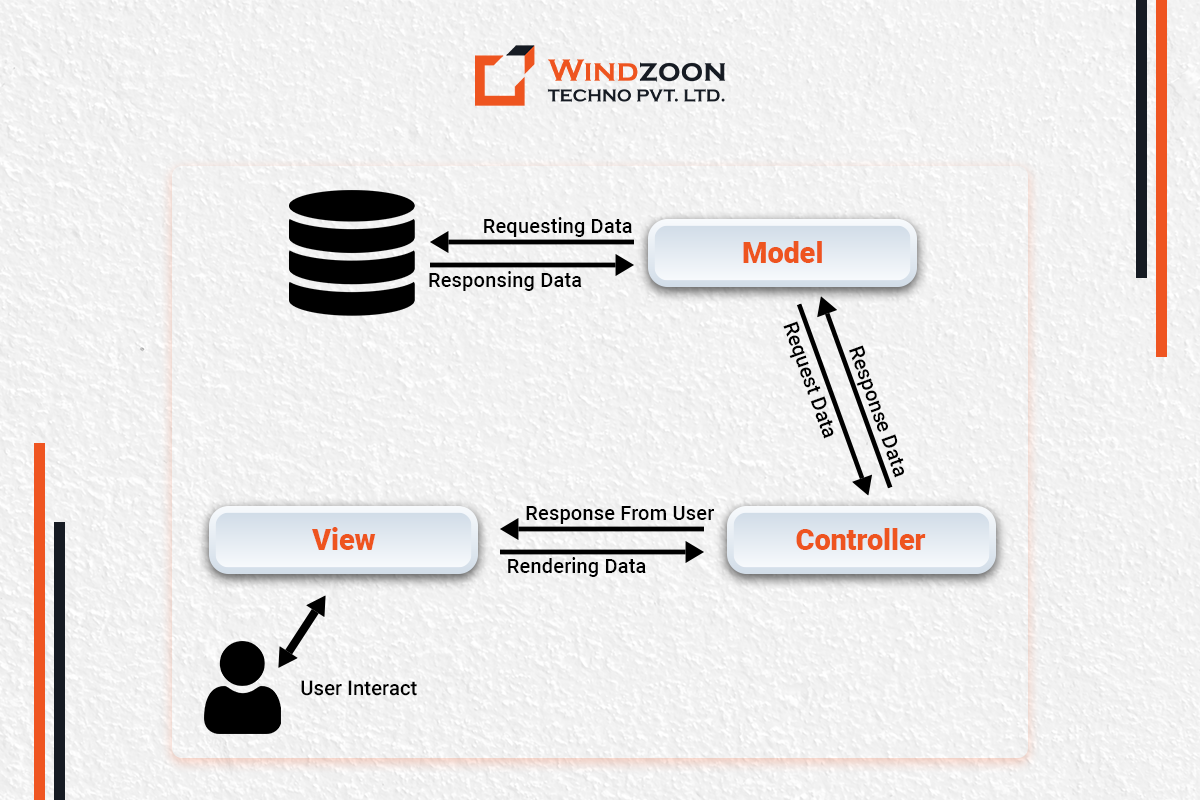
how-laravel-works

This separation helps keep code clean and organized. When a user clicks a button or fills a form, Laravel uses a router to decide what should happen. It may trigger a controller, which may pull or save data via a model, and then return a result using a view. All of this happens seamlessly.

Laravel also includes tools like:

  • Artisan CLI: A command-line tool to generate files quickly.
  • Blade: A simple templating engine for layouts.
  • Eloquent ORM: Helps interact with databases using PHP instead of raw SQL, making database management efficient and straightforward.

Laravel supports custom api development and api development, allowing seamless integration of modules, online portals, and third-party services tailored to your business needs.

What Sets Laravel Apart from Other Frameworks

Laravel isn’t the only PHP framework available—other PHP frameworks like Symfony, CodeIgniter, and Zend are also widely used—but Laravel consistently ranks as one of the most preferred options for developers and businesses alike due to its robust features, scalability, and ease of use. Here’s what makes Laravel truly stand out:

1. Cleaner Syntax

Laravel is known for its elegant and readable code. This means that developers can write less code to achieve more functionality, and it becomes much easier for teams to collaborate and maintain the codebase. Cleaner syntax leads to faster onboarding for new team members and reduces the likelihood of bugs or confusion.

2. Built-In Tools and Features

Unlike many other frameworks that require external libraries or packages for common functions, Laravel includes a wide range of built-in features right out of the box. These include authentication, routing, caching, email handling, and more. These built-in features enable efficient development and seamless development by streamlining workflows and reducing the need for third-party integrations. This reduces setup time and helps developers build faster with confidence in Laravel’s native support.

Additionally, Laravel’s built-in tools help optimize performance and streamline the development process, ensuring robust and scalable applications.

3. Strong Community and Ecosystem

Laravel has a large, active community of developers who constantly contribute tutorials, open-source packages, and support. This strong ecosystem makes it easier for new developers to learn, get help quickly, and follow best practices. Skilled Laravel developers and any experienced Laravel developer benefit from the community’s in-depth knowledge and resources, which help them efficiently implement advanced features, maintain security, and optimize project performance. Regular updates from the community also mean that Laravel stays modern and well-maintained.

4. Focus on Security

Security is a big concern in web development, and Laravel handles this well. It includes built-in tools to protect against major threats like CSRF (Cross-Site Request Forgery), XSS (Cross-Site Scripting), and SQL Injection. Developers can use Laravel’s secure authentication system with minimal effort, giving businesses peace of mind about data protection.

5. Flexibility and Scalability

Laravel works equally well for small business websites and large enterprise-level applications. Its structure supports modular development, which allows features to be added as the business grows. Laravel enables teams to develop scalable and custom development projects, ensuring tailored solutions that meet unique business requirements. Combined with tools like Laravel Vapor (for serverless deployment), Laravel becomes a future-proof choice that adapts to both current needs and long-term expansion.

In short, Laravel combines simplicity with power, making it a trusted framework for businesses that want reliable, scalable, and secure web applications. Laravel supports scalable solutions for businesses of all sizes.

Laravel is not just a framework, it’s a full ecosystem packed with tools that streamline development and improve the performance, scalability, and security of applications. These tools offer major business benefits by reducing development time, minimizing errors, and making ongoing maintenance easier.
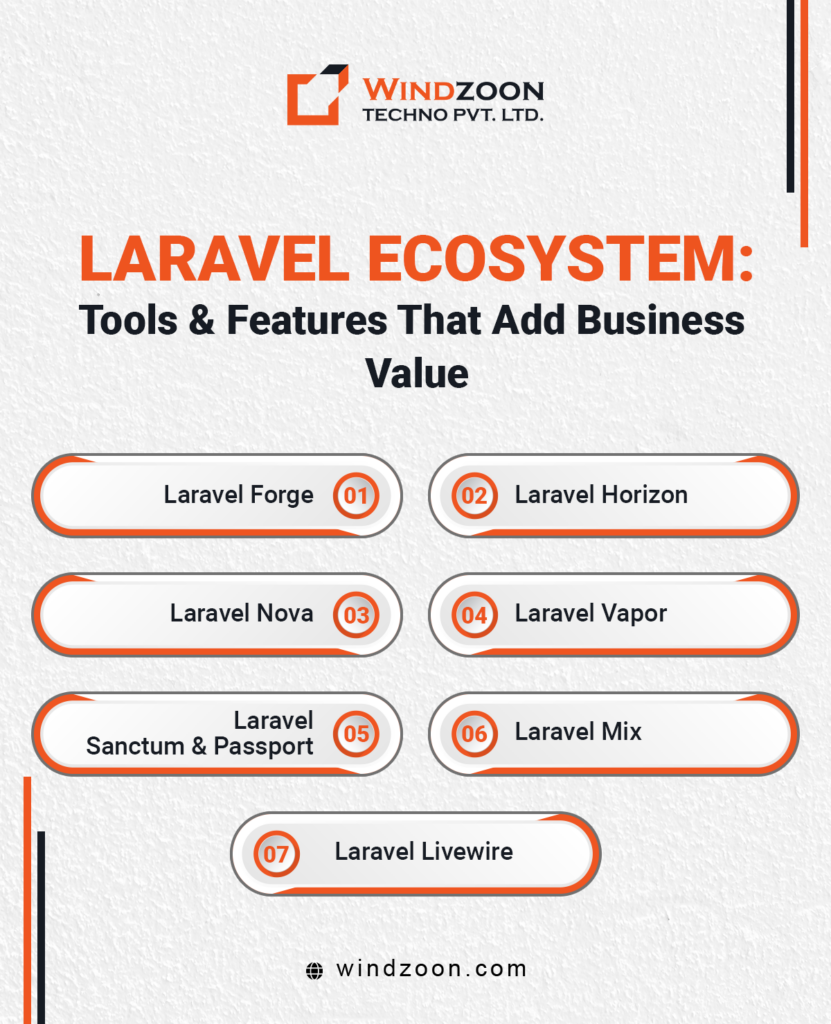
laravel-ecosystem

Laravel Forge

This tool simplifies server management and automates deployment. With Forge, developers can set up and configure web servers in minutes instead of hours. This reduces launch delays and ensures more secure and optimized hosting environments. Additionally, Laravel Forge supports cloud integration and laravel cloud storage, making it easy to connect various cloud services and manage data efficiently for modern web applications.

Laravel Nova

Nova is an elegant admin panel solution for Laravel applications. Instead of building backend dashboards from scratch, Nova offers a ready-to-use, customizable admin interface. It saves development time and allows clients to manage content, users, or data easily through a sleek backend UI.

Laravel Horizon

For apps that use background processing (like sending emails or notifications), Horizon provides a dashboard to monitor queues and jobs. As one of the performance monitoring tools, Horizon helps ensure application health by proactively detecting and resolving issues in background processes. This is critical for real-time or high-traffic applications. Businesses can ensure that tasks are running as expected and troubleshoot quickly if something fails.

Laravel Vapor

Vapor is Laravel’s serverless deployment platform built on AWS. It allows apps to scale automatically with no server management required. This is especially useful for businesses expecting large traffic spikes, like during product launches or seasonal sales.

Laravel Sanctum & Passport

These are Laravel’s tools for user authentication and API security. Sanctum is great for simple token-based authentication, while Passport is ideal for OAuth2 needs. Both are vital for apps that handle user accounts, permissions, or third-party integrations.

Laravel Mix

Managing CSS and JavaScript can get messy, especially in large projects. Laravel Mix makes it easy to compile, bundle, and optimize these assets. This leads to faster-loading websites and a better user experience.

Laravel Livewire

Livewire allows developers to build dynamic, interactive frontend features using PHP alone – no JavaScript required. This speeds up the development of interactive interfaces while maintaining Laravel’s backend power. These ecosystem tools give Laravel developers a powerful toolbox to build better applications faster. However, only experienced developers know when and how to use them effectively, which is why hiring the best talent truly matters.

7 Reasons to Hire the Best Laravel Developers
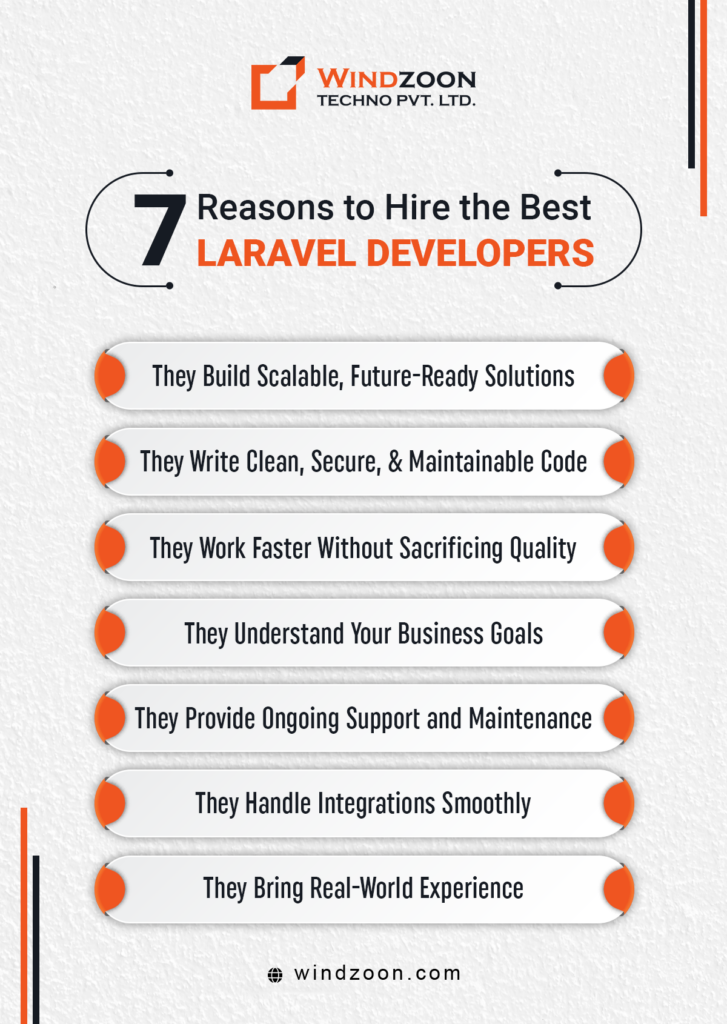
7-reasons-to-hire-the-best-laravel-developers

1. They Build Scalable, Future-Ready Solutions

Great developers plan ahead. They don’t just solve today’s problem, they build systems that grow with your business. Laravel developers can build complex web applications for diverse industries, including scalable and secure commerce and CMS websites. This saves money in the long run by avoiding rebuilds or messy upgrades.

2. They Write Clean, Secure, and Maintainable Code

Poor code causes bugs, security issues, and makes updates difficult. The best Laravel developers, including a skilled Laravel programmer and a dedicated developer, follow proper coding practices, use Laravel’s built-in security features, and write code that’s easy to manage. Experienced Laravel programmers add value by ensuring your application remains secure and maintainable over time.

3. They Work Faster Without Sacrificing Quality

Experienced developers use Laravel’s built-in tools effectively. They know shortcuts, avoid rework, and use time smartly. You get faster results without compromising quality—especially when you hire freelance Laravel developers or remote Laravel developers, which helps manage development costs while maintaining high standards.

4. They Understand Your Business Goals

The best Laravel developers, including dedicated Laravel developers and the ideal Laravel developer, ask questions about your goals and focus on understanding and achieving your business objectives. They don’t just build what you say; a dedicated developer will also suggest better ways to achieve results through smart features and functionality.

5. They Provide Ongoing Support and Maintenance

Web apps aren’t a one-time task. After launch, you need updates, security patches, new features, and ongoing module development and app development to keep your application current. Experienced developers stick around to support your growth.

6. They Handle Integrations Smoothly

Today’s apps need to talk to many services like payment gateways, CRMs, and analytics tools. Top Laravel developers handle these integrations with ease, excelling in commerce development, e commerce development, and delivering custom solutions for your business, keeping your system connected and efficient.

7. They Bring Real-World Experience

The best developers, including senior Laravel developers, senior developers, and experienced software developers, have faced real challenges, solved real problems, and know what works. Their experience reduces risks, ensures smoother launches, and avoids common development pitfalls.

Final Thoughts: Don’t Settle for Average Development

Laravel is a smart and powerful framework, but its real value is unlocked only by skilled developers. Investing in the right people means saving time, reducing risk, and building a platform you can trust. For your next project, consider hiring expert Laravel developers or hire dedicated Laravel developers to ensure success.

Looking for the Best Laravel Development in USA? Let’s talk. Choose a provider that offers the best Laravel development services, including professional Laravel migration services, for comprehensive support.

FAQs

1. Is Laravel suitable for small businesses?

Yes. Laravel works great for both startups and large companies. It’s flexible, scalable, and cost-effective.

2. What kind of apps can be built using Laravel?

Laravel can power eCommerce stores, CRM systems, content platforms, admin dashboards, and even SaaS products. In addition, Laravel is well-suited for mobile app development and custom software development, enabling the creation of high-quality mobile applications and personalized, industry-specific software solutions.

3. How is Laravel different from plain PHP?

Laravel offers structure, built-in tools, and security features that plain PHP lacks. Among PHP frameworks, Laravel stands out due to its advanced features and the technical expertise of its developer community, resulting in faster, cleaner development.

4. Do I need a Laravel developer for ongoing support?

Yes. Regular updates, security patches, and improvements need expert attention. It’s wise to have developers on standby.

5. How long does a Laravel project take?

It depends on the scope. Small sites may take weeks, while larger systems can take months. Experienced developers help speed things up.

6. What should I look for when hiring a Laravel Development company USA?

Look for a company with Laravel experience, a solid portfolio, clear communication, and post-launch support. Skilled Laravel developers and experienced Laravel developers are essential for delivering high-quality web solutions that are secure, scalable, and tailored to your business needs. Make sure they understand business needs and can work in your time zone. Checking reviews and past work helps ensure reliability.

7. Is Laravel good for mobile apps, too?

Laravel is best for web apps, but it can serve as the backend (API) for mobile apps built using frameworks like Flutter or React Native.

12 Must-Follow Web Application Security Best Practices for 2024

Data is the new oil that keeps the world going. It’s like virtual gold that can earn you a lot more than real gold. This is why security breaches and data theft have become quite a norm in the digital world.

As per Security Magazine, every 39 seconds, a cyber attack occurs somewhere in the world. The global cost of these cyberattacks was estimated to be $6 trillion in 2021 and might rise to $10.5 trillion annually by 2025.

Hence, understanding and implementing robust web application security measures is crucial for businesses of all sizes to safeguard their integrity and trust. As an experienced web app development company in India and the USA, we have compiled a list of the best web app security measures based on our years of expertise.

This guide navigates through the intricate layers of web security, offering a comprehensive approach to protecting your digital assets. Hence, join us to transform your web applications into impregnable fortresses, ensuring that your business thrives in the secure and trusty realm of the internet.

However, before we learn the best web app security practices, let’s first know about some of the most common web app security vulnerabilities.

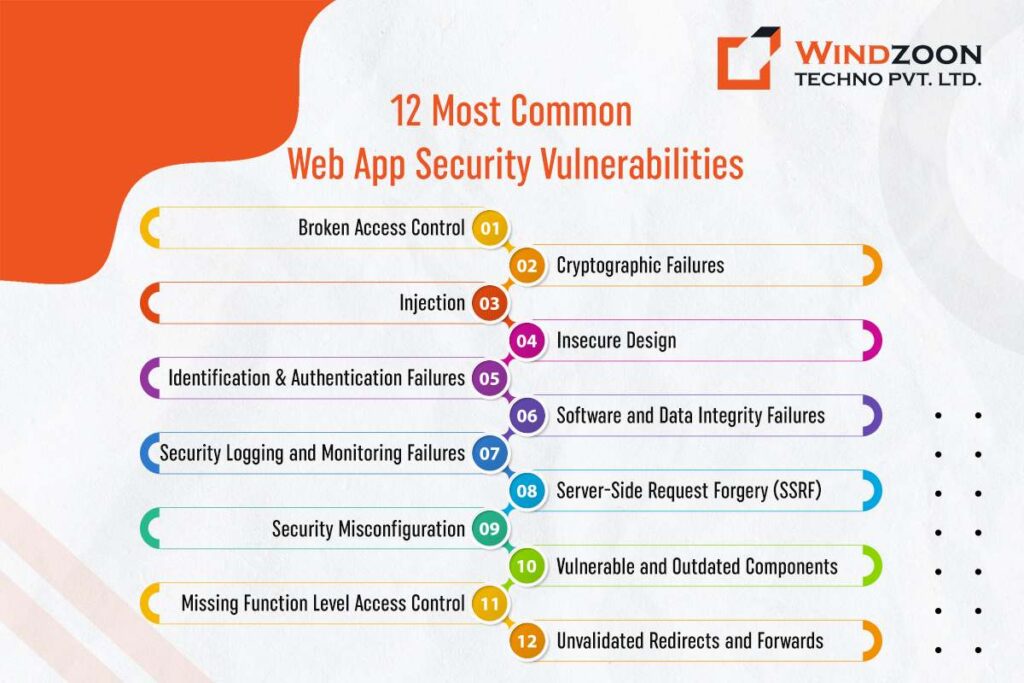
Common Web App Security Vulnerabilities

common-web-app-security-vulnerabilities

According to the Open Web Application Security Project (OWASP), the ten most common vulnerabilities in web applications are:

1. Broken Access Control

  • Here, a hacker accesses a user’s profile by compromising their login details.
  • This can often be prevented through multi-factor authentication.

2. Cryptographic Failures

  • Previously known as ‘Sensitive Data Exposure’. Here, hackers can easily access unencrypted data.
  • Moreover, it involves failing to protect sensitive data, like financial, healthcare, or PII, with adequate encryption.

3. Injection

  • Attackers can send malicious data as part of a command or query, tricking the application into executing unintended commands or accessing unauthorized data.
  • Common examples include SQL, NoSQL, and LDAP injection.

4. Insecure Design

  • This is a broad category that includes risks related to design flaws in software.
  • It emphasizes the need for a threat modelling process and secure design patterns and principles.

5. Identification and Authentication Failures

  • It happens when session management and authentication features are implemented improperly.
  • Attackers can compromise passwords, keys, and session tokens, or exploit other flaws to assume users’ identities.

6. Software and Data Integrity Failures

  • This vulnerability arises when assumptions regarding software updates, critical data, and CI/CD pipelines are not verified.
  • It can lead to unauthorized access or modification of software and data.

7. Security Logging and Monitoring Failures

  • Insufficient logging and monitoring, coupled with ineffective or non-existent integration with incident response, allow attackers to further attack systems without detection.

8. Server-Side Request Forgery (SSRF)

  • The server can be tricked into making outbound requests to unintended services, allowing attackers to interact with these services.

9. Security Misconfiguration

  • This involves incorrect configuration settings in software and systems, leaving them vulnerable to attacks. For example, issues like flaws that haven’t been patched, unused pages, unprotected files or directories, outdated software, and running software in debug mode.

10. Vulnerable and Outdated Components

  • Using components (mostly third-party components) with known vulnerabilities or failing to update components can leave an application vulnerable to attacks.

11. Missing Function Level Access Control

  • If server-side authorization is poorly configured, nonexistent, or compromised, it leaves your app’s backend vulnerable to attacks.

12. Unvalidated Redirects and Forwards

  • Hackers can redirect users to malicious websites to steal their data.

Most of these vulnerabilities stem from issues with authentication, flaws in user input, and data validation. Therefore, protecting your authentication and validation mechanisms is crucial. Any web app development service should include a comprehensive security strategy, regular security checks during and after development, and adherence to best practices in web security.

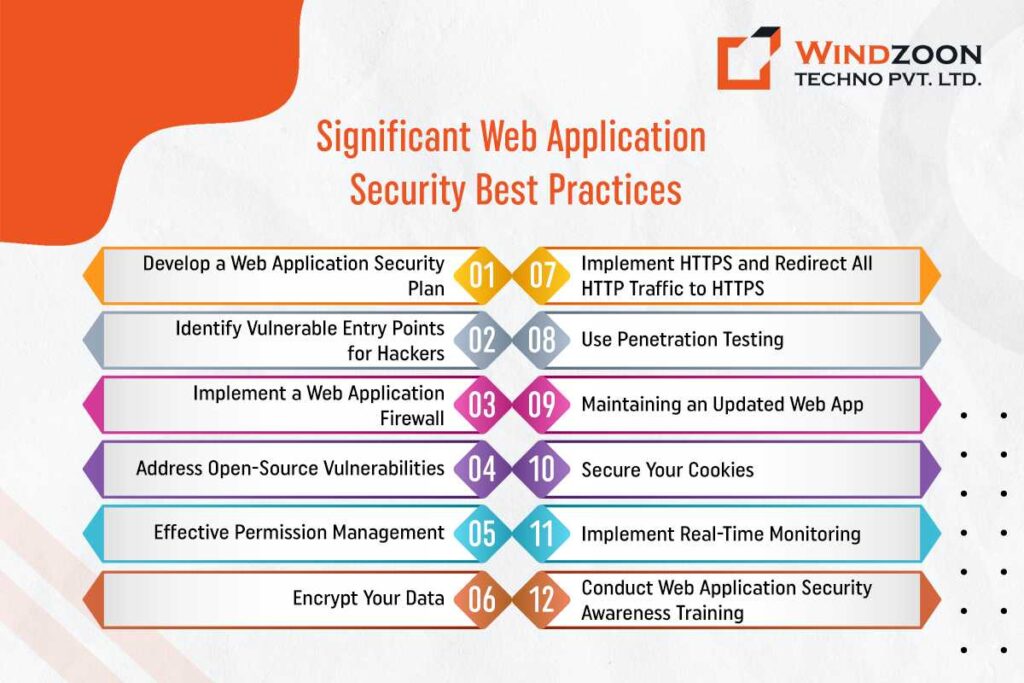
Now, let’s get to know about some of the best web app security best practices for 2024.

Web Application Security Best Practices

significant-web-app-security-best-practices

Following are the best web app security practices every business should follow in 2024.

1. Develop a Web Application Security Plan

To effectively adhere to web application security best practices, having a structured plan is essential. Many companies fail to manage web security properly due to a lack of organization, leading to minimal results.

Collaborate with your IT security team or professional web app development company to create a comprehensive and executable plan for web application security. This plan should clearly define the objectives of your organization, such as improving compliance or strengthening brand protection.

The plan should also prioritize which applications need immediate security measures and outline the methods for testing these applications, whether it be manually, via cloud solutions, on-site software, managed service providers, or other strategies.

Each organization’s security plan will be unique, and tailored to its specific infrastructure. For larger organizations, the plan should specify key personnel responsible for upholding web application security practices continuously.

Additionally, it’s important to consider and include the costs associated with these security measures in your plan. This foresight ensures that your organization is prepared and resourced to maintain high standards of web application security.

2. Identify Vulnerable Entry Points for Hackers

A crucial aspect of web application security is identifying potential entry points that hackers might exploit. Certain parts of your software are inherently more susceptible to attacks, particularly those that are customer-facing and handle data transactions. To strategically focus your security efforts, it’s advisable to categorize the features of your software into modules based on their security sensitivity:

Critical Modules: These include the most vulnerable aspects of your application that are directly exposed to the internet and are, therefore, prime targets for hackers. Critical modules often comprise customer-facing features like login screens and checkout pages.

Serious Modules: These modules are integral parts of your software where sensitive company or user information is stored. Although they might not be directly exposed to the internet, their protection is crucial due to the valuable data they hold.

Normal Modules: While these modules may not have direct access to sensitive data within your application, they still require regular monitoring and security checks. Ensuring these modules are secure is also important for overall application integrity.

Understanding and categorizing these modules help in prioritizing security measures and focusing resources where they are most needed to safeguard your web application effectively.

3. Implement a Web Application Firewall

A key practice in web app security is the use of web application firewalls (WAFs). A WAF acts as a barrier for HTTP traffic between a server and a client, effectively filtering out and blocking malicious requests that could compromise your databases.

Firewalls are highly regarded for safeguarding software at the network’s entry points. They scrutinize all incoming traffic and halt any activities that appear suspicious. One of the advantages of WAFs is that they do not require developers to modify the source code, making them a user-friendly security solution.

However, it’s important to note that traditional firewalls have limitations, particularly in identifying certain types of cyber attacks. For enhanced security, it’s advisable to use advanced WAFs. These are equipped to shield your application from more sophisticated threats like SQL injection attacks and cross-site scripting, ensuring a higher level of protection for your web applications.

4. Address Open-Source Vulnerabilities

Many web applications utilize open-source components due to their cost-effectiveness and functionality. However, these components can bring vulnerabilities into your application. It’s essential to regularly scan these open-source components for any known security flaws.

There are many tools available that can automatically detect vulnerabilities in your software’s dependencies. Once identified, these vulnerabilities must be promptly addressed, either by updating the component, applying a patch, or replacing it with a more secure alternative.

Managing the security of open-source components is a continuous process, as new vulnerabilities are discovered regularly.

5. Effective Permission Management

Ensuring data security in your organization crucially involves controlling user access to sensitive information. It’s essential to understand that not every employee needs access to all data. Over-privileging users can lead to increased risks of unauthorized access, data breaches, and internal threats.

Implementing differentiated access levels within your system offers two key benefits. Firstly, it limits the damage if an external party compromises an employee’s credentials, as they can only access areas permitted by those credentials.

Secondly, in case an employee poses a risk to your company, restricted access ensures they cannot access all sensitive data on their own. A best practice in web application security includes revoking access rights of former employees and updating passwords whenever a developer or staff member departs, further safeguarding your organization’s data integrity.

6. Encrypt Your Data

Encryption is a critical method for encoding information, primarily used to protect it from unauthorized access. While encryption does not directly prevent data interference during transmission, it ensures that the data becomes unintelligible to anyone who isn’t authorized to view it.

Not only is encryption vital for securing data in transit, such as information being sent over the internet, but it also plays a key role in protecting data at rest. This includes data stored in databases or other storage mediums, where it remains shielded from unauthorized access.

Encrypting the data exchanged with Web Services and APIs is just as important as establishing a solid authentication strategy for access control. Without encryption, web services are highly vulnerable. Hackers, who are becoming increasingly skilled at using sophisticated algorithms, can easily locate and exploit these vulnerabilities.

Therefore, implementing robust encryption measures is not just a precaution but a necessity. It is indispensable for safeguarding against unauthorized access and ensuring the overall security of data, whether in transit or at rest.

7. Implement HTTPS and Redirect All HTTP Traffic to HTTPS

In addition to the encryption methods discussed earlier, encrypting information at the service level is also crucial. This is commonly achieved through HTTPS (SSL or Secure Sockets Layer).

SSL technology creates a secure, encrypted connection between a web server and a browser. It ensures the privacy of data exchanged between the browser and the server, making it essential for the protection of online transactions. Used by millions of websites, SSL is the industry standard for securing online interactions.

Moreover, it’s recommended to uniformly implement SSL across your entire website. This comprehensive approach not only safeguards your site but also prevents potential issues with resources like stylesheets and JavaScript files, which may encounter problems if not accessed via HTTPS through an SSL-encrypted connection.

8. Use Penetration Testing

Penetration testing is a crucial and advanced aspect of security testing. It simulates near real-world scenarios where a Quality Assurance (QA) specialist assumes the role of a hacker. The specialist attempts to breach the system through various means, ranging from sophisticated programming techniques to physical breaches.

The primary advantage of penetration testing is its effectiveness in uncovering a wide range of vulnerabilities. The process culminates in a comprehensive report that not only serves as a foundation for future security checks but also acts as a reference to pinpoint the vulnerabilities responsible for any security breaches. Penetration testing encompasses several techniques to ensure all potential threat scenarios are evaluated.

Given that software, especially a medium-complexity web app can have numerous potential entry points for hackers — including cloud access — penetration testing becomes indispensable. It enables a QA specialist to explore numerous scenarios, attempting to breach the system with as much knowledge as an actual hacker would have.

If your organization does not have in-house penetration testing expertise, you should hire web app developers or testers from a reputed web app development firm. A third-party expert does more than just test your web application; they conduct a comprehensive security audit while performing the penetration testing. Having an outsider audit your software often reveals overlooked flaws, providing valuable insights for you and your team.

9. Maintaining an Updated Web App

Updating your web application encompasses more than just the software itself; it includes all third-party services and libraries within its infrastructure. Hackers often exploit these third-party components to breach the main system, so it’s crucial to be aware of these vulnerabilities. Your web app’s documentation can be a key resource in this process.

A common challenge is the reluctance of developers to update third-party services, due to fears of compatibility issues with new versions. This hesitation, however, can lead to significant security risks.

To manage updates effectively, review your documentation to identify the libraries you’re using. Eliminate any that don’t contribute significantly to your app and prioritize updating the rest. Developing an update strategy is essential, as updating libraries can be more complex than anticipated.

Ensure that you’re using only the necessary libraries and always opt for the latest stable versions to avoid potential vulnerabilities in any framework or library. This approach is critical for keeping your web application secure and functional.

10. Secure Your Cookies

Cookies are essential for most websites, benefiting both website owners and users. They help websites gather user information for more insightful analytics, while users enjoy a faster, more personalized browsing experience. However, cookies can also be a gateway for hackers, so ensuring their security is vital.

There are three key aspects to consider for cookie security:

Information Stored in Cookies: Be cautious about the type of data stored in cookies. Avoid storing sensitive information like passwords, as hackers can easily access them and use them to infiltrate your system through another user’s account.

Expiration Date: Set a reasonable lifespan for your cookies. They shouldn’t last indefinitely. Ideally, cookies should expire in less than a month. Regularly requesting user authorization, perhaps every two weeks enhances your web app’s security and ensures that each access is by an authorized user.

Encryption: Encrypt all data stored in cookies. This step adds an extra layer of security, making the information much harder for unauthorized parties to decipher.

Implementing these procedures will dramatically improve the security of your online application, protecting both your data and the privacy of your users.

11. Implement Real-Time Monitoring

The Ponemon Institute reveals that it takes companies an average of six months to detect a major security breach. For businesses handling large volumes of sensitive data, promptly identifying and addressing breaches is paramount. Utilizing specialized monitoring software can track all activities on employee workstations. This surveillance ensures adherence to security protocols.

The reason for doing this is that the Chief Executive reports that 90% of security breaches stem from human error. By monitoring employee actions, businesses can swiftly pinpoint which specific action on which computer led to a system compromise.

It becomes possible because all activities are systematically recorded, allowing for quick identification and rectification of security lapses. Hence, implementing such real-time monitoring is a crucial step in enhancing your organization’s cybersecurity measures.

12. Conduct Web Application Security Awareness Training

In many businesses, a comprehensive understanding of web application security is often limited to a few individuals, while the majority of employees may have only a basic awareness. This limited knowledge can lead to a lack of vigilance and an inability to recognize potential security risks.

To address this, educating your entire staff about web application security is crucial. This approach empowers employees to identify vulnerabilities proactively. Essentially, equipping everyone with knowledge about web application security transforms your workforce into an active part of the solution, enhancing the overall security framework.

Consider hiring a web application security specialist to provide awareness training for your employees. By ensuring that everyone is informed and understands how to respond to security threats or vulnerabilities, you significantly bolster your web application security measures.

Conclusion

To safeguard your bespoke web application development process, you should use all available security measures. We at Windzoon value security above all else, and our skilful developers safeguard every tech solution by including tried-and-true security procedures.

As an established firm, we have a solid reputation in the market for providing creative solutions that are fully secured to prevent unauthorized access.

To avail of our custom web app development services, get in touch with us to get a quote.

Know 8 Benefits & Drawbacks of OpenAI in Web App Development

Artificial intelligence, deep learning, and neural networks – these once seemed like the exclusive domain of tech giants like Google, Facebook, and Amazon. But with the emergence of OpenAI, these cutting-edge technologies are now within reach for developers of all levels.

However, as Spider-Man’s Uncle Ben once famously said, ‘With great power comes great responsibility.’ OpenAI integration in web development can bring a wealth of benefits, but also comes with its own set of challenges and ethical considerations.

As a leading web app development company in India & the USA, in this blog, we’ll take you for a deep dive into the benefits and drawbacks of integrating OpenAI into web app development. So grab a cup of coffee, sit back, and let’s explore the fascinating world of OpenAI together!

So first, we will learn about some significant advantages of integrating OpenAI into web app development.


Benefits of OpenAI’s Integration in Web App Development

benefits-of-openai-integration-in-webapps

Here, are the major benefits you will avail of by integrating OpenAI into web development projects.

1. Makes Customer Support a Breeze

Incorporating OpenAI in customer support can make things a whole lot easier for businesses. By automating responses to frequently asked questions, OpenAI can lighten the load of customer support staff, freeing them up to handle more complicated issues.

Plus, chatbots powered by OpenAI can deal with multiple customer queries at once, which means faster response times and happier customers. As who doesn’t love a quick and helpful response when they’re in need?

2. Personalized User Experience

With OpenAI, businesses can create a personalized user experience by analyzing user behavior and preferences. This can help businesses provide tailored recommendations and suggestions to users.

For example, if you like a certain type of shoes, an online shop can use OpenAI to recommend similar shoes that you might love. That way, you can discover new things that fit your style perfectly.

Hence, by providing a personalized user experience, businesses can keep customers engaged and happy, which can lead to more sales.

3. Aids You in Improving Your Services and Products

You can gain a significant edge by integrating OpenAI in web development because it offers insightful data on user behavior and preferences.

Utilizing OpenAI, you can examine user data to identify patterns and trends that can guide your decision-making regarding product development and marketing tactics.

For instance, if you run a food delivery service, OpenAI can assist you in analyzing client feedback and pinpoint areas where your service can be improved. By upgrading your product or service, you can attract more clients and expand your business.

4. Eliminates Boring, Repetitive Work

Consider working on a project where you are required to repeatedly write the same code. Not only is it monotonous, but it takes a lot of time. In this situation, OpenAI can help. With its sophisticated natural language processing and machine learning capabilities.

OpenAI is trained to produce code snippets based on the project’s requirements. As a result, developers won’t have to spend excessive hours on boring and repetitive activities.

For instance, OpenAI may be used to automatically produce HTML & CSS code for web page layouts, saving developers considerable time and boosting productivity.

With OpenAI, you can focus on more fascinating tasks that need human ingenuity and problem-solving abilities while leaving the tedious job to the computers.

5. Takes Business to the Next Level

OpenAI can help take your biz to the next level. But how? Well, this tech wizard can automate tasks that bog you down and help you focus on what really matters: growing your company!

Plus, it’s like having a crystal ball that shows you what your customers want and where your business can expand.

For example, if you run an online store, OpenAI can go through your customer data and tell you which markets to target next. With OpenAI on your side, you’ll be able to scale your operations and rake in more money than ever before!

6. Catches Scammers Red-handed

OpenAI can be a great tool for businesses to catch those sneaky scammers by analyzing their sketchy behavior patterns. This helps businesses to avoid fraud and keep their customers’ personal data safe and sound.

For instance, a bank can use OpenAI to go through transaction data and immediately spot any suspicious activities. By catching fraudsters in the act, businesses can prevent losses and maintain their customers’ trust.

7. Facilitates HR Management and Talent Acquisition

Do you know what’s a real pain in the neck for any HR executive? Going through heaps of resumes in search of the perfect individual.

Fortunately, OpenAI can make things simpler by assisting businesses in streamlining talent acquisition and human resource management. Businesses can save time and money while ensuring the best applicants are hired by automating the recruitment and screening procedures.

So, rather than sifting through resumes for hours, an HR department can use OpenAI to automate the process and identify the most qualified candidates for a job. With this kind of assistance, businesses can cut costs while increasing overall efficiency.

8. Provides Multilingual Capabilities

OpenAI is like a super-powered translator that can help businesses talk to customers and employees in different languages.

So if you’re trying to expand your biz overseas or just want to give your customers some love in their native tongue, OpenAI can help.

For example, if you’ve got a customer service team, they can use OpenAI to chat with customers in their own language, which is gonna make those peeps feel super appreciated.

Bottom line – OpenAI’s multilingual skills can help your biz connect with more people and provide better service.

Now, we will get to know about some key downsides of integrating OpenAI into web app development.

Drawbacks of OpenAI’s Integration in Web App Development

drawbacks-of-openai-integration-in-webapps

Here, are several drawbacks that must be considered when integrating OpenAI into web development projects.

1. Complexity in Integration

So let’s talk about the first thing you should be aware of before diving into OpenAI integration for your web app – it can get pretty complex! You need to have a decent amount of technical knowledge to properly integrate OpenAI tools into your app.

If you’re not familiar with machine learning or AI technologies, it can be a bit intimidating. As integration requires an understanding of the tool’s API, configuration and customization. Hence, it’s not exactly a walk in the park, especially for beginners.

2. Limited Availability

Another bummer about using OpenAI in web development is its limited availability. Since it’s still a relatively new technology, not all of its features are widely available to everyone.

For instance, the GPT-3 and 4 language model is currently only accessible to a select group of beta testers, and even then, there’s a long waitlist to get in.

This can be frustrating and slow down the development process for AI-powered web apps. It’s like trying to bake a cake without all the necessary ingredients – you’re bound to run into some issues.

3. Error in Predictions

Now, let’s talk about one of the potential pitfalls of using OpenAI in web development – errors in predictions.

Look, we all know that AI isn’t perfect, and neither is OpenAI. Sometimes, it can be wrong in its predictions, which can cause issues for web apps that rely on accurate results.

For example, OpenAI’s image recognition algorithms may not always correctly identify objects in images or videos which could be problematic for apps that need precise object identification.

While OpenAI is constantly improving, it’s important to be aware of its limitations and the potential for errors.

4. Data-Privacy-Related Concerns

Next, we’ll talk about something that’s always important: data privacy. When it comes to integrating OpenAI into web development, privacy concerns can be a real issue.

Using AI technology in web development can create potential privacy issues, particularly when handling sensitive information. Developers must take appropriate measures to prevent data breaches and ensure that their apps comply with relevant data privacy regulations.

As it’s crucial to keep your user’s information safe and secure while still utilizing AI technology to its full potential.

5. Limited Interpretability

When it comes to using OpenAI in web development, one thing to keep in mind is that it has limited interpretability.

In other words, it may be challenging to understand how an AI model generates its predictions. This might produce trust issues between users and developers since, after all, how can you trust something you don’t understand?

Additionally, developers must be able to explain to users how their AI-powered web apps function. But given the mystery surrounding the models that support these apps, that can be a real challenge.

6. Ethical Concerns

Another letdown of integrating OpenAI in web development is the ethical concerns that come with it. As AI becomes more widespread, there’s a risk that it could be misused or abused.

We need to make sure that it is not used for nefarious purposes, like discrimination or reinforcing harmful biases.

Thus, developers need to be aware of these risks and take action to ensure that their apps are ethically sound. So, use AI for good, not evil!

7. High Cost

Another crucial thing to consider when integrating OpenAI in web development is that it can be pretty pricey.

Since the technology is still fresh and not yet widely accessible, developers may need to shell out some cash for expensive hardware or cloud computing services to access OpenAI’s tools and tech.

And that can definitely be a major roadblock for smaller businesses trying to break into the AI game.

8. Dependency

Finally, one potential drawback of OpenAI integration in web development is dependency.

When developers rely heavily on OpenAI tools and technologies, they may become too reliant on them, which can create a dependency that is difficult to break.

If OpenAI were to go out of business or discontinue a particular tool or service, it could leave developers scrambling to find alternative solutions.

Conclusion

OpenAI has the potential to revolutionize web app development and bring about a new era of innovation and efficiency. It has both advantages and disadvantages when it comes to web app development.

As with any new technology, it is up to developers and users alike to approach OpenAI with caution and awareness, while also embracing its incredible potential. As the famous quote by William Gibson goes, “The future is already here – it’s just not evenly distributed.” Let’s make sure that OpenAI is distributed in a way that benefits everyone.

If you need any help incorporating OpenAi into your web app development, then you can always count on us.

Windzoon is a prominent web development services provider in India & the USA with more than a decade of experience developing web apps for varied business models. To leverage our best-in-class services, reach out to us and get a quote.

OpenAI in Web Development: 8 Useful Features for Your Web Apps

Greetings, fellow web wizards! Do you ever wish for your websites to get a little bit of fairy dust and turn into truly magical? Well, hold onto your broomsticks, because I’ve got something that might just do the trick, and its name is Open AI!

Open AI is like having a team of genies at your fingertips, ready to grant your every web development wish. It is an artificial intelligence platform with numerous advantages for web app development. Given that it has received over $1 billion in funding, it is also one of the most financially secure machine-learning startups worldwide.

With its ability to analyze vast amounts of data and learn from user behavior, Open AI can help you create websites that are smarter, more intuitive, and more engaging than ever before.

But that’s not all – Open AI has a ton of other use cases and benefits for web development services in India that you won’t want to miss. So, come with me on a journey into the enchanted world of Open AI, and let’s see what kind of magic we can create together!


What is OpenAI?

OpenAI is like having a super-smart buddy who’s always ready to help you out. However, instead of being human, it’s an artificial intelligence platform that’s constantly learning and growing.

Think of OpenAI as a brain on steroids – it has the ability to process and analyze huge amounts of data in lightning-fast time. This means that it can help people in a wide range of industries, from healthcare to finance to education.

The team at OpenAI is made up of some of the most brilliant minds in the AI world, and they’re always pushing the boundaries of what’s possible. They’re working on some seriously cool projects, like developing robots that can learn from humans and play games like chess and Go.

But even more than that, they’re dedicated to making AI accessible to everyone. They believe that this technology has the power to change the world for the better, and they want to make sure that everyone has the chance to be a part of that change.

Now, let’s learn about some striking data & statistics regarding Open AI.

  • According to the most recent ChatGPT-4 data, OpenAI is working on a mobile app powered by GPT-4.
  • According to industry insiders, ChatGPT-4 will be available on Bing Chat as well.
  • ChatGPT was built on top of GPT-3.5, and Microsoft’s Bing Search uses GPT-3 and GPT-3.5, as well as a patented technology called Prometheus, to give answers faster while making proper use of real-time data.
  • According to the most recent ChatGPT-4 data, if GPT-4 is trained on 100 trillion parameters, it will have the same parameter set as the human brain.
  • By the end of 2023, OpenAI’s sales will be around $200 million.
  • ChatGPT crossed the 100 million user threshold in January 2023.
  • Within a week after its launch, ChatGPT had surpassed 1 million members.
  • Microsoft has invested over $10 billion in OpenAI, acquiring a 46 percent share in the company.
  • According to the most recent ChatGPT figures, the parent company of ChatGPT is worth over $29 billion in 2023.
  • ChatGPT can only collect data prior to 2021 because the creators ceased training that year.
  • ChatGPT has over 57 million monthly users within the first month of its inception.
  • ChatGPT’s owner, OpenAI, expects the company to produce roughly $1 billion in revenue over the next two years.
  • By January 2023, ChatGPT had almost 13 million unique active users every day.
  • Experts estimate that the enormous volumes of data in ChatGPT-4 might be nearly 571 times larger than the 175 billion parameter training data size of GPT-3.

After this, let’s understand the importance of OpenAI in the web development industry.

Significance of OpenAI in the Web Development Industry

First off, OpenAI is a game-changer when it comes to creating web applications. With its natural language processing capabilities, OpenAI can help web developers create websites and apps that can communicate with users like humans. This means that web development can be taken to a whole new level, making it possible to create websites that are more intuitive, responsive, and user-friendly.

Secondly, OpenAI can save web developers a ton of time and effort. Its machine learning algorithms can be used to automate a variety of tasks, from content creation to website design. This can free up developers to focus on more creative aspects of web development, such as user experience and branding.

Thirdly, OpenAI can help businesses improve their online presence. By providing personalized recommendations and search results, OpenAI can help businesses connect with customers and create a more engaging online experience. This can lead to increased traffic, higher conversion rates, and better customer retention.

Overall, OpenAI is a powerful tool for web developers and businesses alike. It can help create more intelligent and intuitive web applications, save time and effort in development, and improve online engagement and customer experiences.

So, if you’re a business looking to improve your online presence, you should definitely consider web development services in India & the USA for incorporating OpenAI into your web development toolkit.

Now, let’s get to know about some interesting use cases of OpenAI in web development.

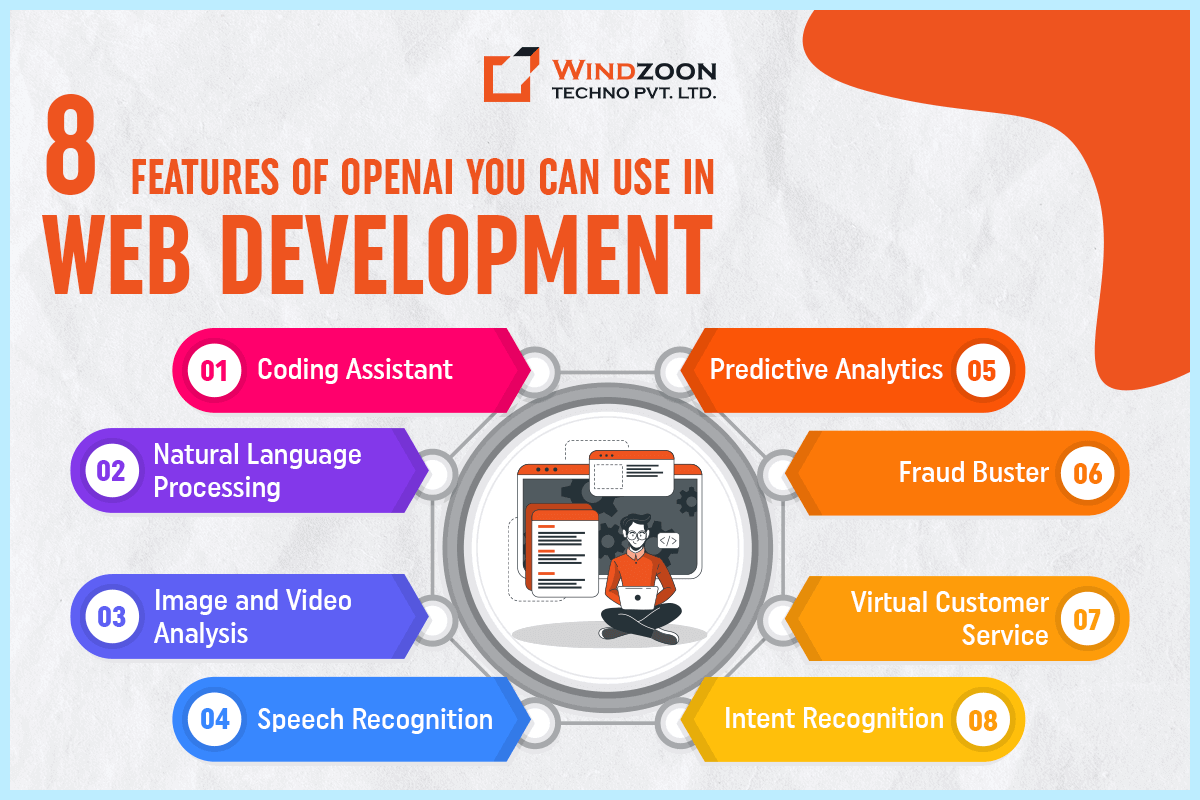
8 Features of OpenAI You Can Use in Web Development

features-of-opanai-use-in-webapps

1. Coding Assistant: Your AI-powered coding buddy!

If you’re a developer, you know that coding can be challenging and time-consuming. That’s where a coding assistant comes in – it’s an AI-powered tool that helps you write code more quickly and accurately. OpenAI’s coding assistant is here to help you write better code in less time!

Example Application of Coding Assistant:

  • Autocomplete code as you type: Say goodbye to typos and syntax errors!
  • Suggest fixes for errors and bugs: Your coding assistant can catch mistakes before they become big problems.
  • Offer suggestions for optimizing code: Let your assistant help you write code that’s faster, more efficient, and easier to maintain.
  • Help with refactoring and code review: Your assistant can make suggestions for cleaning up and improving existing code.

How OpenAI can improve coding in web development?

By using OpenAI’s coding assistant, developers can be more productive and save time and money. You’ll be able to write better code, catch errors before they cause problems, and optimize your code for maximum efficiency. Your assistant will be your new best friend in web development!

What OpenAI tool is used as a coding assistant?

OpenAI Codex is the perfect tool to use as your coding assistant. It uses machine learning to understand natural language and generate code based on your input. With Codex, you’ll be able to write code faster and more accurately than ever before!

2. Natural Language Processing: A Human-like Virtual Assistance

Have you heard about natural language processing (NLP)? It’s an AI-powered tool that can help web applications understand and process natural language queries from users. OpenAI’s NLP tools are like magic wands that can make web applications more intelligent and interactive.

Example Application of Natural Language Processing:

  • Chatbots and Virtual Assistants: Have you ever chatted with a bot on a website? That’s NLP in action. OpenAI’s NLP tools can help create chatbots and virtual assistants that can talk to users like humans do.
  • Sentiment Analysis: NLP can also be used to determine the tone and emotion of the text. This can be useful for analyzing customer feedback, social media posts, and reviews.
  • Language Translation: Want to create a multilingual website? NLP can help translate text from one language to another.
  • Text Classification and Summarization: NLP can analyze and categorize large amounts of text. This can be useful for summarizing articles, categorizing emails, and more.

How can OpenAI improve NLP in web development?

OpenAI’s NLP tools are some of the most advanced in the industry. With OpenAI’s NLP tools, web developers can build more intelligent and interactive web applications that can understand and respond to user input in more sophisticated ways. This means that websites can provide a more personalized experience for users, making them feel heard and understood.

What OpenAI tool is used for NLP?

OpenAI GPT-3 is a powerful tool that can be used for natural language processing. It’s like a language wizard that can generate natural-sounding responses to user queries. With GPT-3, web developers can build chatbots, virtual assistants, and other conversational interfaces that can understand and respond to users in a more human-like way.

3. Image and Video Analysis: Let AI Make Sense of What You See!

The Image & Video Analysis feature is an AI-powered tool that can be integrated into web applications using OpenAI tools. This feature allows web applications to analyze and interpret visual data in a more sophisticated way, making them more intelligent and responsive to visual input.

Example Application of Image & Video Analysis

  • Object recognition and detection: Identify and locate objects in images and videos.
  • Facial recognition and analysis: Recognize and analyze faces in images and videos.
  • Image and video captioning: Generate descriptions for images and videos.
  • Scene understanding and segmentation: Analyze and interpret the content of an image or video.

How OpenAI can help improve image and video analysis in web development?

OpenAI’s image and video analysis tools are seriously advanced. By leveraging these tools, web developers can create applications that can better understand and interpret visual input. This means your website or app can become smarter and more intuitive!

What OpenAI tool can you use for image and video analysis?

The answer is OpenAI CLIP! This powerful tool can classify and recognize objects in images and videos. With CLIP, you can build applications that can analyze and interpret visual data with ease.

So, let AI help you make sense of what you see with image and video analysis from OpenAI!

4. Speech Recognition: Your AI-powered transcriber!

If you’re creating a web application that involves spoken input, you know how important accurate speech recognition can be. That’s where OpenAI’s speech recognition tools come in – they’re AI-powered tools that can transcribe spoken words into text with high accuracy.

Example Application of Speech Recognition:

  • Voice assistants and chatbots: Your application can listen and respond to user input through spoken words.
  • Closed captioning for videos: Make your videos accessible to a wider audience by providing accurate captions.
  • Transcription of audio recordings: Quickly and easily transcribe interviews, podcasts, and other spoken content.
  • Dictation for text input: Allow users to input text through voice commands, making it easier and more convenient for them.

How OpenAI can improve speech recognition in web development?

OpenAI’s speech recognition tools are some of the most accurate in the industry. By using OpenAI’s tools, web developers can make their applications more accessible and user-friendly. Users can feel confident that their spoken words will be accurately transcribed into text, making the application easier to use.

What OpenAI tools are used for speech recognition?

OpenAI’s GPT-3 and Wav2vec 2.0 are two powerful tools that can be used for speech recognition. They use advanced machine learning techniques to accurately transcribe spoken words into text, making it easy to build voice-enabled applications like chatbots and voice assistants.

5. Predictive Analytics: Your crystal ball for the web!

As a business owner or analyst, you know that data can be overwhelming and making accurate predictions can be tricky. However, with an AI-powered tool, predictive analytics, you can analyze data and predict future events. OpenAI’s predictive analytics tools are the top dogs in the industry, helping you build smarter and more data-driven web applications.

Example applications of predictive analytics:

  • Understand customer behavior: Predict what customers will buy next and what they’re most likely to be interested in.
  • Forecast sales: Know how much inventory you’ll need and when to restock to avoid stockouts.
  • Detect fraud: Identify potential fraudulent transactions and prevent loss.
  • Manage risks: Evaluate potential risks and make decisions based on data-driven insights.

How OpenAI can improve predictive analytics in web development?

OpenAI’s predictive analytics tools are like having a crystal ball for the web. You can make smarter business decisions and take proactive actions based on insights and predictions about customer behavior, sales, fraud, and other critical metrics. It’s akin to possessing a hidden weapon in your armory!

What OpenAI tools are used for predictive analytics?

OpenAI’s GPT-3 and DALL-E are the heavy hitters in predictive analytics. They can analyze massive amounts of data and make accurate predictions about future events. You won’t find better tools anywhere else! So, let OpenAI’s predictive analytics tools be your crystal ball for the web!

6. Fraud Buster: The Ultimate Guardian Angel for Your Web Application!

If you’re running a web application, the last thing you want is to fall victim to fraudsters who can steal your valuable data and resources. But fret not, because OpenAI’s fraud detection tools are here to save the day! It’s an AI-powered tool that helps you detect and prevent fraud in real-time.

Example Application of Fraud Buster:

  • Credit card fraud detection: Detect unauthorized transactions and protect your users’ financial information.
  • Account takeover detection: Stop hackers from taking control of your users’ accounts and stealing their personal data.
  • Identity verification: Verify the identity of your users and prevent fake accounts from being created.
  • Anti-money laundering: Identify suspicious transactions and prevent money laundering activities.

How OpenAI can improve fraud detection in web development?

OpenAI’s Fraud Buster tools are some of the most advanced in the industry. By using OpenAI’s tools, web developers can build more secure and trustworthy web applications that can detect and prevent fraud in real-time. Thus, say goodbye to sleepless nights worrying about fraudsters trying to exploit your web app!

What OpenAI tools are used for fraud detection?

OpenAI’s GPT-3 and Anomaly Detection are some of the most powerful tools in the industry that can be used for fraud detection. They analyze large datasets and identify patterns and anomalies that could indicate fraudulent activity. With OpenAI’s fraud detection tools, you’ll have the ultimate guardian angel for your web application!

7. Virtual Customer Service: Your AI-Powered Support Team!

Are you worn out of responding to never-ending support and customer inquiries? Virtual customer service is here to save the day! Powered by OpenAI, this cutting-edge tool can provide automated customer support for your web applications, making your customers’ experience more responsive and user-friendly than ever before.

Example Application of Virtual Customer Service:

  • Chatbots and virtual assistants: Let your AI-powered support team handle customer inquiries and requests.
  • Automated email responses: Your virtual customer service can help you manage incoming emails and respond to common queries automatically.
  • Self-service portals: Provide your customers with self-service options that allow them to quickly find the information they need.
  • Voice-enabled customer support: Give your customers the option to interact with your support team through voice commands.

How OpenAI can improve virtual customer service in web development?

OpenAI’s virtual customer service tools are some of the most advanced in the industry. By integrating OpenAI’s technology into your web applications, you can provide your customers with fast, efficient, and personalized support through chatbots, virtual assistants, and other automated channels.

What OpenAI tools are used for virtual customer service?

OpenAI’s GPT-3.5 is the perfect tool to power your virtual customer service. With their ability to generate natural-sounding responses to customer inquiries, this tool can help you build chatbots and other conversational interfaces that feel like real human interaction. So why not give your customers the best support experience possible with Virtual Customer Service?

8. Intent Recognition: Understand What Your Users Want!

Every businessman has this hidden desire to understand their customer or users better. Well, it is now possible with intent recognition. This AI-powered tool can help you interpret what your users really mean when they interact with your web applications. OpenAI’s intent recognition tools are top-notch and can help you build more intelligent and user-friendly web applications.

Example Application of Intent Recognition:

  • Chatbots and virtual assistants: Improve your chatbots and virtual assistants by accurately understanding what your users are saying.
  • Search engine optimization: Optimize your search results by understanding the intent behind user queries.
  • Personalization of content and recommendations: Deliver personalized content and recommendations based on user intent.
  • Voice-enabled interfaces: Make your voice-enabled interfaces more intuitive and user-friendly by accurately interpreting user intent.

How OpenAI can improve intent recognition in web development?

OpenAI has some of the coolest intent recognition tools out there! With these tools, you can create web applications that really get your users. They can analyze what people say in natural language and give you the right interpretation of what they mean. This means that you can give your users personalized and accurate responses that match their needs.

What OpenAI tools are used for intent recognition?

OpenAI’s GPT-3 and Dialogue Systems are incredibly powerful tools that can help you with intent recognition. They can analyze natural language inputs and accurately interpret user intent. With these tools, you can build more intelligent and user-friendly web applications that truly understand your users.

Conclusion

OpenAI’s integration in web development has unlocked a new realm of possibilities for businesses to enhance their operations and provide exceptional customer experiences. With its vast array of features, OpenAI has transformed the way businesses interact with their customers.

As the technology continues to evolve, the potential for OpenAI in web development is limitless. Businesses that leverage OpenAI will undoubtedly gain a competitive advantage and position themselves for success in the ever-evolving digital landscape.

So don’t contemplate anymore. Connect with any reliable web development company in India & the USA to avail the full potential of OpenAI.

Windzoon has been a prominent web development services provider for a decade. We have an amazing team of skilled and experienced developers who can help you leverage OpenAI in the best possible way.

Hence, contact us today and get a quote to reap the benefits of our world-class services.