12 Must-Follow Web Application Security Best Practices for 2024

Data is the new oil that keeps the world going. It’s like virtual gold that can earn you a lot more than real gold. This is why security breaches and data theft have become quite a norm in the digital world.

As per Security Magazine, every 39 seconds, a cyber attack occurs somewhere in the world. The global cost of these cyberattacks was estimated to be $6 trillion in 2021 and might rise to $10.5 trillion annually by 2025.

Hence, understanding and implementing robust web application security measures is crucial for businesses of all sizes to safeguard their integrity and trust. As an experienced web app development company in India and the USA, we have compiled a list of the best web app security measures based on our years of expertise.

This guide navigates through the intricate layers of web security, offering a comprehensive approach to protecting your digital assets. Hence, join us to transform your web applications into impregnable fortresses, ensuring that your business thrives in the secure and trusty realm of the internet.

However, before we learn the best web app security practices, let’s first know about some of the most common web app security vulnerabilities.

Common Web App Security Vulnerabilities
common-web-app-security-vulnerabilities

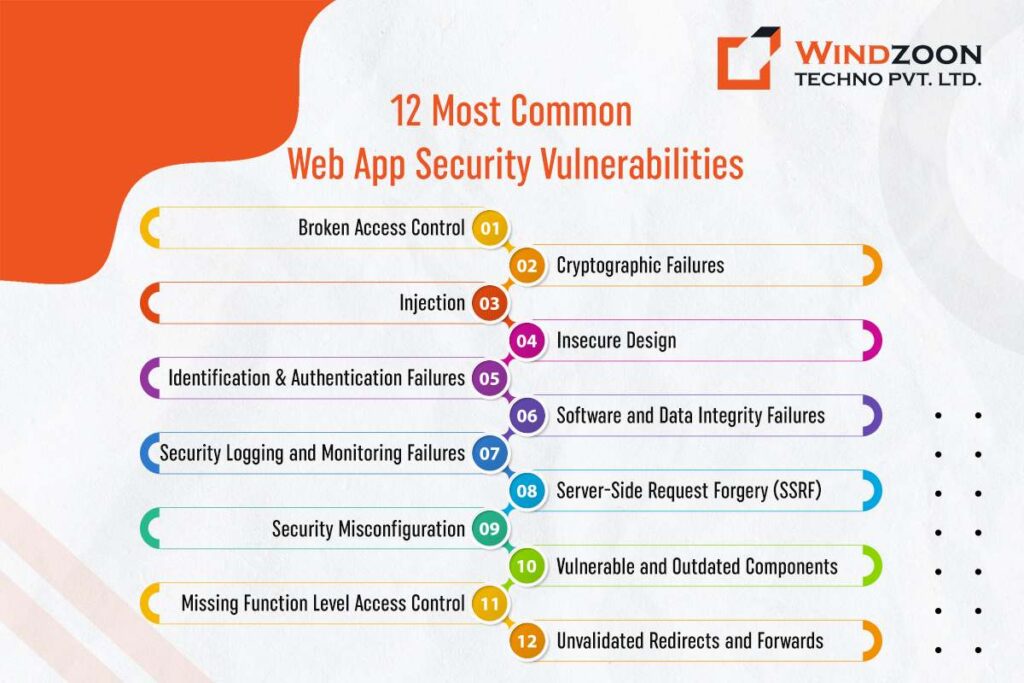
According to the Open Web Application Security Project (OWASP), the ten most common vulnerabilities in web applications are:

1. Broken Access Control

  • Here, a hacker accesses a user’s profile by compromising their login details.
  • This can often be prevented through multi-factor authentication.

2. Cryptographic Failures

  • Previously known as ‘Sensitive Data Exposure’. Here, hackers can easily access unencrypted data.
  • Moreover, it involves failing to protect sensitive data, like financial, healthcare, or PII, with adequate encryption.

3. Injection

  • Attackers can send malicious data as part of a command or query, tricking the application into executing unintended commands or accessing unauthorized data.
  • Common examples include SQL, NoSQL, and LDAP injection.

4. Insecure Design

  • This is a broad category that includes risks related to design flaws in software.
  • It emphasizes the need for a threat modelling process and secure design patterns and principles.

5. Identification and Authentication Failures

  • It happens when session management and authentication features are implemented improperly.
  • Attackers can compromise passwords, keys, and session tokens, or exploit other flaws to assume users’ identities.

6. Software and Data Integrity Failures

  • This vulnerability arises when assumptions regarding software updates, critical data, and CI/CD pipelines are not verified.
  • It can lead to unauthorized access or modification of software and data.

7. Security Logging and Monitoring Failures

  • Insufficient logging and monitoring, coupled with ineffective or non-existent integration with incident response, allow attackers to further attack systems without detection.

8. Server-Side Request Forgery (SSRF)

  • The server can be tricked into making outbound requests to unintended services, allowing attackers to interact with these services.

9. Security Misconfiguration

  • This involves incorrect configuration settings in software and systems, leaving them vulnerable to attacks. For example, issues like flaws that haven’t been patched, unused pages, unprotected files or directories, outdated software, and running software in debug mode.

10. Vulnerable and Outdated Components

  • Using components (mostly third-party components) with known vulnerabilities or failing to update components can leave an application vulnerable to attacks.

11. Missing Function Level Access Control

  • If server-side authorization is poorly configured, nonexistent, or compromised, it leaves your app’s backend vulnerable to attacks.

12. Unvalidated Redirects and Forwards

  • Hackers can redirect users to malicious websites to steal their data.

Most of these vulnerabilities stem from issues with authentication, flaws in user input, and data validation. Therefore, protecting your authentication and validation mechanisms is crucial. Any web app development service should include a comprehensive security strategy, regular security checks during and after development, and adherence to best practices in web security.

Now, let’s get to know about some of the best web app security best practices for 2024.

Web Application Security Best Practices
significant-web-app-security-best-practices

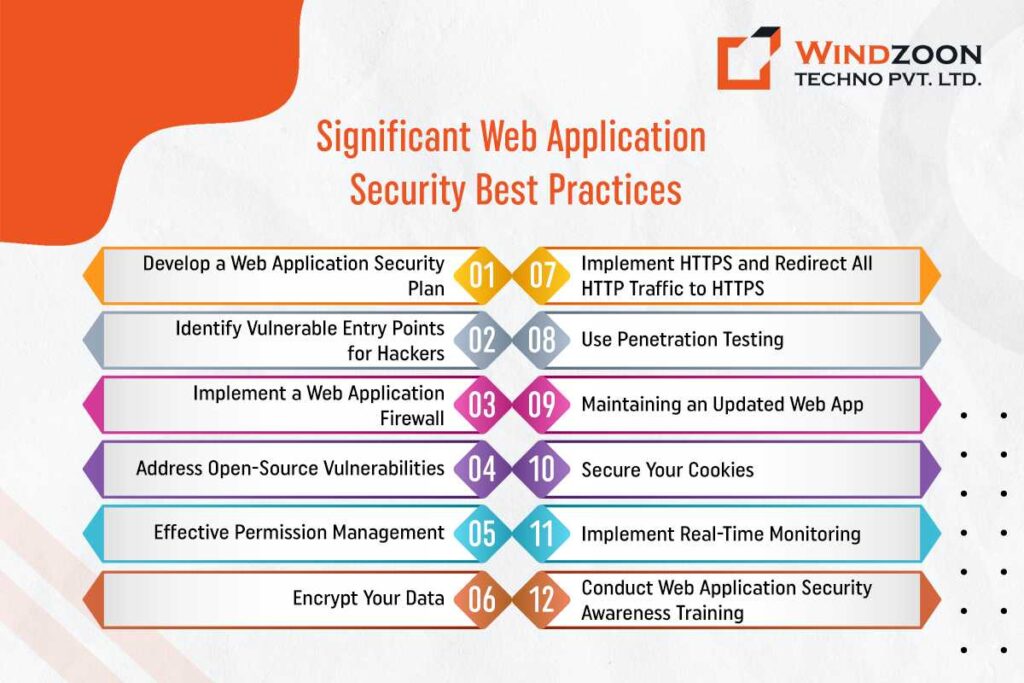
Following are the best web app security practices every business should follow in 2024.

1. Develop a Web Application Security Plan

To effectively adhere to web application security best practices, having a structured plan is essential. Many companies fail to manage web security properly due to a lack of organization, leading to minimal results.

Collaborate with your IT security team or professional web app development company to create a comprehensive and executable plan for web application security. This plan should clearly define the objectives of your organization, such as improving compliance or strengthening brand protection.

The plan should also prioritize which applications need immediate security measures and outline the methods for testing these applications, whether it be manually, via cloud solutions, on-site software, managed service providers, or other strategies.

Each organization’s security plan will be unique, and tailored to its specific infrastructure. For larger organizations, the plan should specify key personnel responsible for upholding web application security practices continuously.

Additionally, it’s important to consider and include the costs associated with these security measures in your plan. This foresight ensures that your organization is prepared and resourced to maintain high standards of web application security.

2. Identify Vulnerable Entry Points for Hackers

A crucial aspect of web application security is identifying potential entry points that hackers might exploit. Certain parts of your software are inherently more susceptible to attacks, particularly those that are customer-facing and handle data transactions. To strategically focus your security efforts, it’s advisable to categorize the features of your software into modules based on their security sensitivity:

Critical Modules: These include the most vulnerable aspects of your application that are directly exposed to the internet and are, therefore, prime targets for hackers. Critical modules often comprise customer-facing features like login screens and checkout pages.

Serious Modules: These modules are integral parts of your software where sensitive company or user information is stored. Although they might not be directly exposed to the internet, their protection is crucial due to the valuable data they hold.

Normal Modules: While these modules may not have direct access to sensitive data within your application, they still require regular monitoring and security checks. Ensuring these modules are secure is also important for overall application integrity.

Understanding and categorizing these modules help in prioritizing security measures and focusing resources where they are most needed to safeguard your web application effectively.

3. Implement a Web Application Firewall

A key practice in web app security is the use of web application firewalls (WAFs). A WAF acts as a barrier for HTTP traffic between a server and a client, effectively filtering out and blocking malicious requests that could compromise your databases.

Firewalls are highly regarded for safeguarding software at the network’s entry points. They scrutinize all incoming traffic and halt any activities that appear suspicious. One of the advantages of WAFs is that they do not require developers to modify the source code, making them a user-friendly security solution.

However, it’s important to note that traditional firewalls have limitations, particularly in identifying certain types of cyber attacks. For enhanced security, it’s advisable to use advanced WAFs. These are equipped to shield your application from more sophisticated threats like SQL injection attacks and cross-site scripting, ensuring a higher level of protection for your web applications.

4. Address Open-Source Vulnerabilities

Many web applications utilize open-source components due to their cost-effectiveness and functionality. However, these components can bring vulnerabilities into your application. It’s essential to regularly scan these open-source components for any known security flaws.

There are many tools available that can automatically detect vulnerabilities in your software’s dependencies. Once identified, these vulnerabilities must be promptly addressed, either by updating the component, applying a patch, or replacing it with a more secure alternative.

Managing the security of open-source components is a continuous process, as new vulnerabilities are discovered regularly.

5. Effective Permission Management

Ensuring data security in your organization crucially involves controlling user access to sensitive information. It’s essential to understand that not every employee needs access to all data. Over-privileging users can lead to increased risks of unauthorized access, data breaches, and internal threats.

Implementing differentiated access levels within your system offers two key benefits. Firstly, it limits the damage if an external party compromises an employee’s credentials, as they can only access areas permitted by those credentials.

Secondly, in case an employee poses a risk to your company, restricted access ensures they cannot access all sensitive data on their own. A best practice in web application security includes revoking access rights of former employees and updating passwords whenever a developer or staff member departs, further safeguarding your organization’s data integrity.

6. Encrypt Your Data

Encryption is a critical method for encoding information, primarily used to protect it from unauthorized access. While encryption does not directly prevent data interference during transmission, it ensures that the data becomes unintelligible to anyone who isn’t authorized to view it.

Not only is encryption vital for securing data in transit, such as information being sent over the internet, but it also plays a key role in protecting data at rest. This includes data stored in databases or other storage mediums, where it remains shielded from unauthorized access.

Encrypting the data exchanged with Web Services and APIs is just as important as establishing a solid authentication strategy for access control. Without encryption, web services are highly vulnerable. Hackers, who are becoming increasingly skilled at using sophisticated algorithms, can easily locate and exploit these vulnerabilities.

Therefore, implementing robust encryption measures is not just a precaution but a necessity. It is indispensable for safeguarding against unauthorized access and ensuring the overall security of data, whether in transit or at rest.

7. Implement HTTPS and Redirect All HTTP Traffic to HTTPS

In addition to the encryption methods discussed earlier, encrypting information at the service level is also crucial. This is commonly achieved through HTTPS (SSL or Secure Sockets Layer).

SSL technology creates a secure, encrypted connection between a web server and a browser. It ensures the privacy of data exchanged between the browser and the server, making it essential for the protection of online transactions. Used by millions of websites, SSL is the industry standard for securing online interactions.

Moreover, it’s recommended to uniformly implement SSL across your entire website. This comprehensive approach not only safeguards your site but also prevents potential issues with resources like stylesheets and JavaScript files, which may encounter problems if not accessed via HTTPS through an SSL-encrypted connection.

8. Use Penetration Testing

Penetration testing is a crucial and advanced aspect of security testing. It simulates near real-world scenarios where a Quality Assurance (QA) specialist assumes the role of a hacker. The specialist attempts to breach the system through various means, ranging from sophisticated programming techniques to physical breaches.

The primary advantage of penetration testing is its effectiveness in uncovering a wide range of vulnerabilities. The process culminates in a comprehensive report that not only serves as a foundation for future security checks but also acts as a reference to pinpoint the vulnerabilities responsible for any security breaches. Penetration testing encompasses several techniques to ensure all potential threat scenarios are evaluated.

Given that software, especially a medium-complexity web app can have numerous potential entry points for hackers — including cloud access — penetration testing becomes indispensable. It enables a QA specialist to explore numerous scenarios, attempting to breach the system with as much knowledge as an actual hacker would have.

If your organization does not have in-house penetration testing expertise, you should hire web app developers or testers from a reputed web app development firm. A third-party expert does more than just test your web application; they conduct a comprehensive security audit while performing the penetration testing. Having an outsider audit your software often reveals overlooked flaws, providing valuable insights for you and your team.

9. Maintaining an Updated Web App

Updating your web application encompasses more than just the software itself; it includes all third-party services and libraries within its infrastructure. Hackers often exploit these third-party components to breach the main system, so it’s crucial to be aware of these vulnerabilities. Your web app’s documentation can be a key resource in this process.

A common challenge is the reluctance of developers to update third-party services, due to fears of compatibility issues with new versions. This hesitation, however, can lead to significant security risks.

To manage updates effectively, review your documentation to identify the libraries you’re using. Eliminate any that don’t contribute significantly to your app and prioritize updating the rest. Developing an update strategy is essential, as updating libraries can be more complex than anticipated.

Ensure that you’re using only the necessary libraries and always opt for the latest stable versions to avoid potential vulnerabilities in any framework or library. This approach is critical for keeping your web application secure and functional.

10. Secure Your Cookies

Cookies are essential for most websites, benefiting both website owners and users. They help websites gather user information for more insightful analytics, while users enjoy a faster, more personalized browsing experience. However, cookies can also be a gateway for hackers, so ensuring their security is vital.

There are three key aspects to consider for cookie security:

Information Stored in Cookies: Be cautious about the type of data stored in cookies. Avoid storing sensitive information like passwords, as hackers can easily access them and use them to infiltrate your system through another user’s account.

Expiration Date: Set a reasonable lifespan for your cookies. They shouldn’t last indefinitely. Ideally, cookies should expire in less than a month. Regularly requesting user authorization, perhaps every two weeks enhances your web app’s security and ensures that each access is by an authorized user.

Encryption: Encrypt all data stored in cookies. This step adds an extra layer of security, making the information much harder for unauthorized parties to decipher.

Implementing these procedures will dramatically improve the security of your online application, protecting both your data and the privacy of your users.

11. Implement Real-Time Monitoring

The Ponemon Institute reveals that it takes companies an average of six months to detect a major security breach. For businesses handling large volumes of sensitive data, promptly identifying and addressing breaches is paramount. Utilizing specialized monitoring software can track all activities on employee workstations. This surveillance ensures adherence to security protocols.

The reason for doing this is that the Chief Executive reports that 90% of security breaches stem from human error. By monitoring employee actions, businesses can swiftly pinpoint which specific action on which computer led to a system compromise.

It becomes possible because all activities are systematically recorded, allowing for quick identification and rectification of security lapses. Hence, implementing such real-time monitoring is a crucial step in enhancing your organization’s cybersecurity measures.

12. Conduct Web Application Security Awareness Training

In many businesses, a comprehensive understanding of web application security is often limited to a few individuals, while the majority of employees may have only a basic awareness. This limited knowledge can lead to a lack of vigilance and an inability to recognize potential security risks.

To address this, educating your entire staff about web application security is crucial. This approach empowers employees to identify vulnerabilities proactively. Essentially, equipping everyone with knowledge about web application security transforms your workforce into an active part of the solution, enhancing the overall security framework.

Consider hiring a web application security specialist to provide awareness training for your employees. By ensuring that everyone is informed and understands how to respond to security threats or vulnerabilities, you significantly bolster your web application security measures.

Conclusion

To safeguard your bespoke web application development process, you should use all available security measures. We at Windzoon value security above all else, and our skilful developers safeguard every tech solution by including tried-and-true security procedures.

As an established firm, we have a solid reputation in the market for providing creative solutions that are fully secured to prevent unauthorized access.

To avail of our custom web app development services, get in touch with us to get a quote.

Know The Best 15 Mobile App Design Practices Of 2023

We all live in a world where smartphones & mobile apps are ruling the world. We use them to communicate, watch TV, create memories, pay bills, stay updated on the latest news, operate businesses, and so on.

Right now, the mobile app design and development market is booming. However, there is a lot of rivalry and rising user expectations. Users nowadays expect a product that works well and has an appealing interface and a positive user experience.

Because 90% of users have reported stopping using an app owing to poor performance, and 86% deleted or uninstalled at least one mobile app due to performance issues. If you don’t want your mobile app to count in this category, hire a mobile app development company that specializes in creating unique mobile apps.

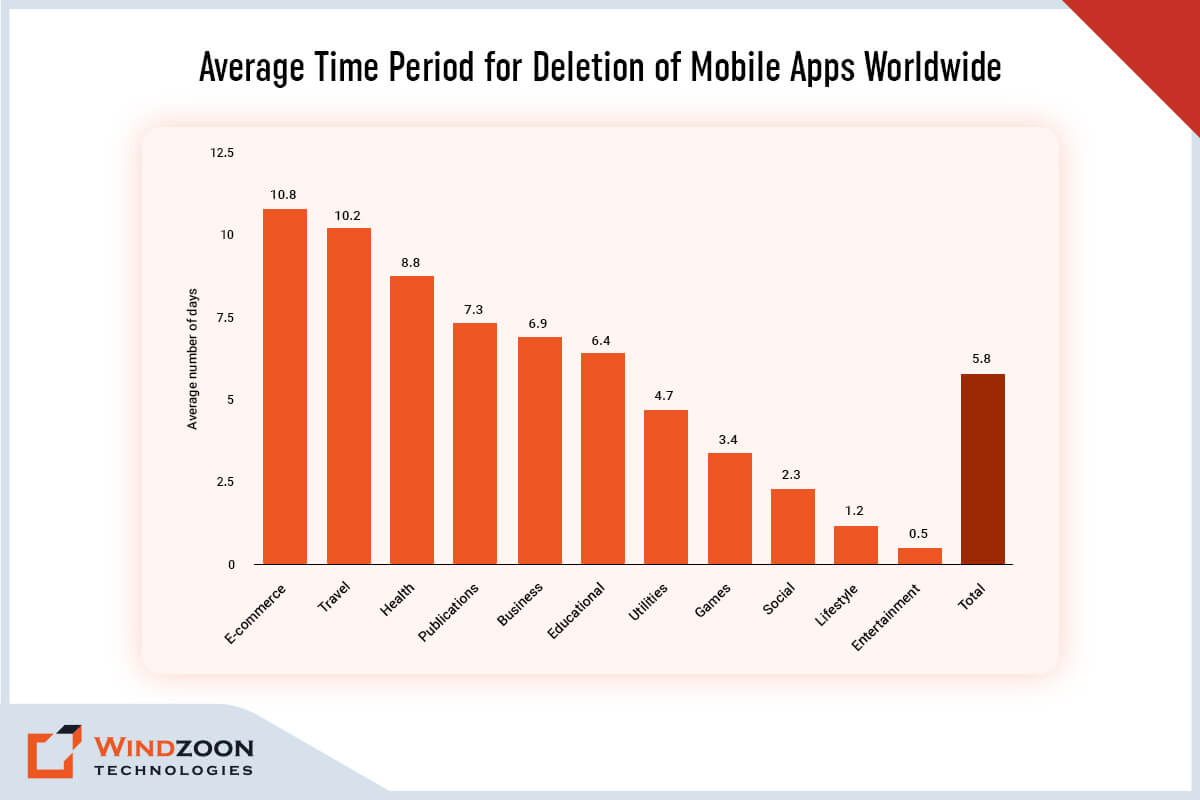
Average Time Period for Deletion of Mobile Apps Worldwide

Because according to a 2018 study, mobile apps are uninstalled 5.8 days after they were last used. So, how do you prevent yours from ending up in the digital trash? You can do this by following the below-mentioned best mobile app design practices in 2023.

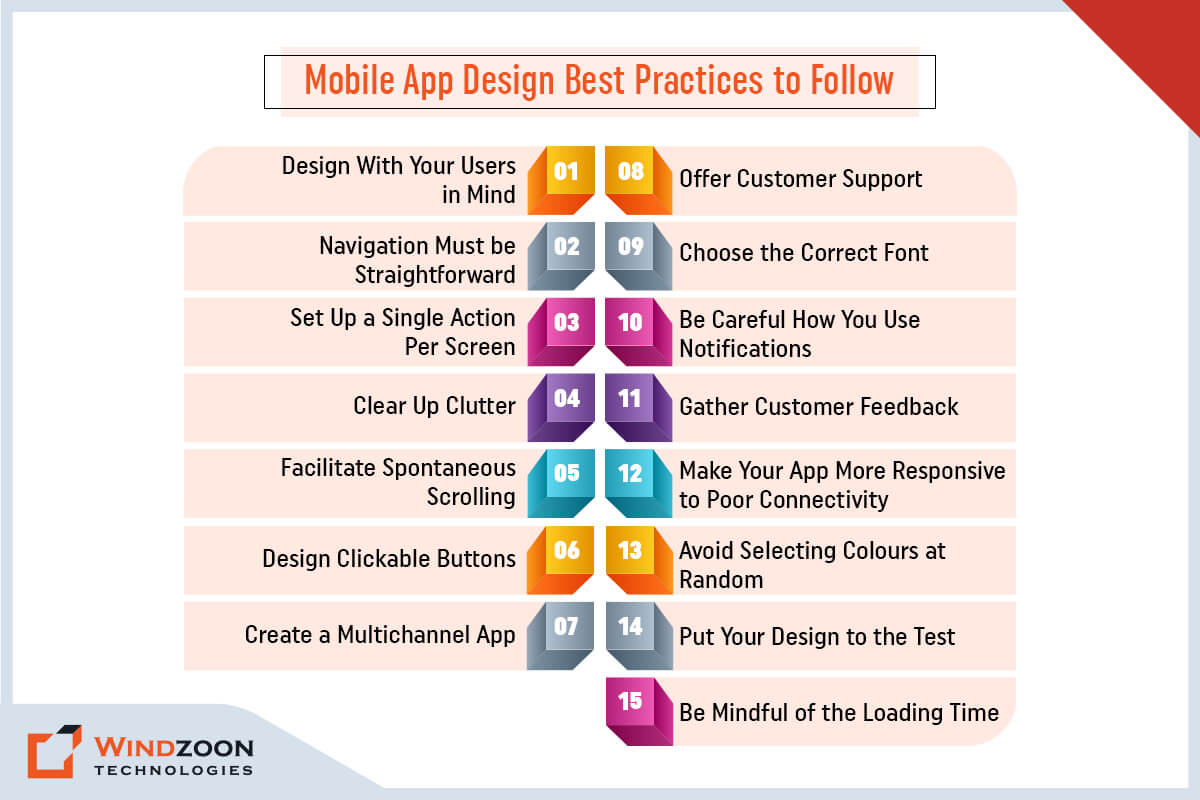
Top 15 Mobile App Design Practices You Should Be Aware Of In 2023

Mobile App Design Best Practices to Follow

1. Design With Your Users in Mind

Best practices for mobile app design start with accessibility. To create a design that works for everyone, you must consider every conceivable use case. Users can hold their smartphones in either their left or right hand or even both hands.

The best app designs offer a simple layout with easy access to the most crucial interface elements regardless of how users hold their smartphones.

Place buttons and other components carefully away from the screen’s top and bottom corners. Because these are the most difficult spots to reach, making it challenging for users to use the app.

If your users cannot find your unique content and features, then they are useless. It would be beneficial if you designed appealing and simple navigation.

Use simple items to locate so that consumers can move between screens or back without difficulty. Make sure to plan the navigation menu to take up as little screen space as possible.

Read More: Mobile App Development Trends You Should Consider

3. Set Up a Single Action Per Screen

The smartphone screen is much smaller than the desktop screen, which causes many challenges for UX designers. Users become overwhelmed when adding a few more items to the screen.

The best course of action is to break the procedure down into manageable steps and give each one its own screen.

For instance, if you are creating an app for cab booking, you can divide the process into the sign-up process, choosing a location, choosing appropriate rides, and so on. To make the procedure more user-friendly, each action should be separated onto its own screen.

4. Clear Up Clutter

In the world of mobile UI/UX design, minimalism is always a trending option. It is not difficult to construct a simple approach. You should avoid overcrowding displays with content and interface elements since customers look for usefulness and ease of use. Strike a balance between exceptional functionality and a simple design for better results.

It is not required to present every piece of information on the interface. Organize your content so that it gives the user a clear overview of the features that are offered. And keep the screen as clear and clutter-free as possible.

5. Facilitate Spontaneous Scrolling

Use a horizontal scroll to browse a product catalog or display facts on a large visual area that wouldn’t fit on the screen. Give a visual cue and indicate the scrolling direction if additional content is available.

6. Design Clickable Buttons

One of the most aggravating things that can happen when using an app is tapping a button and missing it. It is impossible for users to interact with an app when the touch controls are too small. The desire to conserve space may drive UX designers to reduce the size of the buttons. However, it will have a negative impact on the user experience.

If you wish to stick to the best app design guidelines, make buttons 44 x 44 pt or 48 x 48 dp. Still, each operating system has its own suggestions, so be sure to read them.

7. Create a Multichannel App

Designers must design a multichannel app to make that transition smooth for users who frequently toggle between apps and desktops. For instance, customers who shop for clothing online may first add items to their carts on their phones before completing the transaction on computers. Regardless of the device, ensure the same goods are saved in their cart.

8. Offer Customer Support

Make careful to respond to user concerns whenever they arise. Use various techniques to help them navigate your app, such as chatbots and live chats, in-app native FAQs, and click-to-call client support buttons.

9. Choose the Correct Font

Choosing the appropriate font is just as important as developing the visual elements of your device solution. Picking the wrong fonts might damage your design. Therefore, choose a font that reads well in various sizes and weights.

Apple and Google, two titans of technology, advise keeping the font size at 12 points. It enables people to read the information on the screen without having to zoom in. Additionally, it enables them to keep their sight distance for their device at a comfortable level.

10. Be Careful How You Use Notifications

Notifications are one of the most effective methods for retaining users, as they provide timely reminders to return to an app and interact with content. However, it is critical to consider the frequency and timing of your push alerts and the content they provide. Receiving too many pings or unpredictable bursts may cause consumers to disable notifications entirely.

Thus, keep notifications contextual when you display them. Add easy-to-access granular notification settings so consumers can adjust notifications to their needs.

11. Gather Customer Feedback

As a designer, your primary goal is to give users a positive UX. Additionally, you can get user feedback on your ideas to confirm their authenticity. Genuine feedback will assist you in determining what works and what does not.

All this information will assist you in determining what changes to make. Using analytics in your app will provide you with all of the data you need to improve the user experience.

12. Make Your App More Responsive to Poor Connectivity

Any app not designed to handle the most crucial tasks while connected to a slow network is mediocre. For instance, if users are booking tickets or making e-commerce purchases, ensure that their actions are preserved and subsequently executed as soon as the connection is restored.

If your app needs connectivity at all times, tell users they must have a connection to move forward rather than just showing them an unending spinner or nothing. Users that worry about being doubly charged will eventually lose faith in your app.

13. Avoid Selecting Colours at Random

Your app’s design features, including the colour aspects, must serve a function. Avoid using colours that are overly vivid, contrasted, or challenging to read. The colours shouldn’t be too intense to damage someone’s eyes.

Use typical colour associations for your buttons, as we previously covered, keeping things simple. For instance, buttons that indicate “yes” or “continue” should be green, whereas “no” and “exit” buttons should be red.

Reversing typical colour associations will only confuse the user. And you will see a decline in your conversion rates as a result.

Read More: Top Mobile App Development Frameworks to Build Apps

14. Put Your Design to the Test

You must test your app regularly to ensure that the design and functionality work as intended.

Even though you may believe it’s fantastic, you must acknowledge that your opinion is prejudiced because you were the one who created it.

You must obtain other people’s opinions. From our experience, it is advisable to outsource testing to any professional mobile app development services provider linked with app design, development, and testing. In this manner, the criticism comes from a wholly unbiased viewpoint.

Or you can test the design with beta testers or focus groups. Check the feedback you receive. Concentrate on any design-related errors or defects. Make modifications when difficulties arise.

15. Be Mindful of the Loading Time

Speed is likely the main factor behind customers uninstalling your app out of the many other factors. According to surveys, 63% of users would stop using an app if the loading time was longer than five seconds.

Undoubtedly, that is a very minimum period.

A workable solution here is to employ design strategies to offer the perception of speed or, at the absolute least, mask any delays.

The simplest strategy is to use an interesting loading screen. The notion is that users should have something interesting or informative to look at while waiting.

Conclusion

It’s difficult to create a fantastic on-demand application. However, that doesn’t imply that succeeding is impossible. If you’re building a complex application, it’s critical to have the top mobile app design practices in mind and to be able to discuss with professionals all the issues.

And Windzoon is an excellent choice if you’re seeking a professional to help you with your app design project. Hire mobile app developers and designers from us with more than ten years of experience providing a wide range of app development and design services.

To use our services or learn more about us, get a quote.

8 Top Mobile App Development Frameworks to Build Top Apps in 2023

Who would have predicted two decades ago that we would be able to manage most of our daily activities with just a palm-sized smartphone? Most likely not. But it turns out true. Our lives have become incredibly easy and convenient thanks to various smartphone apps and the internet.

However, this growing reliance on applications has considerably expanded the market for app development. While there are many frameworks and libraries available for creating mobile apps. You need a framework that will enable you to deploy fresh concepts and keep up with the competitors in this rapidly shifting ecosystem.

As a renowned mobile app development services provider, we have suggested some leading mobile app development frameworks in this blog. These frameworks will elevate your app design and development experience to the next level in 2023.

However, before we get to know about these frameworks, let’s learn some basic information about the mobile framework.

What Exactly Is a Mobile Development Framework?

Mobile app development frameworks are software libraries or sets meant to aid in the creation of mobile apps for certain contexts. You can think of them as the skeletons supporting the various connecting components of mobile development.

Frameworks for mobile development are crucial because they enable developers to avoid starting from scratch, which speeds up project development. Additionally, frameworks lessen the need for complicated programming languages.

Frameworks for developing mobile applications include React Native, Swiftic, Java, HTML, and many others. These frameworks are divided into three categories: Native, Web, and Hybrid. Each sort of mobile app framework has specific uses and situations in which it excels.

Different Mobile App Development Frameworks

Frameworks for creating mobile applications can be divided into three categories:

1. Native Apps

These frameworks are used to create native mobile applications for particular platforms. Typically, they are created to meet the requirements of a particular operating system (OS), such as Windows, iOS, or Android.

2. Web Apps

It is a framework that makes it easier to develop slick web applications for web API, web servers, and web service interfaces. It is referred to as a framework or platform for creating various web applications.

3. Cross-Platform Apps

Cross-platform mobile apps can be created using several frameworks that are specifically designed for developing hybrid apps. It is equipped with both native and web development framework capabilities.

Before learn about the top mobile app development framework, you can also read 14 mobile app development trends you should consider in 2023

Now, Let’s learn about the top mobile app development framework to use in 2023

8 Top-Notch Mobile App Development Frameworks to Use in 2023

Top-Notch Mobile App Development Frameworks

Top-Notch Mobile App Development Frameworks

1. Flutter Framework

Flutter is Google’s UI toolkit that enables the creation of aesthetically pleasing, native-like applications for various operating systems and devices using a single codebase. This open-source mobile app SDK makes use of widgets to create responsive mobile applications. Additionally, it has the 2D graphics engine Skia, which enables developers to generate a fully native feel as the client requested.

Key Features of Flutter Framework

  • Hot reloading
  • Google Firebase assistance
  • Flexible User Interface
  • Integrated material design
  • Integrated Cupertino (iOS-style) widgets
  • Rich motion APIs
  • It supports both Android and iOS
  • Powerful widget support

Apps Created Using Flutter Framework

  • Google Ads
  • Cryptograph
  • Reflectly
  • Alibaba’s Xianyu

2. React Native Framework

In 2018, Facebook released React Native, a JavaScript-based app development framework. This framework is in high demand among app developers worldwide, with around 42% of mobile app programmers using it on a regular basis. The platform’s popularity can be attributed to the fact that it enables developers to build mobile apps with a native appearance and feel for both iOS and Android devices. However, to get the most out of this framework it is advisable to take help from a competent react native app development company to build an application.

Key Features of React Native Framework

  • Live reloading to view the most recent code modifications
  • It works with both iOS and Android.
  • Reusable components
  • capable of working with external plugins
  • A single code base for all platforms
  • Component-based GUI creation for front-end apps
  • Declarative API for Predictive User Interface
  • NPM for installation

Apps Created Using React Native Framework

  • Tesla
  • Skype
  • Airbnb
  • Amazon Prime

3. Xamarin Framework

Microsoft’s Xamaerin is a cross-platform, open-source mobile application framework. This framework enables the creation of world-class mobile applications using programming languages like C# and Net. A large community that supports the framework works with the developers to develop environments with diverse components, APIs, backends, and other features by using various tools, programming languages, and libraries.

Key Features of Xamarin Framework

  • A single codebase
  • Android SDK manager
  • Application Loader
  • Google emulator manager
  • Storyboard files
  • Diagnostic tools
  • compatible with a multitude of devices
  • Flexible backend architecture

Apps Created Using Xamarin Framework 

  • The World Bank
  • UPS mobile app
  • Alaska Airlines
  • Azure mobile app

4. Apache Cordova Framework

Apache Cordova, formerly known as PhoneGap, is a well-known technology platform that developers use to create mobile apps. It is an open-source framework for creating apps that makes use of HTML5, CSS3, and JavaScript. This framework basically serves as a container that successfully aligns online applications with native mobile functionality.

Key Feature of Apache Cordova Framework

  • Rapid prototyping deployment
  • Integrates WebView with native app components
  • Utilize device-level APIs.
  • A single source of code
  • Command Line Interface (CLI)
  • Plugins that integrate smartphone hardware features
  • Third-party app management tools

Apps Created Using Apache Cordova Framework

  • Localeur
  • Untappd
  • SparkChess

5. Ionic Framework

Ionic is another app framework that has garnered popularity among the developer community. It is an open-source, AngularJS-based platform that enables the development of powerful web, native, and hybrid apps using CSS, JavaScript, and HTML. Ionic apps can be successfully published across different app stores and deployed on all available devices using Cordova or Capacitor.

Key Features of Ionic Framework

  • Lazy Loading
  • Ion-Ripple Effect
  • Attractive UI components
  • Live reloading in the emulator or browser
  • Ion-Searchbar
  • Shorter time to development
  • Strong and stable development environment
  • Complete control over the creation of apps
  • An active developer community

Apps Created Using Ionic Framework

  • Firstly
  • ChefSteps
  • DieselOn
  • Market Watch
  • McLaren Automotive
  • GE Transportation

6. Framework 7

Framework7 is one of the popular open-source frameworks that are simple to learn and utilize. It enables you to create web, desktop, and mobile applications with a native appearance and feel. Additionally, it is a crucial prototyping tool for displaying functional app prototypes as quickly as possible. Framework7 has a fantastic collection of pre-built UI components and widgets, including dialogue boxes, pop-up windows, action sheets, list views, tabs, side panels, layout grids, and many more.

Key Features of Framework 7

  • Integrated grid layout, the FastClick library, and the Helper libraries
  • Page animation with high-performance
  • Easy-to-use JS API and adaptable router API
  • Pre-styled components and widgets
  • Simple and well-known jQuery syntax
  • It can be used with React, Angular, and other frameworks.
  • Default UI components
  • Enables support for Svelte, React, and Vue.js

Apps Created Using Framework 7

  • My Shopper
  • AvtarGen
  • GoDial
  • PricePoint
  • Rabbit Mail

7. Kotlin Multiplatform Mobile (KMM)

It is an SDK that makes it simple to create cross-platform mobile apps. With this cross-platform technology, which is based on a single code base, you can create high-end apps that are prepared to run on both iOS and Android devices. This implies that you only need to develop platform-specific code for specific use situations, such as the implementation of a native UI.

Key Features of Kotlin Framework

  • High performance
  • Kotlin Multiplatform Mobile Plugin for Android Studio
  • Integration of Cocoapods
  • Xcode 13 will be used to launch an iOS device.
  • Debug type evaluation in Kotlin/Native
  • Modern tools and language
  • A very active community

Apps Created Using Kotlin Multiplatform Mobile

  • VMware
  • Space by Jetbrains
  • PlanGrid

8. Swiftic Framework

Swiftic was created as a user-friendly framework for mobile app development. And it doesn’t need any special code to use its key functions. In fact, Swiftic allows novice developers to create iOS apps quickly and easily without having to write a lot of code. Swiftic can even compete with the top and finest framework for developing mobile apps on this list when it comes to the user interface.

Key Features of Swiftic Framework

  • Remarkable user experience
  • Support for third-party integration
  • Extensive analytics
  • Supports in application promotion and publication
  • Helps in creating mobile web stores
  • Insightful push notifications
  • Beginner-friendly and user-friendly
  • Does not require in-depth expertise in coding or app development

Apps Created Using Swiftic Framework

  • Royal Bagel Co.
  • Lakeside Fitness
  • Remix Coffee Co.
  • The Gentlemen’s Barber
  • Spa Café

Conclusion

Among all of the choices available on the market, picking the best mobile app development framework is a crucial step. However, you can simplify it by being aware of your final objectives and what you hope to achieve with your selection. We anticipate that after reading this post, you’ll be better able to decide which mobile app development framework is appropriate for your endeavor.

If you select an appropriate mobile development framework, your business can succeed. However, if you are unsure of which framework will work best for your company, you can enlist the help of a specialist to verify your hypothesis.

Windzoon is a fantastic option if you’re looking for a specialist to assist you with your app development project. Hire mobile app developers and designers from us who have over ten years of expertise delivering a wide range of app development and design services.

Visit wzadmin.windzoon.in/ to request a quote or to discover more about us.

14 Inspiring Mobile App Development Trends You Should Consider in 2023

The global pandemic has hastened the shift toward mobile-first solutions in all industries. As more modern customers use their smartphones to pay bills, order items, connect with coworkers, and make new friends, the demand for high-quality mobile apps has skyrocketed.

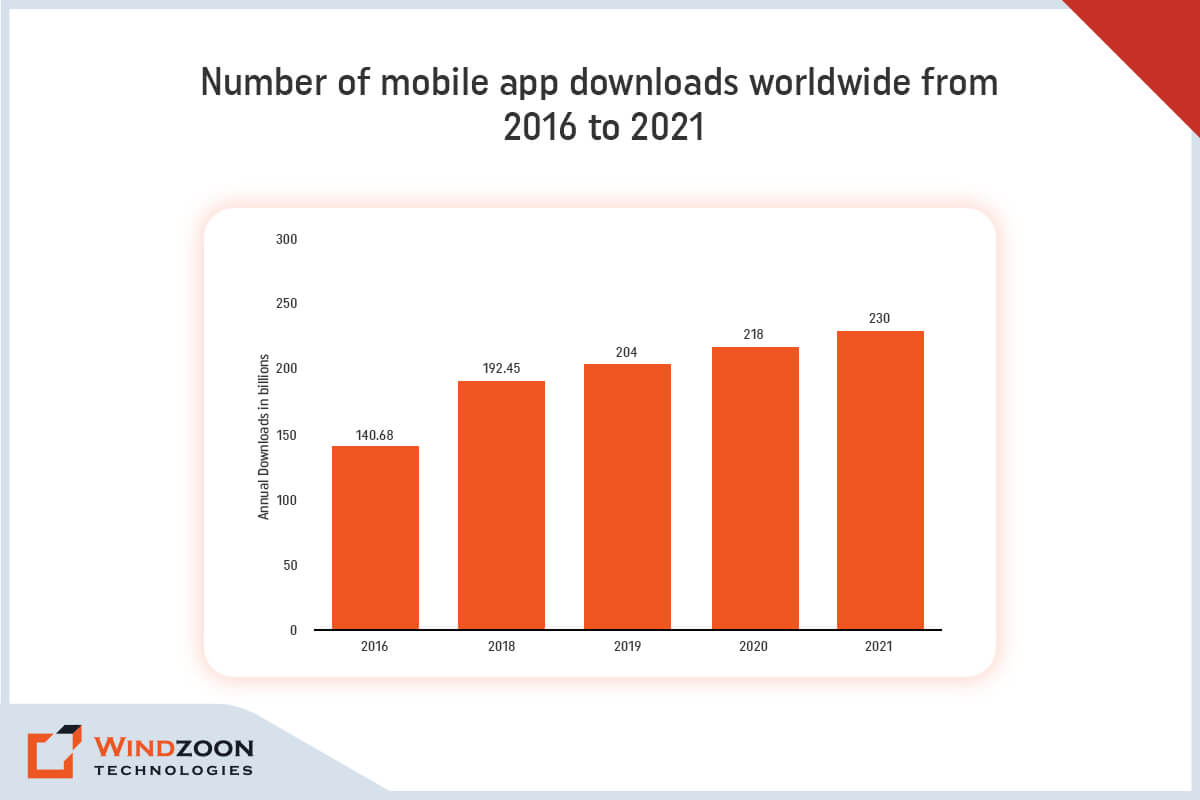
Therefore, developing a market-leading app becomes essential for both startups and established businesses. Since app downloads increase steadily each year, this is not surprising. Annual mobile app downloads were as high as 230 billion in 2021, and it is still rising. A mobile app is undoubtedly a highly lucrative project that you can undertake with the aid of any mobile app development company.

mobile app downloads worldwide

Number of mobile app downloads worldwide from 2016 to 2021

But in order for a mobile app to succeed, it must adhere to the most recent trends in mobile app development. Because if it doesn’t, the app, which seems cutting-edge now, might be considered outdated later on.

Here are some outstanding mobile app development trends for 2023 that every Indian company should be aware of.

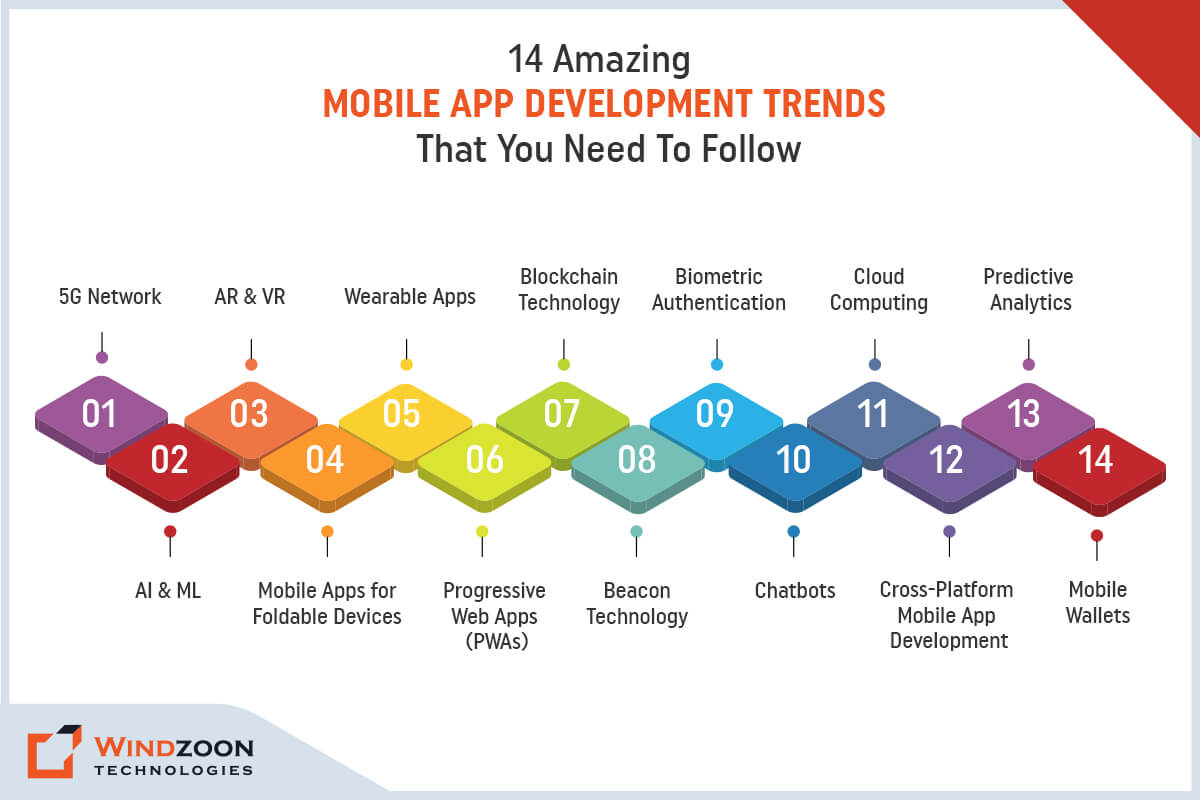
Mobile App Development Trends You Need Follow

Amazing Mobile App Development Trends You Need To Follow

1. 5G Network

The fifth generation of mobile connectivity, or 5G, is soon to arrive. It will transform the creation of mobile apps in ways we never imagined. By 2026, it’s predicted that 5 billion people will be using 5G, which is also seen as the start of the Fourth Industrial Revolution.

Unlike its predecessor, 5G has a latency of less than one millisecond. It will boost data transfer rates up to 100 GB/s.

5G will stimulate app development in areas such as the Internet of Things (IoT), augmented reality (AR) and virtual reality (VR), connected driverless vehicles, wireless health, and others. Next-generation apps will use this power and speed to accomplish things we never thought possible.

2. AI and ML

Mobile apps and systems are already using artificial intelligence and machine learning. Face App, Prisma, and other AI-powered applications have taken AI to the next level.

In 2023, AI will have a more significant impact on our daily lives. Along with current technologies, AI advancements like AI-based cameras, speech translations, and user projections will find a new home in smartphones.

Many businesses recognize the advantages of AI because it enables them to deliver top-notch services while significantly reducing operating costs.

3. AR and VR

A growing number of businesses are using augmented and virtual reality to improve the user experience of their mobile apps. In 2023, the AV/VR market is projected to reach $160 billion, a significant rise from $12 billion in 2020. And in the ensuing years, this trend is not likely to reverse itself.

Numerous apps in the market are already utilizing the power of AR/VR, including Google Maps, Ikea, Nike, and many others. So, if you want to use augmented or virtual reality to enhance your company’s offerings, the time is now.

4. Mobile Apps for Foldable Devices

Devices with folding displays are called foldable devices. It is still uncommon to use this construction technique. However, major manufacturers like Samsung, Huawei, LG, and others actively promote their first smartphones with foldable displays.

Both manufacturers and app developers can benefit from this trend. In the coming years, digital products that can be customized for special foldable screens may become very popular. At the very least, nearly all mobile applications will be equipped with the technology necessary to adapt app size and layouts to foldable screens.

5. Wearable Apps

As the market for wearable technology expands, more digital solutions are required to support electronics. Every type of wearable device, including jewelry, smart watches, and bands needs a full-featured app.

It assists in collecting the device wearer’s data, measuring and analyzing vital signs, producing advanced statistics, and more.

6. Progressive Web Apps (PWAs)

Progressive web apps are a different mobile app innovation that is anticipated to gain traction in the coming years (PWA). These applications serve as a user interface for websites and native mobile applications.

PWAs are less dependent on the network, take up less space, and load faster. Even though they aren’t a brand-new development trend for mobile apps, they are here to stay and help companies achieve their goals at a reasonable cost.

Progressive web apps are more accessible and simple to design than traditional apps. That is because they are simply web pages with app functionality. PWAs are interactive, updated automatically, and very flexible.

7. Blockchain Technology

According to current trends in mobile app development, blockchain technology is all about better user experience, data privacy, and security.

Blockchain can be used for various purposes, including storing passwords on decentralized networks, using smart contracts to feature in-app transactions between users, blockchain gaming or metaverses, and more.

With the proliferation of blockchain technology and mobile banking, more and more apps will incorporate blockchain solutions.

8. Beacon Technology

Beacons are one of the most recent innovations in proximity marketing and location technology. They are discreet wireless transmitters that communicate with nearby smart devices using low-energy Bluetooth technology. And that way, they link to smart devices and transmit data, facilitating and improving location-based interaction and search.

It makes purchasing goods and services simple and convenient. Hence, many businesses are now using beacon trends to promote their products and services. Additionally, it helps them to learn more about their customers’ purchasing habits and preferences. And enables businesses to make shopping more personalized.

9. Biometric Authentication

App development trends have become more stringent and significant in terms of security. As a result, biometric authentication has become an essential data protection feature for every modern app. It intensified the security several times, allowing for quick authentication and operation.

Face recognition, fingerprint scanning, and computer vision are all examples of this technology. Such a trend has the potential to significantly improve the security of users’ data and money.

10. Chatbots

Chatbots are transforming how companies interact with their customers. In the past, companies used mobile calls to reach out to their clients (which was time-consuming).

Chatbots are a form of communication that aids businesses in meeting customer expectations. Here are some popular chatbot options:

  • Google Assistant
  • Alexa
  • Siri

Chatbots make it easier and faster to respond to customer requests. This technology is widely used in various applications, including online shopping, transportation, food delivery, etc.

11. Cloud Computing

As cloud computing gains popularity, developers can use the strength of the cloud to improve mobile apps. With this innovation, mobile apps can complete complex tasks and obtain all the data they require from the cloud. This enhances the functionality and speeds up the app.

12. Cross-Platform Mobile App Development

The development of cross-platform apps will be one of the most popular mobile app trends in 2023. It enables you to create your app once and release it on various platforms, such as iOS and Android.

Cross-platform development not only saves time and money but also guarantees that your app will look and feel the same on all devices.

13. Predictive Analytics

Predictive analytics includes data modeling, artificial intelligence, machine learning, and data mining. This trend effectively uses data analysis to assist businesses in making future-ready decisions.

It can detect trends and opportunities, improve business processes, and forecast customer behavior. Businesses can improve their chances of success by employing this trend early in developing their mobile applications.

14. Mobile Wallets

Customers are particularly fond of mobile wallets. People prefer not to frequently pay with cash or type account or card information as the economies of various countries become more digital. For better throughput, they prefer to pay using integrated digital payment.

By integrating popular payment gateways with mobile wallets, the payment process is sped up and simplified.

A growing number of mobile wallets have gained popularity, including Google Pay, PhonePe, Amazon Pay, Paytm, and others. Because the industry has not yet reached saturation, there is still an opportunity for future growth.

Conclusion

The mobile app industry is expanding and evolving at a rapid pace. How can you ensure your app stands out from the millions of others on the market and offers what users want? The answer is simple: by using the most recent trends in app development when creating your application.

And if you require assistance in putting these trends into action, please do not hesitate to contact us. As a preeminent Mobile App Development Company, Windzoon offers top-notch mobile application development services at the most affordable prices.

Hire Mobile App Developers from us to create a bespoke application tailored to your business needs and the latest industry trends.

For more information about our services or to get a quote, go to wzadmin.windzoon.in/.