Top 14 Features to Use in eCommerce WordPress Development

According to Statista’s most recent estimate, global e-commerce sales will rise from $3.35 trillion in 2019 to $6.91 trillion in 2024. With such a staggering development rate, it is obvious that e-commerce is not just a fad but a crucial element for any prosperous company.
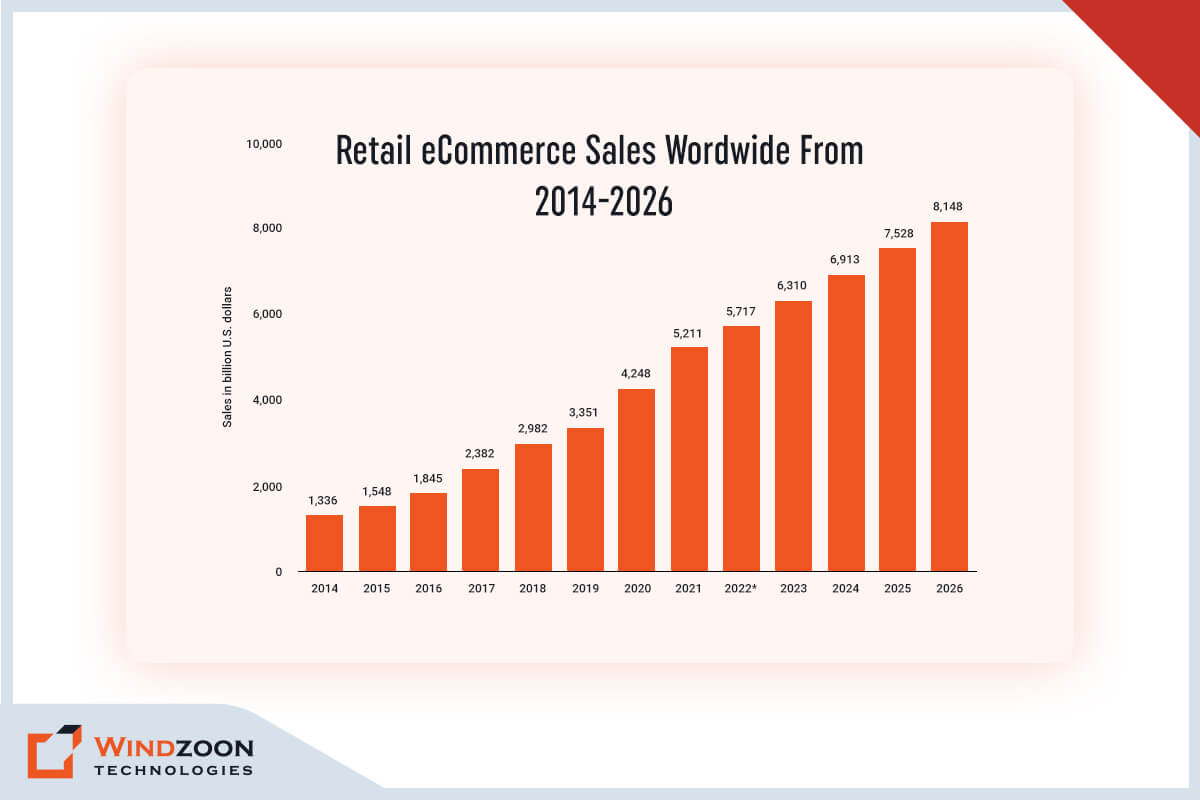
Retail eCommerce Sales Wordwide

If you are operating or planning to start an e-commerce store, you must make sure that it has the most up-to-date and efficient features in order to compete in the ever-changing e-commerce market.

However, to accomplish this, you’ll require the most well-known web development platform to create your online shop. And what is more, tried and trusted than WordPress? It ranks among the most popular and well-known platforms for developing an online store.

But simply having a WordPress website is insufficient; you must also incorporate the latest features to ensure that your online store stands out and generates conversions.

As a leading WordPress Development services provider, we have set aside some crucial and cutting-edge features for your WordPress e-commerce website. So, keep reading to learn how you can make your WordPress e-commerce website more competitive and successful.

Read More: ECommerce Web Design Trends

So, let’s begin our article with this very first topic:

14 Must-Have Features for Your WordPress eCommerce Website
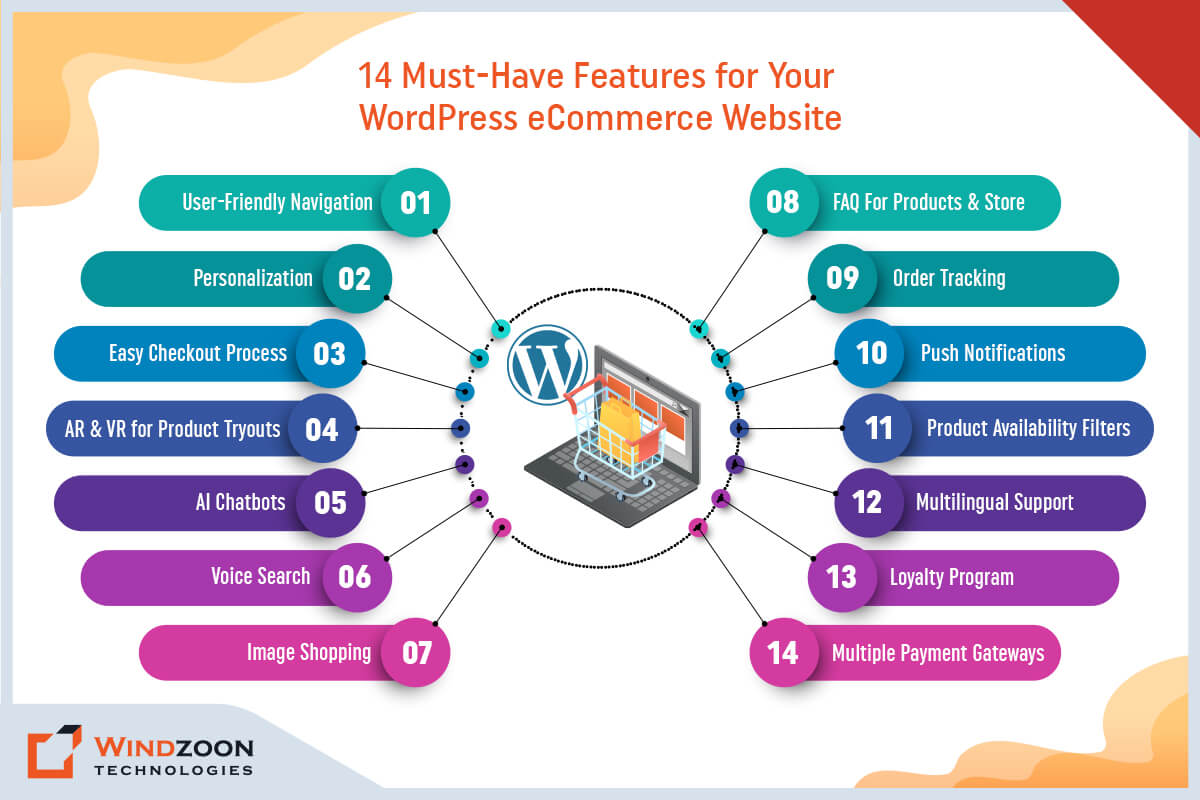
Features for Your WordPress eCommerce Website

1. User-Friendly Navigation

A simple navigation system makes it quick and simple for your customers to discover what they’re looking for. A good e-commerce website must have clear and concise menus, accessible search bars, and understandable categories and subcategories.

Furthermore, most smartphones that have been launched in recent years have larger screens. Although larger displays are excellent for accurate finger tapping, it is harder to navigate with just one hand when using the thumb. Naturally, app developers must emphasize thumb-friendly design more than ever before.

2. Personalization

Personalization is the key to providing your consumers with an exceptional online shopping experience. Utilize consumer information, such as past purchases and browsing patterns, to tailor product recommendations, offers, and advertising messages. Additionally, you can increase brand loyalty and foster stronger relationships with your consumers by using personalized content and messaging.

3. Easy Checkout Process

A complicated checkout process can lead to abandoned shopping carts and lost sales. By providing a guest checkout option, reducing the number of steps needed to complete a purchase, and giving clear and concise directions at each step, you can streamline your checkout process. And give consumers the fastest, easiest checkout experience possible.

Read More: Why WordPress is the Best for Online Store Development?

4. AR & VR for Product Tryouts

Modern technologies like augmented reality (AR) and virtual reality (VR) enable customers to virtually experience products in their own environments. For instance, the well-known furniture retailer IKEA allows customers to visualize how a sofa or table will appear in their living room. While a recently released cosmetics line called Myntra Beauty enables customers to virtually try on different lipstick colors to find the ideal match.

5. AI Chatbots

An AI chatbot is an automated messaging system that can assist with online purchases and offer personalized customer support.

These intelligent bots can respond to customer questions, make tailored recommendations, and even finish transactions. For instance, a customer might ask a chatbot to propose products based on their preferences, and the chatbot will offer advice and direct them to the appropriate product pages.

Therefore, adding an AI Chatbot to your WordPress e-Commerce site can help boost user interaction and revenue.

Since the introduction of smart speakers and voice assistants like Google Assistant, Alexa, Siri, etc., people’s lives have changed and gotten simpler in many ways. These innovations make people’s lives better by enabling them to switch from “typing” to “speech.”

Voice tools and devices are designed to respond to specific voice commands, giving users access to a wide variety of services. Customers can do a lot of things without even typing on their device, like request suggestions, order food or groceries, reserve a hotel or cab, and much more.

Many e-commerce sites provide various Voice User Interface options that enable users to conduct voice-based product searches. By optimizing your e-commerce WordPress website for voice search, you can effectively grow your business.

7. Image Shopping

Image purchasing will become more popular in e-commerce. It is a function that enables users to buy something from an online shop by simply pointing their camera at the thing they want to buy. Similar to CamFinder, there is a tonne of photo applications out there, and there will be a tonne more this year.

This feature streamlines the shopping process and saves time. For instance, a customer can click on an image of a celebrity sporting a specific outfit to make an immediate purchase of the products.

Companies like Asos and Zara are already utilizing image shopping technology to give their consumers a more seamless shopping experience.

8. FAQ For Products & Store

Customers are more likely to make a purchase from an online shop that offers clear and concise information about their goods and services. A frequently asked questions (FAQ) section can help address frequent customer concerns and questions, eventually enhancing the user experience and boosting conversions.

Your FAQ page should answer commonly asked questions about shipping, returns, payment methods, and other relevant information. For example, if you sell clothing, you may want to include sizing and fit details, as well as material and care instructions. If you trade electronics, you might want to include details about compliance, warranties, and technical specifications.

Read More: Why Choose WordPress CMS for Your Website?

9. Order Tracking

One of the biggest advantages of online shopping is the ease of having items delivered right to your door. However, it can be aggravating to wait for a package to come, especially if you don’t know when it will.

Giving customers a means to follow their orders can increase customer satisfaction and lower customer service calls. Order tracking should be simple to use and provide real-time updates on the progress of the order, including tracking information and expected delivery dates.

For instance, Amazon & Myntra give customers comprehensive tracking information and let them track their packages in real time through their websites or mobile apps. Additionally, they notify customers via email and push notifications throughout the delivery process.

10. Push Notifications

Push notifications have the potential to be an effective instrument for attracting customers and boosting sales. They enable you to inform consumers about new products, discounts, and other promotions by sending them personalized messages right to their devices.

For instance, a clothing shop might notify customers via push notifications of a summer dress sale that is only available for a short period of time. Customers may receive push notifications from a meal delivery service about new menu items or promotional offers.

However, it’s crucial to use push notifications sensibly and avoid sending out an excessive number of them, as doing so may be perceived as intrusive and result in consumers unsubscribing. Additionally, you can use segmentation to send pertinent messages to certain client groups.

11. Product Availability Filters

Online shoppers anticipate being able to discover the products they’re looking for quickly and easily. Product availability filters help customers find products that are in stock and available for purchase.

This feature can help to improve the user experience and alleviate the frustration of customers who are looking for specific products. For instance, an online shoe store might let customers filter their search results by size, color, and style to locate the shoes they’re searching for quickly.

You should also think about introducing a “back in stock” notification function to let customers know when an item they want becomes available again.

12. Multilingual Support

Accessing a worldwide audience through e-commerce stores can be significantly hampered by language barriers. By providing multilingual support, you can increase your client base and improve the user experience for users who speak different languages.

This is important for e-commerce companies that operate in places with a diverse populace. For instance, a global e-commerce site might offer bilingual support for languages like English, Spanish, French, and Chinese.

In addition, you ought to consider using machine translation to automatically translate the text of your website into various languages. However, it’s imperative to guarantee that the interpretations are exact and knowledgeable.

Read More: How to Pick the Right Offshore WordPress Development Agency?

13. Loyalty Program

Acquiring new customers can be costly and time-consuming, which is why it’s critical to prioritize customer retention. A loyalty program can be a powerful tool for encouraging repeat purchases and fostering consumer loyalty.

An online store can offer rewards such as exclusive discounts, free shipping, or early access to sales for customers who make a certain number of purchases or reach a certain spending threshold.

As an illustration, Myntra uses its Insider program to give customers points for each transaction they make. Customers can exchange their points for exclusive products, deluxe samples, or freebies. Additionally, the program provides tiers of rewards, with higher spending customers receiving greater privileges and benefits.

14. Multiple Payment Gateways

Numerous payment choices can increase conversions and lower cart abandonment rates. Customers have a variety of preferences when it comes to payment methods, so providing an option can help to satisfy their needs and improve the user experience.

On your WordPress e-commerce site, you might even consider allowing users to pay using a variety of methods, such as credit cards, PayPal, Apple Pay, Google Pay, and other popular payment methods. However, make Make sure your payment gateway is secure and complies with industry standards.

Amazon Pay, for example, enables customers to use their Amazon account to make transactions on third-party websites. It can expedite the checkout procedure while providing customers with a trusted and well-known payment option.

After this, we will learn about the steps for creating an e-commerce website using WordPress.

A Quick Guide for Building an e-Commerce Store with WordPress

Want to create an online store with WordPress? Here’s a quick start guide to get you started:

  • Begin by coming up with a memorable and relevant domain name that represents your brand and product offering.
  • Next, find a reputable web hosting company that guarantees high uptime and quick site load times.
  • Install WordPress and select an e-commerce theme that suits your tastes and preferences.
  • Add an e-commerce plugin to your site, such as WooCommerce, and configure your store settings, such as payment and shipping options.
  • Make sure your product pages have high-quality images and descriptions that are search engine optimized.
  • Customize your store’s design and layout to provide your customers with a unique and intuitive shopping experience.
  • Set up website analytics to monitor important metrics such as site traffic and user behavior.
  • Put strong security steps in place to protect your website and customer data.
  • Check the pace and responsiveness of your website to make sure users can access it quickly.
  • Launch your shop at this point and advertise it online with email marketing and social media.

With this checklist in hand, you can be confident that your e-commerce website is equipped with all the essential features and tactics needed to increase sales, attract and retain consumers, and establish a successful and profitable online business.

Read More: WordPress Website Development Cost

Conclusion

Building an effective e-commerce website with WordPress is no piece of the cake. It necessitates meticulousness, originality, and a readiness to change with shifting market patterns. However, you can take your website to the next level and provide your consumers with the seamless and enjoyable shopping experience they deserve by putting these 14 must-have features into practice.

You could even enlist the assistance of a qualified WordPress developer in this effort. Windzoon is a prominent Custom WordPress development company with 10+ years of experience in developing various kinds of WordPress solutions. To avail of our industry-specified custom services contact us and get a quote for different WordPress Packages.
14 Reasons Why Agency Need White Label WordPress Development Services

Once in Paris there was a chef named Alice. She has invented a very special recipe and shared her secret recipe with a restaurant. The restaurant takes the recipe and puts its own name on it, so it appears as if it created it itself. This way, the restaurant gets a new menu item without having to do all the work. And Alice gets a share in the profit the restaurant earns from her recipe.

The preceding anecdote describes the procedure of white labeling. It is a well-known and well-established business strategy that is used extensively in web development. And when 43.2% of web development is done with a content management system, and 63.4% of those websites are built with WordPress. You can easily conclude that white labeling is a popular concept in WordPress web development as well.

However, what precisely are these White Label WordPress Development Services, and does your company actually require them? Stay tuned to this blog for answers to all of your queries.

What is White Labeling?

White labeling is like dressing up your products in disguise. It occurs when a business develops a product or service, but instead of marketing it under its own brand name, permits another business to do so.

It’s kind of like a secret identity for the product, where it can blend in with the branding of another company. It may result in a win-win situation for both companies, as the initial company expands its reach and the company selling the product provides a fresh product without investing any money in its development.

Therefore, think of white labeling as a method for products to transform into undercover agents, concealing their true origins in order to attract more customers.

Now, we’ll understand the difference between a white-label company and a private-label company.

What is The Difference Between a White-Label Company and a Private-Label Company?

In the realm of branding and product manufacturing, the terms “white-label” and “private-label” are frequently used. Despite their outward similarity, they contrast significantly in terms of their branding strategy, target market, and method of product development.

A white-label business usually develops products or services which are sold by another business under its own brand name. The product is frequently generic or unbranded, allowing the purchaser to brand and sell it there own. A private-label business, on the other hand, develops products, especially for another business under its own brand name.

Here are 10 significant distinctions between a white-label business and a private-label business:

[wpdatatable id=13]

After this, we will learn about a white-label WordPress development company.

What is a White Label WordPress Development Company?

A white-label WordPress development company is a third-party organization that specializes in developing unique WordPress websites and plugins for other companies or organizations to resell under their brand name.

They operate in the background, offering development services to companies that want to give WordPress development as a service but may not have the resources, time, or knowledge to do so themselves.

Next, we will understand who can reap advantages from a white-label WordPress development company.

Who Can Benefit From a White-Label WordPress Development Company?

A white-label WordPress development company can help a broad variety of businesses and organizations that want to provide WordPress development services to their clients without having to invest in their own development team. The primary gainers from white-label WordPress development firms include

  1. Marketing Agencies: By utilizing white-label WordPress development services, marketing agencies can broaden their product lines and offer their clients completely customized websites and plugins that are tailored to their branding and individual requirements.
  2. Web Design Agencies: Without having to invest in their own development team, web design agencies can offer their customers a full website development solution by partnering with white-label WordPress development companies.
  3. Hosting Companies: Hosting companies can include custom WordPress development services in their hosting packages, enabling them to provide their clients with a more comprehensive solution.
  4. Freelancers: Without having to handle the development themselves, freelancers can offer their customers high-quality website development services by using white-label WordPress development services.
  5. eCommerce Businesses: eCommerce businesses can create fully customized eCommerce websites that incorporate their existing systems and provide a hassle-free shopping experience to their customers using white-label WordPress development services.
  6. Startups: White-label Startups can now easily and cheaply create a professional website or app thanks to WordPress development services, releasing them to focus on their core business activities.

Overall, working with a white-label WordPress development firm can be advantageous for any company or institution that wants to provide its customers with WordPress development services.

With this, Now, we have reached the most crucial section of this blog post: why do you need to hire a white-label WordPress development agency?

Read More: How to Pick the Right Offshore WordPress Development Agency? – 8 Useful Tips

Benefits of Working with a White-Label WordPress Development Company

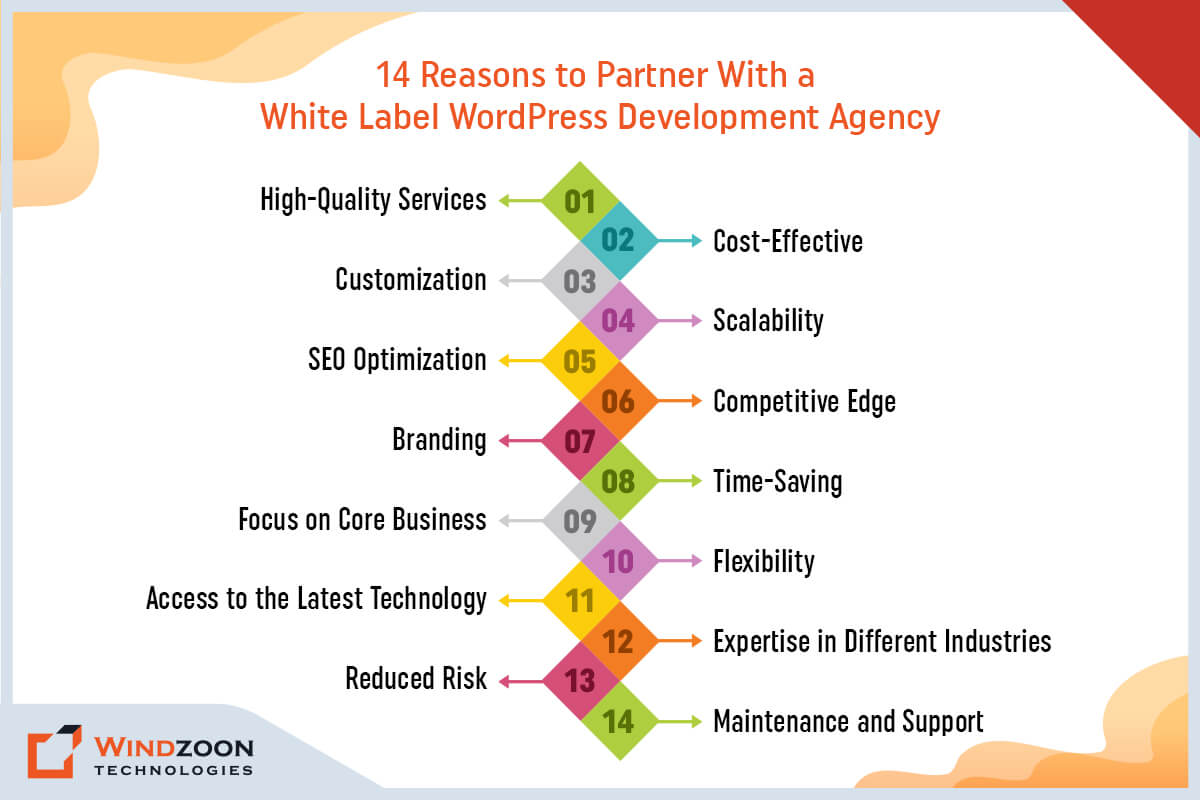
Here are 14 detailed points outlining the advantages that businesses can enjoy when working with a white-label WordPress development agency.

Reasons to Partner With White Label WordPress Development Agency

1. High-Quality Services

One of the biggest advantages of working with a white-label WordPress development company is the assurance of getting high-quality services. These businesses employ a group of skilled workers who focus on WordPress development and have experience creating unique WordPress websites.

They possess the know-how to create websites that are safe, scalable, and search engine optimized. It means that businesses can rest assured that their website is in excellent hands and will be delivered to the highest quality standards.

2. Cost-Effective

Another significant benefit of working with a white-label WordPress development firm is cost-effectiveness. Hiring an in-house development team can be costly due to the costs of wages, incentives, and office space.

You can cut these expenses by entrusting your WordPress development requirements to a white-label business. These companies usually provide competitive rates, and businesses can choose to work with them on a project-by-project or ongoing retainer basis.

3. Customization

White-label WordPress development firms provide customization services that can assist businesses in developing a distinctive online presence that is consistent with their brand and organizational objectives.

These businesses can alter the appearance, usability, and features of a website to suit particular needs. It means that businesses can have a website that is tailored to their requirements and reflects their brand identity.

Read More: Why Choose WordPress for Enterprise Website Development?

4. Scalability

The next benefit of working with a white-label WordPress development company is scalability. These businesses are capable of creating scalable websites that can expand along with a company.

As a business expands and needs additional features or functionality, a white-label company can add these elements to the website. It means that companies can escape having to completely rebuild their website, which can be expensive and time-consuming.

5. SEO Optimization

White-label Companies that specialize in WordPress development offer SEO optimization services that can raise a company’s exposure and search engine rankings.

These companies have experience creating search engine-optimized websites. And therefore, can assist businesses in developing a content strategy that targets their audience and achieves their marketing objectives. Thus, businesses may boost website traffic, lead and sales generation, and exposure to their websites.

6. Competitive Edge

Collaborating with a white-label WordPress development company can give businesses a competitive edge. Because these companies stay up-to-date with the latest technology and trends in WordPress development. Therefore, can help businesses create a website that is modern, functional, and user-friendly. And enable businesses to stand out from their competitors and attract more customers.

Read More: Why WordPress is the Best for Online Store Development?

7. Branding

White-label WordPress development firms may assist businesses to establish their brand by building a website that mirrors their brand identity and values.

These businesses can produce a distinctive style and user experience that distinguishes a company from its rivals. As a result, companies can establish a memorable online footprint that appeals to their target market.

8. Time-Saving

White-label WordPress development companies have the resources and know-how to complete projects efficiently. They have established workflows and processes in place to ensure that projects are completed on time.

It is especially important for companies working on time-sensitive initiatives or with tight deadlines. Businesses can free up time to work on other parts of their operations by outsourcing their WordPress development requirements.

9. Focus on Core Business

A white-label company can help businesses focus on their core business. By partnering with a white-label WordPress development company, businesses can delegate their website development needs to a team of professionals. This frees up their time and resources so that they can provide more focus on their core business functions.

It can help businesses achieve their goals faster and more efficiently, while also ensuring that their website is in good hands and being developed to the highest standards.

Read More: Why Choose WordPress CMS for Your Website?

10. Flexibility

White-label WordPress development companies offer flexible engagement models. It allows businesses to choose the level of involvement they want in the development process.

Whether a business wants to be involved in every step of the process or prefers to hand over the reins entirely, white-label companies can accommodate their needs.

11. Access to the Latest Technology

The fact that white-label businesses have access to the most recent technology and development tools is another important advantage.

They stay up to current with the most recent WordPress updates and plugins. It allows businesses to take advantage of the newest features and functionality. This can assist companies in staying one step ahead of the competition and giving customers a superior user experience.

12. Expertise in Different Industries

White-label Companies that specialize in WordPress development have experience working with companies in a variety of sectors.

They can customize their services to satisfy the particular requirements of each business because they have a thorough understanding of industry-specific requirements. As a result, companies can take advantage of their knowledge of the sector and obtain a website that is tailored to that sector.

13. Reduced Risk

The possibility of making expensive errors can be decreased by working with a white-label WordPress development business. These businesses have expertise in creating websites and are able to foresee potential problems. As a result, companies can steer clear of expensive errors and guarantee that their website will be provided on time and to the highest standards.

14. Maintenance and Support

White-label Companies that specialize in WordPress development provide regular maintenance and support services to make sure that websites remain safe, secure, and search engine optimized.

It covers services like program upgrades, backups, security checks, and troubleshooting. These businesses have dedicated support groups on hand to deal with any problems as they emerge and make sure the website is operating without a hitch.

At last, we will learn some useful tips to choose a qualified white-label WordPress development company.

How to Choose a Reliable White-label WordPress Development Company?

It can be extremely important for your business to select a reputable white-label WordPress development firm. Here are some recommendations for selecting a trustworthy white-label WordPress development company:

  1. Portfolio: Look for a business that has a substantial portfolio of prior work showcasing its WordPress programming skills.
  2. Experience: Pick a business that has worked on projects comparable to yours and has years of experience developing WordPress solutions.
  3. Specialization: Search for a business that specializes in the particular aspects of WordPress development that you require, such as theme modification, plugin development, or website optimization.
  4. Reputation: To evaluate the company’s professionalism, communication, and work quality, study reviews, and testimonials from previous customers.
  5. Team: Make sure the business has a talented team of designers, developers, and project supervisors who will be working on your project.
  6. Communication: Go with a business that encourages open dialogue and teamwork and is prepared to keep you informed and actively involved at every stage of the growth process.
  7. Support: To make sure that your website is secure and up to date, find a business that provides ongoing help and maintenance services.
  8. Cost: Pick a business that provides reasonable prices without sacrificing quality.
  9. Turnaround Time: Confirm that the business can complete your project by the deadline you have set.
  10. Flexibility: To accommodate your budget, timeline, and resources, pick a business that provides flexible engagement models.

By considering these factors, you can choose a reliable white-label WordPress development company that can help you achieve your business goals and create a high-quality website that reflects your brand identity.

Read More: WordPress Website Development Cost: Top 7 Factors to Consider

Conclusion

In the digital era, where your website frequently serves as customers’ first encounter with your brand, it is essential to have a website that not only looks great but also works flawlessly. White-label WordPress programming can help with this.

By working with a white-label WordPress development company, you can create a custom website that is tailored to your brand’s unique needs, without the hassle of starting from scratch.

Windzoon is a prominent WordPress Website Development Agency in India and the United States. Hire WordPress Developers from us who are adept at building customized WordPress solutions for various types of businesses. Get in touch with us or request a quotation to utilize our professional services or learn more about our WordPress Packages.

An Important 9-Step Guide on Mobile App Development Process

There was a time when people sent text messages on pagers. However, with the powerful features available in the form of applications, mobile phones have arisen as an ideal alternative to past technologies.

It has successfully crossed 6 billion users and has generated 59.16 percent of global website traffic in 2022. With this increasing usage of mobile phones, the mobile app development market is also growing with leaps & bounds.

Number of Mobile App Downloads Worldwide

In 2022, around 5 billion applications were in the different app stores. And the total number of mobile app downloads was 255 billion, with $430.90 billion in revenue generation.

Considering this significant number of applications on the internet, it is difficult to build an app that can stand apart from this cutthroat competition.

And for you to build such an app, you need a niche and unique development idea and a finely tuned development process.

As a seasoned mobile app development company with a decade of experience in app development, we have prepared a detailed step-by-step guide to explain the mobile app development process in a simple way. So stay tuned to this post to know further.

However, before we go further, let’s learn some basic information about mobile app development.

What is Mobile App Development?

Mobile app development refers to the process of producing software applications that run on mobile devices like smartphones, tablets, and smartwatches. These applications can be designed for a specific mobile operating system, such as iOS or Android, or cross-platform use, meaning they can run on multiple operating systems.

The mobile app development process involves various stages, including ideation, design, development, testing, and deployment. It often involves a team of developers, designers, project managers, and quality assurance professionals who work together to bring an app to life.

Mobile app development involves building & maintaining various types of apps, including games, social media, and e-commerce apps. However, the types of developed mobile apps depend on users’ needs and the business organizations’ goals.

In the next question, we will understand the people who need mobile applications.

Who Requires a Mobile App?

Everyone needs a mobile app! Okay, not everyone, but most people these days, use smartphones and rely on apps to make their lives easier. So whether you’re a business owner, a student, a fitness enthusiast, or just someone who wants to stay connected with friends and family, an app can help you achieve your goals.

For businesses, a mobile app can be a powerful tool for engaging with customers and increasing revenue. Apps can be used to showcase products and services, offer discounts and promotions, and provide a seamless user experience. They can also help businesses stay in touch with their customers, gather feedback, and improve their offerings.

For individuals, a mobile app can be a convenient way to manage daily tasks, stay informed about the world, and connect with others. In addition, apps can help you track your fitness goals, manage your finances, learn new skills, and even find love. With so many apps available, there’s something for everyone, no matter your interests or needs.

In short, mobile apps have become an integral part of modern life, offering convenience, entertainment, and utility. So whether you’re running a business or just trying to navigate your daily routine, a well-designed mobile app can be a game-changer.

Now, we will learn the significant reasons to invest money in mobile app development.

Important Reasons to Invest in Mobile App Development

Here are some reasons to invest in mobile app development in bullet points:

  • Increased customer engagement with proper UX and satisfaction
  • Potential for new revenue streams
  • Improved brand recognition and loyalty
  • Ability to gather user data and feedback
  • Greater accessibility to customers anytime, anywhere
  • Opportunity to showcase products and services in a unique and interactive way
  • Better communication and relationship-building with customers
  • Potential for cost savings and increased efficiency in business operations

These are just some of the many reasons businesses and individuals may invest in mobile app development services. By creating a well-designed and functional app, you can provide a valuable service to your customers while also achieving your business goals.

After this, we will learn the most common types of mobile apps.

Various Types of Mobile Apps

There are several types of mobile apps, each with its own set of advantages and disadvantages. Below are brief summaries of the four most common types of mobile applications:

Native Apps: Native apps are built specifically for a single mobile operating system, such as iOS or Android. They are developed using the platform’s software development kit (SDK) and optimized for its hardware and software. Native apps are fast, responsive, and provide the best user experience, but they can be expensive to develop and maintain.

Cross-Platform Apps: Cross-platform apps are designed to run on multiple mobile operating systems using a single codebase. These apps are typically built using web technologies such as HTML, CSS, and JavaScript and are wrapped in a native container that allows them to run on different platforms. As a result, cross-platform apps are less expensive to develop than native apps but may not perform as well or provide as good a user experience.

Hybrid Apps: A hybrid app combines features from both native and web apps. They are built using web technologies but are wrapped in a native container that allows them to access the device’s hardware and software features. Hybrid apps are less expensive to develop than native apps and can be deployed on multiple platforms, but they may not perform as well or provide as good a user experience as native apps.

Progressive Web Apps (PWAs): PWAs are web applications that are designed to look and feel like native apps. They can be accessed through a web browser and can be installed on the user’s device like a native app. PWAs are designed to be fast, reliable, and provide a good user experience. They are less expensive to develop than native apps and can be deployed on multiple platforms, but they may not have access to all of the device’s hardware and software features.

Read More: Top Mobile App Development Frameworks to Build Mobile Apps

Each type of mobile app has its advantages and disadvantages, and the choice of which type to use depends on various factors, including the app’s functionality, target audience, and budget.

Now, we will compare different alternatives for developing mobile apps.

Important Comparison of Various Alternatives for Developing Apps

[wpdatatable id=12]

After this, we will learn about the influence of the latest technology on the creation of mobile apps.

Impact of Modern Technology on the Creation of Mobile Apps

Mobile app development constantly evolves, with new technologies emerging and shaping how we interact with our devices. These new technologies have profoundly impacted the mobile app industry, both in terms of the apps themselves and the development process. Here are some ways new technology has impacted mobile app development:

  • Increased functionality through emerging technologies like AI, AR, and VR
  • Improved user experience as mobile devices become more capable
  • Streamlined development process through new tools and frameworks
  • Increased competition as more apps flood the market
  • Evolving security concerns with sensitive activities being performed on mobile devices
  • Greater emphasis on personalization and customization in app design
  • Integration with emerging technologies like wearables and smart home devices
  • The growing importance of data analytics and machine learning for app optimization
  • Increased adoption of cloud-based services for app development and hosting
  • Advancements in mobile payment and e-commerce capabilities for app users

The impact of new technology on mobile app development has been both positive and challenging. However, the continued evolution of mobile technology will bring further advancements and changes to the industry, making it an exciting time to be a mobile app developer.

Finally, we have come to the main topic of this blog post.

Read More: Mobile App Development Trends You Should Know

A Comprehensive 9-Step Process of the Mobile App Development

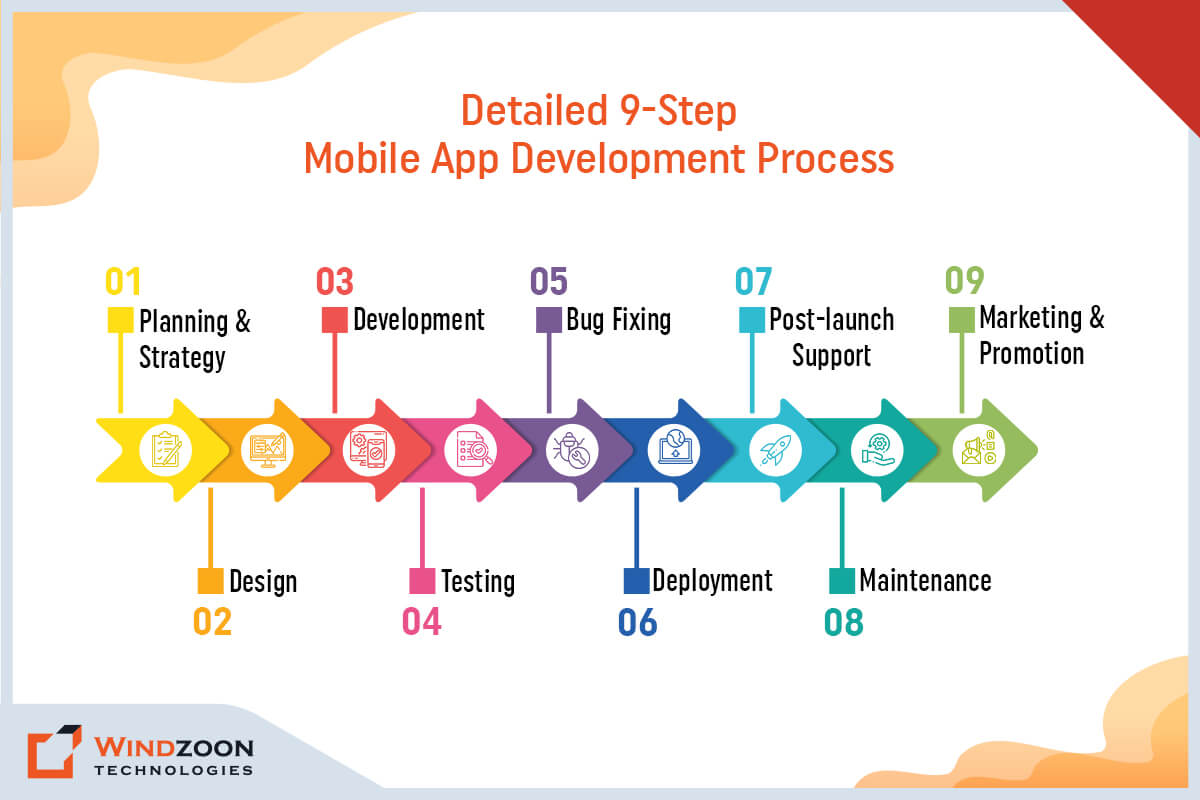
Detailed 9-Step Mobile App Development Process

1. Planning and Strategy

Define the app’s purpose, target audience, and goals: It is important to identify the specific problem or need that your app is trying to solve. You also need to determine who your target audience is and what their needs and preferences are. This will help you to design an app that meets their needs and expectations.

Conduct market research and competitor analysis: You need to understand the current market trends and what your competitors are offering. This will help you identify any gaps in the market and develop unique features for your app.

Determine the app’s features and functionality: Based on your research; you need to determine the features and functionality that your app should have. It’s called a Minimum Viable Product(MVP). While deciding on MVP, it is important to keep the user experience in mind and make the app as easy to use as possible.

Product Roadmap: The team creates a product roadmap to help keep development on track and ensure that the app meets business goals.

Develop a project timeline and budget: It is important to set a realistic timeline for the project and determine how much money you can allocate for the development process.

2. Design

Create wireframes and mockups of the app’s user interface: Wireframes are simple sketches of the app’s layout and interface. This helps to visualize the structure and layout of the app. And Mockups are a more detailed representation of the app’s interface with visual elements, colors, and typography.

Develop a visual design for the app, including color schemes, typography, and branding: You need to design a visual style for your app that is consistent and appealing to your target audience.

Develop the user interface (UI) design: The UI design determines how the app’s functionality will be presented to the user. It includes the layout, buttons, icons, and other elements with which the user will interact.

Create a user experience (UX) design: The UX design determines how the user will navigate the app and interact with its functionality. It includes the user journey, information architecture, and other elements that contribute to the user experience.

Create a clickable prototype: A clickable prototype is created to test the app’s design and functionality. This low-fidelity version of the app enables the development team to identify any potential issues and make necessary changes.

3. Development

Choose a mobile app development platform: There are different platforms available for mobile app development, including Android and iOS. The development team should choose the platform that aligns with the app’s objectives and target audience.

Create a database: The app’s database is developed, and the development team creates the schema and tables necessary to store data.

Develop the backend: The backend is developed to support the app’s functionality. This includes developing APIs, web services, and other components necessary to connect the app’s front end with its back end.

Develop the front end: The front end of the app is developed, including the screens, buttons, menus, and other elements that the user will interact with.

Integrating third-party APIs and services, if necessary: Third-party APIs and services can be used to enhance the app’s functionality, such as adding location-based services, social media integration, or payment processing.

Sprints: Development is broken up into sprints, which are short and focused periods of development that deliver a specific set of features.

Agile Methodology: The development team uses an agile development methodology, which means that they prioritize communication, collaboration, and flexibility.

4. Testing

Testing is a crucial step in the mobile app development process that ensures the app is functioning as intended.

Unit testing: This is the process of testing individual units or components of the app, such as a single function or module, to ensure it works as intended.

Integration testing: This is the process of testing how different units of the app work together to ensure that they function as expected.

Functional testing: This is the process of testing the app’s functionality to ensure it meets the requirements and performs as intended.

Performance testing: This is the process of testing the app’s performance, such as load time, response time, and stability, to ensure it can handle the expected user traffic.

User acceptance testing (UAT): This is the process of testing the app with real users to gather feedback and ensure it meets their needs and expectations.

5. Bug Fixing

After testing is complete, the development team will identify any bugs or issues that need to be addressed.

Identifying the root cause of the bug: The development team must determine the cause of the bug to be able to fix it.

Prioritizing bugs: Not all bugs are created equal, and the development team must prioritize which bugs to fix first based on their severity and impact on the user experience.

Fixing the bug: The development team will fix the bug and conduct additional testing to ensure the fix works as intended.

Updating the app: After the bug is fixed, the development team will update the app and release a new version to the app store.

6. Deployment

The deployment phase is when the app is released to the app store.

Build Files: The development team creates the necessary build files, which are used to package the app for deployment.

App Metadata: The development team creates app metadata, such as app descriptions, screenshots, and keywords, to help the app rank in the app store.

App Store Guidelines: The development team ensures that the app meets the app store guidelines and requirements for deployment.

Submit the app to the app store for review: Before the app can be released to the public, it needs to be reviewed by the app store for quality and compliance with their guidelines.

Release the app to the app store: Once the app has been approved, it can be released to the app store for users to download and use.

7. Post-launch Support

In the post-launch support phase, the app is monitored for bugs and crashes, and customer support is provided.

Debugging: The development team releases regular updates to the app to fix any bugs or issues that users report.

Customer Support: The development team provides customer support to users who experience issues with the app.

Analytics: The development team uses app analytics to track user behavior and make data-driven decisions about future updates.

8. Maintenance

In the maintenance phase, the app is kept up-to-date with the latest operating system and device updates.

OS and Device Compatibility: The development team ensures that the app is compatible with the latest operating systems and devices.

App Store Optimization: The development team regularly updates the app’s metadata to ensure that it ranks well in the app store.

Feature Updates: The development team releases regular updates to the app that add new features and improve user experience.

9. Marketing and Promotion

Create a marketing strategy for the app: You must develop a marketing plan to promote the app to your target audience. This can include social media marketing, content marketing, and paid advertising.

Analyze user feedback and make improvements: It is important to listen to user feedback and make necessary improvements to the app to meet their needs and expectations. This will help to increase user engagement and retention.

Conclusion

Mobile app development is an exciting and constantly evolving field that requires a diverse range of skills and expertise. From the initial concept and design phase to development and testing, and finally, to deployment and maintenance, the mobile app development process is a complex and multifaceted undertaking.

It requires a team of talented individuals with various skills, including designers, developers, project managers, and quality assurance specialists. And to get all these experts in one place, take assistance from a competent mobile app development company.

Windzoon is a leading web app development company with a decade of experience in web & app development. Hire mobile app developers from us to build a sophisticated and industry-specified app for varied business models.

Contact us to avail of our expert services and get a quote.

8 Things to Know Before Hiring Digital Marketing Agency

Are you aware? Search engines are responsible for 68% of all website traffic, and 81% of consumers conduct online research before making a purchase.

Even if you are unaware of the data, you might observe that businesses are rapidly undergoing a digital transformation. As a consequence, businesses are now working harder in the digital sphere to draw customers.

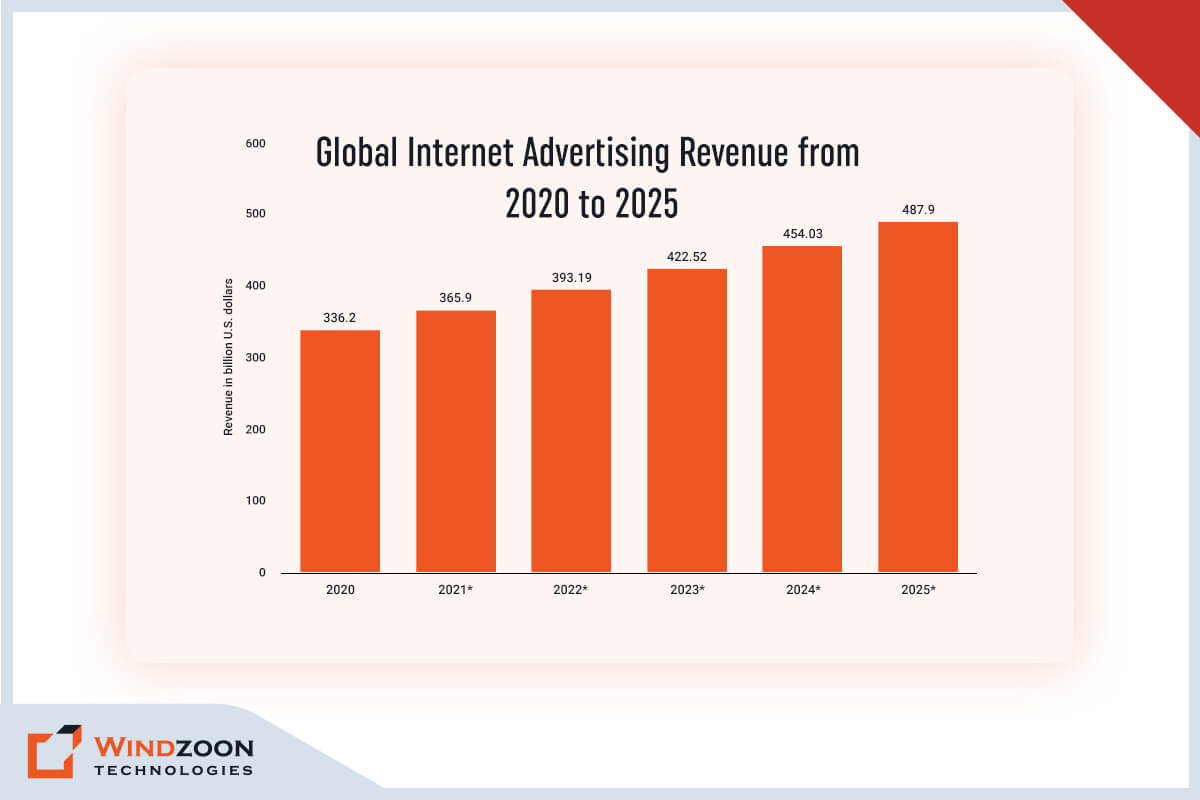
Due to this, the total revenue from online advertising was 365.9 billion dollars in 2021 and was expected to reach 488 billion dollars by 2025. As a result, the percentage of global advertising income that goes to digital advertising increased from 67 percent in 2022 to 68.5 percent in 2023.

Global Internet Advertising Revenue

And due to this ever-increasing demand for digital marketing, small business owners with limited time are finding it difficult to navigate the world of digital marketing on their own. As a result, they require a trustworthy and knowledgeable digital partner to manage their online marketing needs.

However, the increase in digital marketing agencies over the past few years has made it difficult to choose the best one. And to help you with your dilemma, we’ve written this post to help you choose the finest digital marketing agency for your business.

However, before that let’s get some basic knowledge about digital marketing agencies.

What is a Digital Marketing Agency, and What Does It Do?

A digital marketing agency is a specialized company that assists businesses in promoting their products or services through various digital channels. It provides a variety of services intended to increase brand recognition, draw in clients, and encourage sales.

Here are a few essential bullet points to help you comprehend what a digital marketing company does:

  • Develops digital marketing strategies to align with business goals.
  • Executes digital campaigns across multiple channels, including social media, email marketing, SEO, PPC advertising, and content marketing.
  • Conducts market research to identify target audiences and their behavior and preferences.
  • Creates and optimizes content, including blog posts, videos, and ads, to engage target audiences.
  • Measures and analyzes campaign performance using data analytics tools to refine strategies and improve results.
  • Provides ongoing support and maintenance to ensure campaigns are effective and up-to-date.

In short, a digital marketing agency helps businesses leverage the power of digital channels to reach and engage with their target audiences, build brand awareness, and drive conversions.

Now, let’s learn some tips to recognize competent digital marketing agencies for your small business.

Read More: Differences Between Digital Marketing and Traditional Marketing

How to Determine Which Digital Marketing Services Your Business Needs?

Finding the ideal digital marketing services for your company can be difficult. It can be challenging to decide where to concentrate your efforts in order to get the best results given the abundance of choices. You can use the following key factors to determine which digital marketing services your company needs:

1. Understand Your Business Goals

Knowing your company goals is the first step in choosing the best digital marketing services. Do you want to raise brand recognition, generate leads, increase conversions, or increase website traffic? Once you’ve determined your objectives, you can choose the digital marketing services that will help you accomplish them.

2. Identify Your Target Audience

If you want to effectively market your business, you must be aware of your target market. It includes details about their age, gender, location, interests, and behaviors. Once you grasp your target audience, you can pick the digital marketing services that will reach and engage them.

3. Analyze Your Competition

You can find the digital marketing services your company needs by carrying out a competitive study. Look at what your rivals are doing and find where their plans fall short. This will assist you in choosing the digital marketing solutions that will set your company apart from the competitors.

4. Assess Your Budget

It’s essential to evaluate your budget before making any decisions because the cost of digital marketing services can vary. Establish your budget for digital marketing services and choose the ones that will yield the greatest return on investment.

5. Select the Right Mix of Services

Digital marketing services come in a variety of forms, such as social media marketing, email marketing, SEO, PPC advertising, content marketing, and others. For the purpose of developing a thorough digital marketing plan, choose the services that most closely match your objectives, target market, financial constraints, and industry landscape.

6. Consult With a Digital Marketing Agency

Consultation with a reputable digital marketing firm can be beneficial if you’re unsure of the digital marketing services your company needs. A knowledgeable firm can offer you a personalized digital marketing strategy that is catered to the requirements and objectives of your company. They can also ensure that you’re getting the most out of your money and resources by guiding you through the confusing world of digital marketing.

After this, we will compare the options of hiring an in-house team or a digital marketing agency.

Should You Collaborate With A Digital Marketing Agency Or Hire In-House Staff?

Here is a comparison table to help you weigh the pros and cons of each option:

[wpdatatable id=11]

Now, let’s know about places to find a qualified digital marketing agency for your business.

Which Places to Look for Finding the Best Digital Marketing Agency For Your Business?

Here are some places to consider for hiring the right agency for your business:

1. Online Directories

An excellent location to start your search for a digital marketing firm is one of online directories like Clutch, UpCity, and Agency Spotter. These directories offer a thorough list of organizations and let you narrow down the findings by location, services, and industry.

2. Referrals

When searching for a digital marketing firm, recommendations from friends, coworkers, or other business owners can be a useful source of information. Request referrals from individuals you know well and who have dealt with agencies in the past.

3. Social Media

Social media platforms such as LinkedIn, Twitter, and Facebook are excellent places to discover and connect with digital marketing agencies. To learn about new agencies and to remain current on industry trends, follow thought leaders and influencers.

4. Industry Associations

Industry organizations like the American Marketing Association (AMA) and the Interactive Advertising Bureau (IAB) can offer a wealth of knowledge on digital marketing firms. These organizations usually have directories of their member organizations, and they can offer suggestions based on your particular requirements.

5. Search Engines

A simple Google search can be an excellent method to locate digital marketing agencies in your area. Use keywords like “digital marketing agency + your location” to limit your search results.

6. Local Business Groups

Joining local business organizations and networking events can be a wonderful way to connect with local digital marketing companies. Attend events and network with other business owners who can offer suggestions and referrals.

7. Industry Conferences

Meeting digital marketing firms and learning about the newest trends and technologies can both be accomplished by attending industry conferences and events. A few examples of activities you can go to include conferences like the Digital Marketing World Forum, Digital Summit, and Social Media Marketing World.

After this, know about some essential questions to consider before hiring a digital marketing agency.

10 Questions to Consider Before Hiring a Digital Marketing Agency

Here are some important questions to consider before making any decision:

  1. What are your specific marketing goals, and how can a digital marketing agency help you achieve them?
  2. Does the agency have experience in your industry or niche and do they have case studies or references to support their claims?
  3. What services does the agency offer, and which ones are relevant to your business goals?
  4. What is the agency’s approach to strategy, and do they have a clear process for developing and executing campaigns?
  5. What is the agency’s team structure, and who will be working on your account? Do they have subject matter experts in areas relevant to your business, such as SEO or social media?
  6. How does the agency measure success and report on campaign performance? Will they provide regular updates and insights?
  7. What is the agency’s pricing model, and what are the costs associated with each service? Are there any additional costs or long-term commitments?
  8. How does the agency handle communication and collaboration with clients? Will you have a dedicated point of contact, and how often will you meet to discuss progress and strategy?
  9. What is the agency’s timeline for delivering results, and what factors may impact the timeline?
  10. How does the agency stay up-to-date on the latest trends and technologies in digital marketing, and how do they incorporate these into their strategies?

By asking these questions, you can ensure you find an agency that meets your specific needs and can help you achieve your business goals.

Now, we will see the ideal way to choose the right digital marketing company for your business.

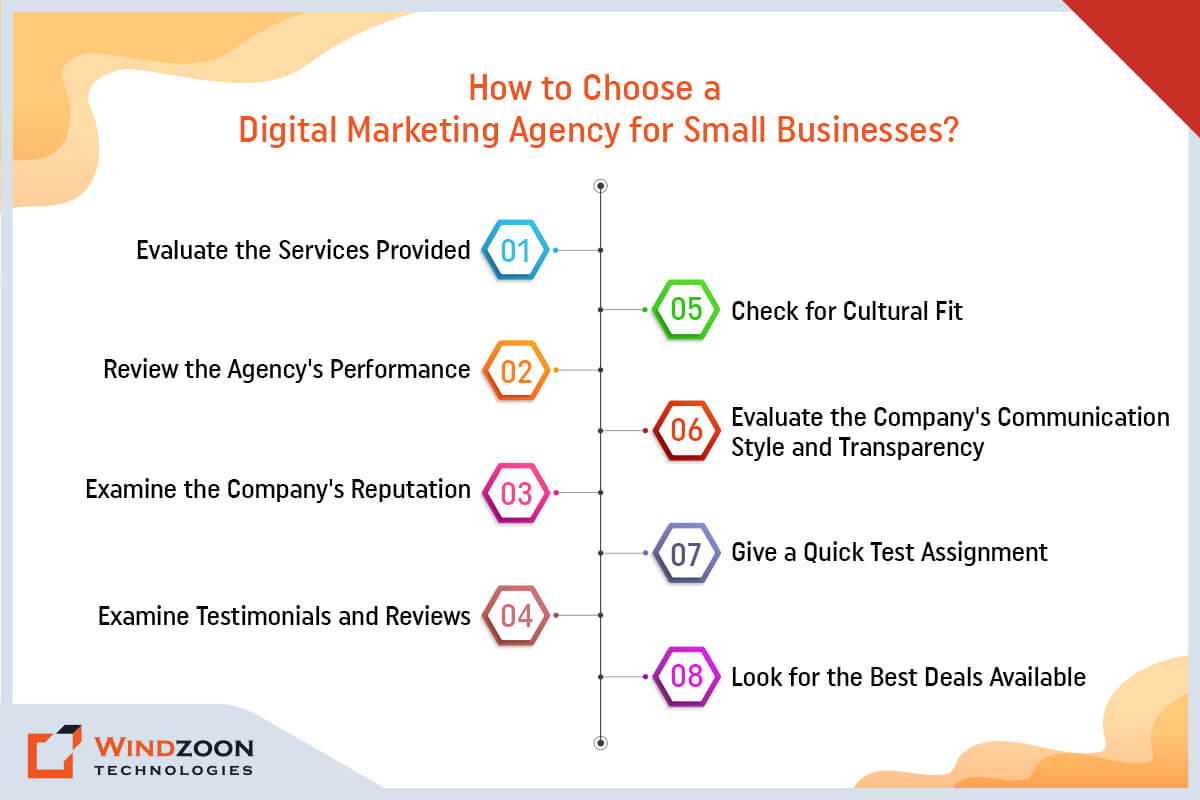
How to Select the Ideal Digital Marketing Company for Your Firm?

Tips to Hire Digital Marketing Agency

1. Evaluate the Services Provided

You need to define your goals explicitly in order to understand whether the digital marketing agency can assist you. After that, think about the services that will help you achieve those objectives and search for a company that can provide those services.

For instance, if you need SEO, SMO, or PPC services, you should search for a company that specializes in those offerings.

2. Review the Agency’s Performance

Request to see their portfolio so you can review some of their work and determine whether their quality and manner are up to your standards. Inquiring about the company’s past and present campaign success rates is a great idea.

Besides, it is critical to match your desired outcome with the agency’s expertise before choosing a digital marketing agency. Furthermore, the agency’s fields of expertise ought to be taken into account.

They should have prior expertise working with your niche in order to maximize the results. Therefore, pay attention to the agency’s accomplishments and clients serviced rather than its years in operation.

3. Examine the Company’s Reputation

Many digital marketing companies on the Internet assert that they are the best in their industry. But the truth is that a lot of companies in this sector aren’t really knowledgeable about digital marketing.

Therefore, don’t be duped by their grand statements and attractive websites. Do your research and verify the company’s credibility instead. Analyze the agency’s online presence and get in with their clients to ask them about their experiences.

Additionally, see if the company has received any awards, remarkable certificates, or business seals that put them apart from the competition.

4. Examine Testimonials and Reviews

Client reviews and testimonials can be trustworthy sources of information about the agency’s core competencies, particularly if you can relate to the objectives of the clients providing a review.

Plus, investigate the company’s image online rather than just relying on the customer reviews posted on the website. Check for customer reviews on Google, social media, and business directories.

5. Check for Cultural Fit

Consider the digital marketing company as an addition to your staff. Therefore, it’s essential that it fits best with your work culture. It implies that you must make sure the team is in line with the mission, vision, and fundamental values of your business.

While this may be difficult to assess, it is a critical element in ensuring a healthy and long-term business relationship. If at all feasible, meet the team in person to gauge how they work as a team, how they communicate, whether they are affable and other factors.

6. Evaluate the Company’s Communication Style and Transparency

Effective communication and transparency are essential to a good partnership. Clients must be kept informed of all activities, so that collaboration works successfully. Digital marketing firms must be transparent about the tactics they use.

Furthermore, you should be aware of who to approach for reviews and marketing data. The best digital marketing agencies to pick are the ones that have devoted teams of superb communicators who can save you time and money.

7. Give a Quick Test Assignment

By giving the agency a sample assignment, you can easily evaluate the agency’s work. This will enable you to assess their concepts and abilities and determine whether they are a fit for your company’s goals or should look elsewhere.

You should also take into account their background, ideas, execution skills, budget analysis, expectations, and suggestions for the project.

8. Look for the Best Deals Available

The cost of digital marketing is an essential aspect to think about. But that does not imply that you should pick the cheapest available option. Instead, make an effort to strike an equilibrium between price and quality.

Additionally, you should always choose a company that offers clear costing. Make sure to request a precise estimate upfront. Pricing transparency is an indication of an agency’s honesty and integrity.

Conclusion

Choosing the perfect digital marketing agency for your small business can be a daunting task, but with the right approach, it can be an exciting and rewarding experience. By identifying your marketing needs, researching potential agencies, and evaluating their expertise and approach to strategy, you can find the ideal partner to help you achieve your business goals.

Remember, a competent digital marketing company will work closely with you, listen to your needs, and develop customized solutions that are tailored to your unique business needs. So, take the time to choose wisely and invest in an agency that can help you achieve long-term success in the ever-changing landscape of digital marketing.

Windzoon is a well-known digital marketing services provider that assists businesses in developing effective digital marketing strategies. Contact us and request a quote to learn more about our results-driven services.