Enterprise WordPress Development: What Sets It Apart?

WordPress is often seen as a simple tool for blogs or small business websites. But when your company scales up, so do your website needs: faster performance, tighter security, custom features, and integration with business systems.

Here, an enterprise WordPress development company plays a major role.

Unlike regular developers who rely on pre-made themes and plugins, enterprise teams focus on custom WordPress website development, personalized for larger businesses. It’s not just about having a website; it’s about building a platform that can handle high traffic, sensitive data, and future growth.

If your business depends on its website for operations or revenue, working with professionals who understand enterprise requirements isn’t optional; it’s essential.

Let’s move on to what exactly defines an enterprise WordPress development company.

What Is an Enterprise WordPress Development Company?

When most people hear “WordPress development,” they often imagine simple business websites, blogs, or small online stores. But for larger businesses, it’s a completely different world.

An enterprise WordPress development company is a specialized service provider that builds and manages large-scale, complex WordPress websites specifically for medium to large businesses. These companies focus on creating solutions that go far beyond basic templates and plugins.

Where regular WordPress development may involve installing ready-made themes or basic customization, enterprise WordPress development companies handle things like:

  • Building a custom WordPress website development from the ground up, with no reliance on pre-made themes.
  • Ensuring websites handle high traffic without performance issues.
  • Integrating the website with essential business systems like CRMs, ERPs, payment gateways, and inventory management tools.
  • Implementing strict security protocols and data privacy compliance (such as GDPR or HIPAA).
  • Providing long-term support, maintenance, and scalability solutions.

In simple terms, while a standard WordPress agency might build you a functioning website, an enterprise WordPress development company builds you a complete, business-critical digital platform that supports your company’s growth and operations.

Now that you have a clearer idea of what these companies do, let’s move on to how enterprise WordPress development actually differs from regular development work you might see from smaller agencies or freelancers.
enterprise-wordpress-development

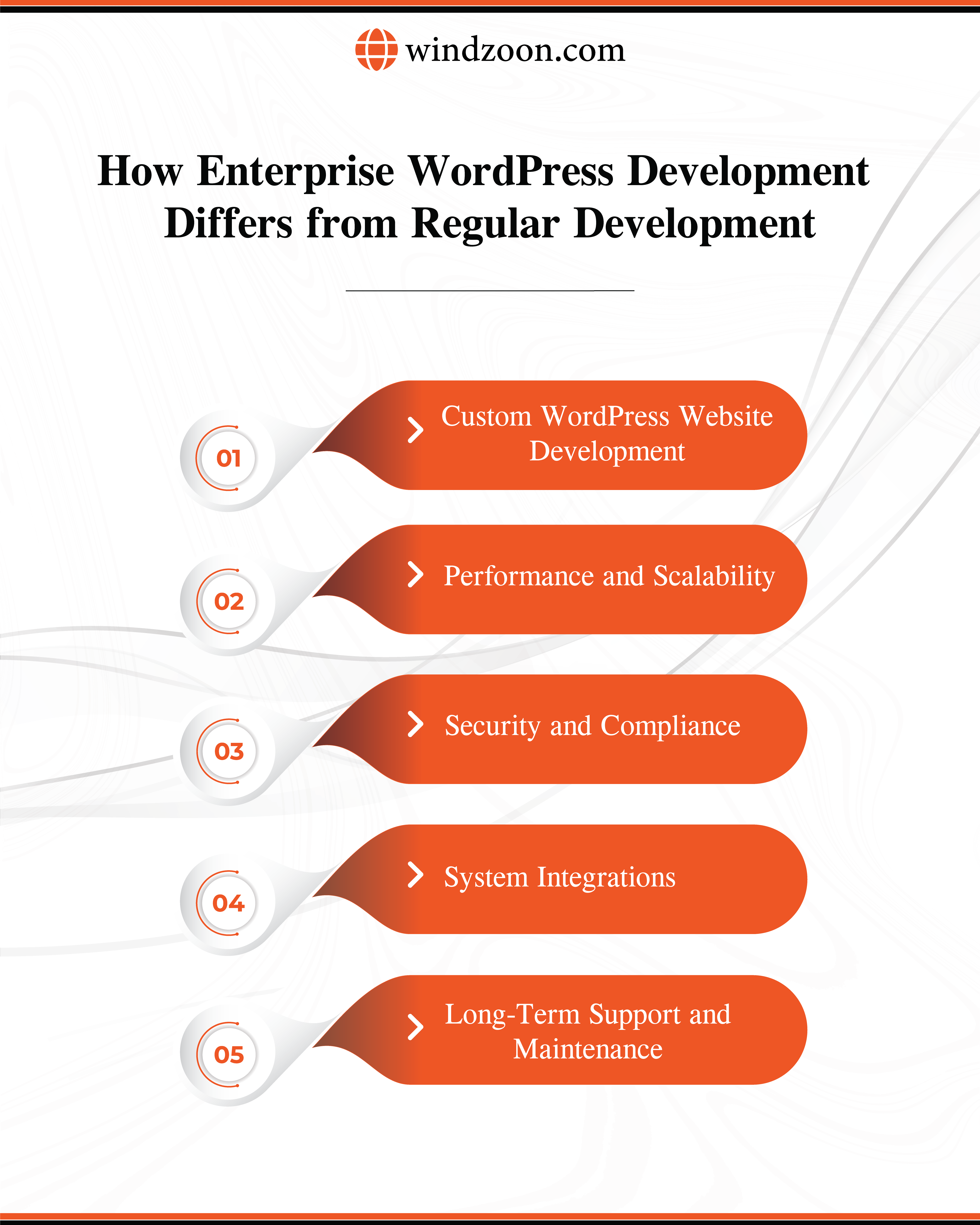
How Enterprise WordPress Development Differs from Regular Development

At first glance, WordPress might seem like the same tool whether you’re building a blog or running a large business website. But in reality, enterprise WordPress development works on a completely different level compared to regular website development.

A typical WordPress website focuses on getting pages live quickly using ready-made themes and plugins. That’s fine for small businesses or personal use. But enterprises have deeper needs that go beyond design and basic functionality.

Here’s how working with an enterprise WordPress development company stands apart:

  • Custom WordPress Website Development

Enterprise websites are built with custom WordPress website development at their core. This means creating custom themes, plugins, and functionalities tailored specifically to the business, rather than relying on off-the-shelf solutions.

  • Performance and Scalability

Enterprise websites handle large traffic volumes. Regular development typically doesn’t account for load balancing, caching systems, or optimized hosting setups that an enterprise-grade website requires.

  • Security and Compliance

While regular websites might only worry about simple security plugins, enterprise sites require strict security protocols, encrypted data handling, and compliance with standards like GDPR, HIPAA, or industry-specific regulations.

  • System Integrations

An enterprise website often needs to integrate with CRMs, ERPs, payment systems, custom APIs, and internal tools. These are not things a standard WordPress setup can handle without professional expertise.

  • Long-Term Support and Maintenance

Enterprise-level projects require dedicated support, service-level agreements (SLAs), and proactive updates, something freelancers or smaller agencies usually don’t offer.

Simply put, enterprise WordPress development companies aren’t just building websites. They’re building digital systems that support real business operations at scale.

Now that you know where the difference really lies, let’s look at the specific qualities that set these companies apart from the rest.
Key-Qualities-That-Set-Enterprise-WordPress-Development-Companies-Apart

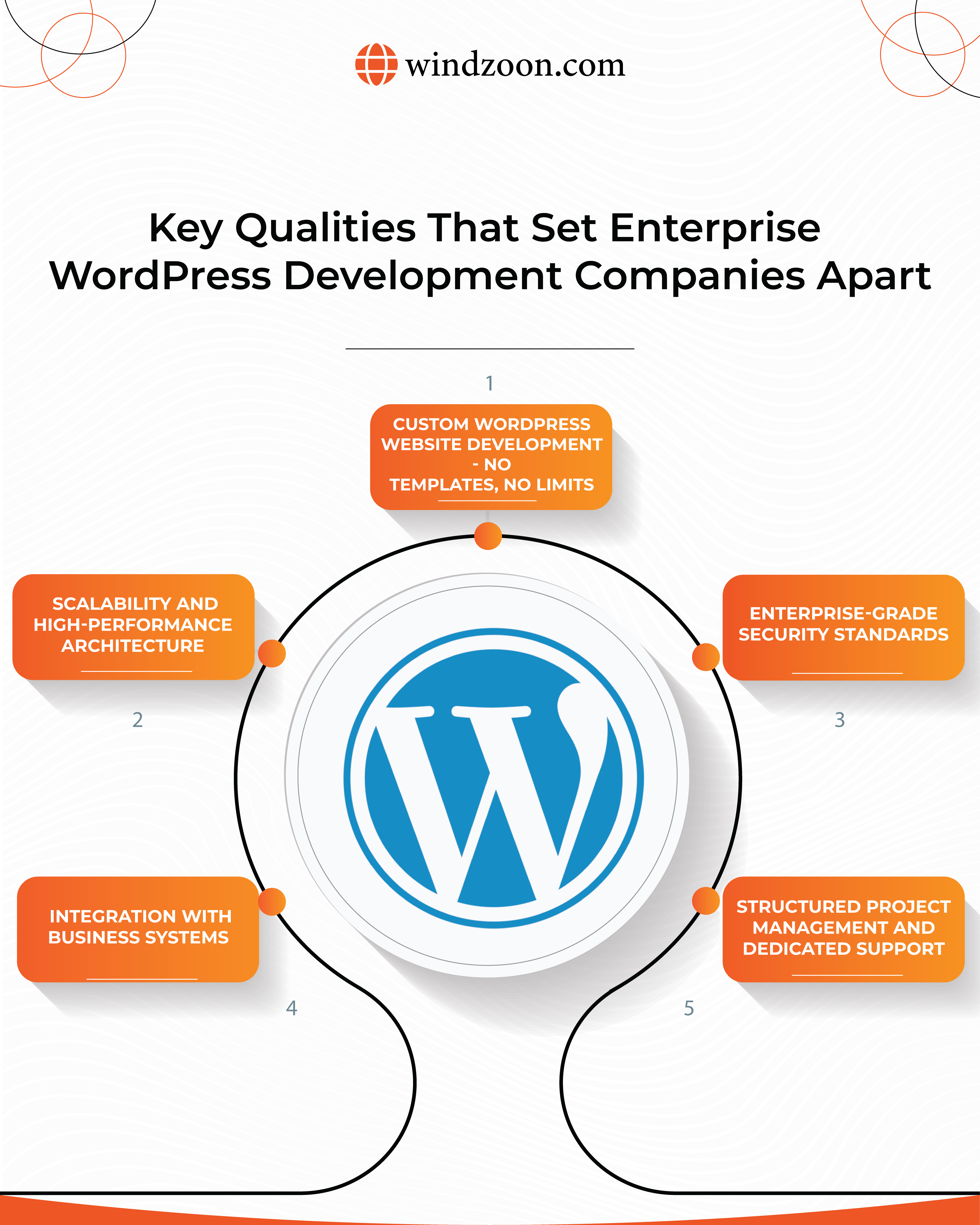
Key Qualities That Set Enterprise WordPress Development Companies Apart

Choosing any web development agency might seem enough when building a WordPress site, but for larger businesses, the difference comes down to capability and approach. Not all developers can meet enterprise-level challenges.

So, what specifically sets an enterprise WordPress development company apart from regular WordPress service providers?

  • Custom WordPress Website Development – No Templates, No Limits

Enterprise companies rarely work with pre-made themes or off-the-shelf plugins. They require custom WordPress website development tailored to business workflows, branding, and customer journeys. That means building unique features like membership systems, custom dashboards, booking platforms, or advanced search functionalities.

  • Scalability and High-Performance Architecture

Where regular websites slow down with traffic spikes, enterprise websites are built to scale. This includes using advanced hosting solutions, load balancers, content delivery networks (CDNs), and caching systems, all configured specifically for the business.

  • Enterprise-Grade Security Standards

For companies handling sensitive user data, compliance and security are non-negotiable. Enterprise WordPress development companies implement measures like two-factor authentication, encrypted data storage, secure admin controls, and regular security audits.

  • Integration with Business Systems

One key advantage of working with an enterprise-level partner is the ability to seamlessly connect your website with internal tools: CRMs, ERPs, payment gateways, marketing automation platforms, or inventory management systems.

  • Structured Project Management and Dedicated Support

Enterprise projects aren’t managed on WhatsApp or casual email threads. They follow structured processes using tools like Jira, Slack, or Asana, backed by dedicated project managers. Plus, long-term support contracts, SLAs, and proactive maintenance are standard.

Now that we’ve explored what makes these companies different, let’s move to why choosing the right enterprise WordPress development partner actually matters for your business long-term.

Why Choosing the Right Enterprise WordPress Development Partner Matters

For an enterprise, the website isn’t just a digital business card; it’s often the backbone of customer experience, lead generation, and even revenue. That’s why picking just any agency or freelancer won’t cut it when it comes to custom WordPress website development.

Partnering with the wrong team can lead to slow-loading websites, security risks, integration failures, and frequent downtime, all of which businesses can’t afford at scale.

An experienced enterprise WordPress development company helps avoid these risks by focusing on long-term, growth-oriented solutions. Here’s why the right partner matters:

  • Business Continuity & Reliability

A capable enterprise development partner ensures your website doesn’t just work today — it keeps working reliably as your business grows and evolves.

  • Faster Response to Changes

With structured project management and dedicated support, changes in business requirements or market conditions can be implemented faster. This agility is critical for enterprise-level businesses.

  • Security & Compliance You Can Trust

The right partner ensures your website follows security best practices and complies with regulations like GDPR or HIPAA, protecting both your business and customer trust.

  • Customization That Actually Works

A skilled partner doesn’t just say “yes” to every request. They provide insights and solutions that fit your exact business logic, whether it’s integrating custom APIs or building customer portals.

In simple words, working with the right enterprise WordPress development partner isn’t an expense; it’s an investment in stability, scalability, and growth.

Now, let’s wrap up with a quick recap of everything we’ve covered.

Conclusion

When it comes to building a professional website, not every company needs the same level of development. But for growing businesses and large organizations, working with a regular developer or small agency simply isn’t enough.

An Enterprise WordPress Development Company offers more than just web design; it provides secure, scalable, and fully tailored solutions that support long-term business goals. From handling complex integrations to ensuring high performance and tight security, their role goes beyond building pages.

If your business needs more than a basic website, investing in custom WordPress website development is the smart step forward. It ensures your platform grows with your company, rather than holding it back.

If you’re looking for a reliable team that understands both the technical and business sides of enterprise web projects, companies like Windzoon Techno Pvt Ltd are here to help.

Ready to take your website from good to growth-ready? Let’s connect.

FAQs

  1. What is the difference between regular WordPress development and enterprise WordPress development?

Regular WordPress development usually focuses on small business websites or blogs using pre-built themes and plugins. Enterprise WordPress development, on the other hand, involves custom-built solutions designed for larger businesses. This includes handling higher traffic, integrating with business systems like CRMs or ERPs, ensuring advanced security, and providing long-term support.

  1. Why do large businesses need custom WordPress website development?

Large businesses often have unique needs that can’t be met with standard WordPress setups. Custom WordPress website development allows for tailored features, optimized performance, advanced security protocols, and integration with business tools. It ensures the website can scale and adapt as the business grows.

  1. How do I choose the right enterprise WordPress development company?

Look for a company with a proven track record in handling enterprise-level projects. Key qualities include experience in custom development, security compliance knowledge, system integration capabilities, strong project management, and post-launch support. Checking client reviews and case studies is also helpful.

  1. Is WordPress secure enough for enterprise-level websites?

Yes, but only when handled by experienced professionals. An enterprise WordPress development company knows how to implement advanced security measures, such as firewalls, encrypted data handling, user access controls, and regular security audits. These steps ensure the platform is safe for business-critical operations.

Laravel 12: Latest Features Every Developer Should Know

In the fast-evolving world of web development, staying in sync with the latest frameworks isn’t just helpful, it’s essential. Laravel, one of the most trusted PHP frameworks, continues to set the standard with its clean syntax, robust features, and elegant architecture. With the release of Laravel 12, developers now have even more tools to build powerful, modern web applications efficiently.

But here’s the thing: Laravel 12 isn’t just a minor update. It brings along a series of enhancements, from streamlined starter kits to next-level support for frontend tools, that reshape how developers craft applications in 2025.

Let’s begin by revisiting what Laravel actually is and why it’s become a developer’s favorite over the years.

What is Laravel Framework, and Why Is It Popular in Web Development?

An open-source PHP framework called Laravel makes it easier to create scalable and reliable online apps. At its core, it follows the MVC (Model – View – Controller) architectural pattern, which cleanly separates the logic, presentation, and data layers of an application. But Laravel goes beyond just structure; it’s a toolkit filled with thoughtful features that make a developer’s life easier.

Consider Laravel to be PHP’s Swiss Army knife. It comes with built-in tools for routing, authentication, database migrations, caching, and more. You don’t have to start from scratch every time you build something. Instead, Laravel gives you the foundations and the shortcuts to get up and running fast, without sacrificing quality.

Why is Laravel so popular?

Here’s why developers and businesses alike keep choosing Laravel:

  • Expressive Syntax: Laravel’s code reads like English. It’s easy to write, easy to understand, and easy to maintain, especially for teams.
  • Strong Community Support: There’s a huge ecosystem of packages, forums, and tools, making it easier to solve problems and build faster.
  • Security at its Core: Features like CSRF protection, hashed passwords, and robust authentication make it a secure framework for serious applications.
  • Effortless Integrations: Whether you want to add payment gateways, email services, or APIs, Laravel handles it smoothly.
  • Elegant Tools: Laravel offers polished tools like Eloquent ORM, Laravel Mix, and Artisan CLI that streamline tasks that most frameworks make tedious.

All of these reasons are why countless startups, SMEs, and large enterprises choose to work with a professional Laravel web development company; they want the flexibility and reliability Laravel offers, without getting lost in technical complexity.

Now that we’ve understood Laravel’s foundation and its growing relevance, let’s take a brief look back at how it has evolved over the years and what brought us to version 12.

Laravel Version History: From Laravel 5 to Laravel 12

To fully understand the significance of Laravel 12, it’s important to look at how Laravel has progressed over the years. The framework has evolved not only in its capabilities but also in its approach to modern web development, becoming one of the most trusted PHP frameworks in the industry.

Laravel 5: Laying the Groundwork for Scalability

Released in 2015, Laravel 5 introduced several architectural changes that defined the direction of the framework:

  • Artisan command improvements
  • Middleware support for filtering HTTP requests
  • Request validation via Form Requests
  • Introduction of service providers and dependency injection

This version laid the foundation for Laravel’s structured and maintainable development approach.

Laravel 6 and 7: Transition to Semantic Versioning

Laravel 6 adopted semantic versioning (SemVer) and introduced long-term support (LTS). Key highlights included:

  • Laravel UI, which separated frontend scaffolding from the core
  • Lazy collections for improved memory efficiency
  • Job middleware and better exception handling

Laravel 7 built on this by introducing:

  • Blade component tags
  • HTTP client for simplified external API requests
  • Route model binding enhancements

Laravel 8: Smoother Developer Experience

Laravel 8 was a major step forward in terms of developer productivity. It introduced:

  • Laravel Jetstream for modern authentication scaffolding
  • Dynamic model factories
  • Event listener improvements and better job batching
  • Improvements to route caching and model factory design

It became a widely adopted version thanks to its balance between modern tooling and backward compatibility.

Laravel 9: Advancing with Symfony 6

Laravel 9 was released as an LTS version and aligned with Symfony 6 components. Notable upgrades included:

  • Full support for PHP 8
  • Improved query builder with type hints
  • Enum casting for Eloquent models
  • Flysystem 3.x integration for file storage

This version further solidified Laravel’s place in enterprise-grade development.

Laravel 10: Refinement and Type Safety

Laravel 10 focused on simplifying code and improving maintainability. Key updates were:

  • Native type declarations across the codebase
  • Removed deprecated methods and properties
  • New process abstraction for handling system processes

It was aimed at creating cleaner, more predictable codebases.

Laravel 11 and 12: The Modern Laravel Era

Laravel 11 introduced structural simplifications, removing unnecessary boilerplate and focusing on minimalism. By the time Laravel 12 arrived, the framework was streamlined and more powerful than ever:

  • Modular and composable application structure
  • Enhanced testing tools
  • Improved route groups and middleware management
  • Support for the latest PHP versions and performance enhancements

These versions reflect a shift toward developer-focused efficiency and production-level performance.

For any business planning a web application, understanding Laravel’s evolution helps clarify why partnering with a reliable Laravel web development company can make a significant difference.

Up next, we’ll explore Laravel 12.x in detail and walk through the most important features introduced in its latest versions.

Laravel 12.x Features Explained – From 12.0 to 12.19

Laravel 12 isn’t just one version; it’s a series of consistent, thoughtful updates that show how the framework continues to grow with developer needs in mind. Starting from version 12.0 and rolling through to 12.19, each release brought meaningful improvements, feature refinements, and performance boosts.

Let’s break down the most notable changes across these versions to help you understand the evolution and what makes Laravel 12.x especially appealing.

Laravel 12.11 to 12.15 – Focus on Performance

  • Route Caching Optimization: Large apps with hundreds of routes saw faster boot times and improved memory usage.
  • Model Bootstrapping Tweaks: Eloquent model behavior during boot was refined to be less error-prone and more predictable.

Laravel 12.16 to 12.19 – Modern Development Ready

  • Enhanced Job Retry Logic: Queued jobs now handle failure retries more gracefully, especially in distributed systems.
  • Updated Prompts and Console UI: Artisan prompts were made more interactive, enhancing developer experience in the terminal.

  • Support for Native Types in Policies and Middleware: Making the codebase leaner and safer, this change allowed native PHP type hints to be used more widely.

Why These Features Matter

From cleaner file structures to performance tuning and smarter tooling, Laravel 12.x is all about working with the developer, not against them. It empowers teams to write less boilerplate, build faster, and maintain clarity, even in large, complex apps.

For businesses looking to stay ahead of the curve, working with a seasoned Laravel web development company ensures these features are not just understood but fully leveraged in real-world projects.

Next, we’ll dive into how these Laravel 12.x enhancements actually impact real-world application development.

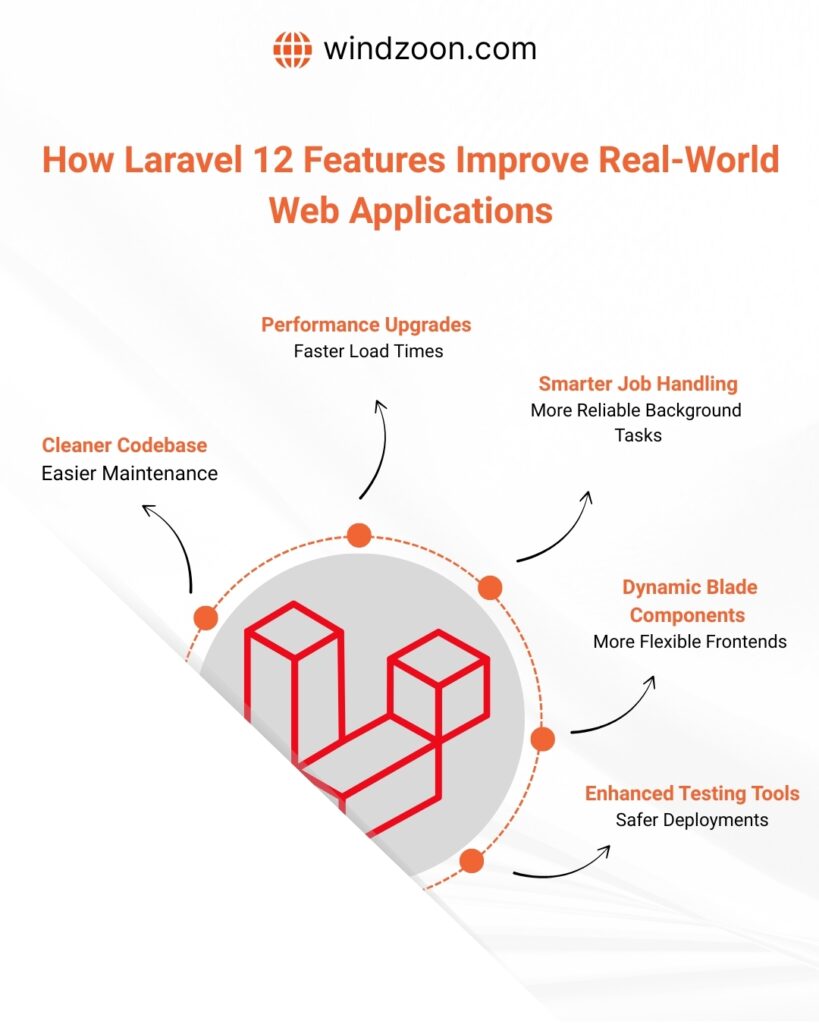
How Laravel 12 Features Improve Real-World Web Applications

how-laravel-12-features-improve-real-world-web-applications

It’s one thing to read about new features in a changelog. It’s another to understand how they actually improve the experience of building and maintaining web applications. Laravel 12.x doesn’t just offer bells and whistles; it brings tangible benefits that directly impact performance, scalability, and developer productivity.

Let’s walk through how these features play out in real-world projects:

1. Cleaner Codebase = Easier Maintenance

The simplified app structure introduced in Laravel 12.0 helps developers start with a minimal setup and grow organically as needed. In long-term projects, this translates to fewer unused files, less clutter, and a cleaner codebase that’s easier to manage.

For businesses, this means reduced technical debt and faster onboarding of new developers.

2. Performance Upgrades = Faster Load Times

Improvements in route caching and query optimization aren’t just technical jargon; they lead to quicker response times. Whether you’re running an eCommerce platform or a SaaS product, speed matters. Laravel 12 makes apps feel snappier even as they scale.

A Laravel web development company can help fine-tune these settings to squeeze out every bit of performance.

3. Smarter Job Handling = More Reliable Background Tasks

With better job retry logic and batch monitoring, Laravel 12 ensures background tasks like sending emails, processing files, or syncing data don’t silently fail. In real-world applications, this boosts reliability and keeps business processes running smoothly.

4. Dynamic Blade Components = More Flexible Frontends

Laravel’s Blade engine now makes it easier to reuse UI components across pages, reducing duplication and allowing faster development of complex interfaces. This is especially helpful for admin panels, dashboards, and content-heavy sites.

5. Enhanced Testing Tools = Safer Deployments

Integrated support for Pest testing encourages developers to write expressive, easy-to-read tests. When a product is tested well, it ships with confidence and fewer bugs.

Real Value for Businesses

These aren’t just upgrades for the sake of change. They’re carefully crafted improvements that solve common pain points in modern web development.

Partnering with a Laravel web development company ensures your application is built not only with the latest tools but also with best practices that make the most of Laravel 12’s capabilities.

Coming up next: how to choose the right Laravel partner to bring all of this to life.

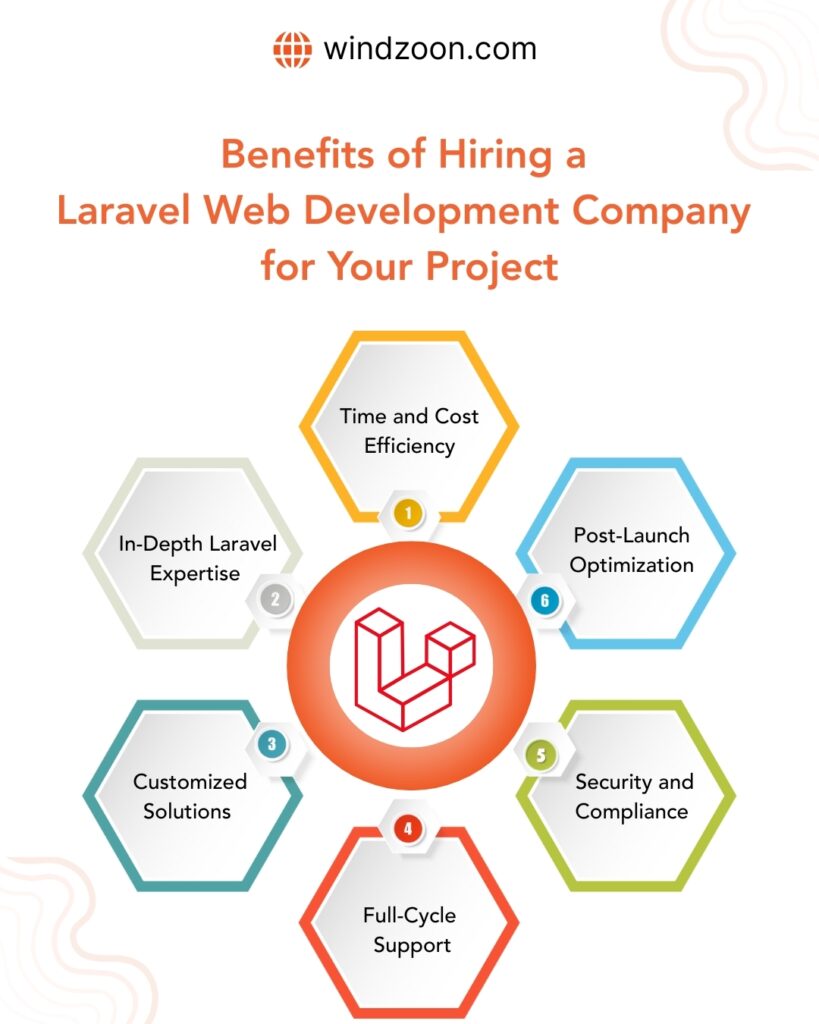
Benefits of Hiring a Laravel Web Development Company for Your Project

benefits-of-hiring-a-laravel-web-development-company

While Laravel offers a powerful and elegant framework for building web applications, getting the most out of it requires more than just familiarity with the syntax. This is where a Laravel web development company steps in, not just as a coding team, but as a strategic technology partner.

Here’s how your project benefits when professionals handle the Laravel stack:

1. In-Depth Laravel Expertise

Laravel evolves rapidly. A dedicated team stays updated with each release, including subtle but crucial changes in the 12.x versions. They understand how to leverage these updates to build secure, scalable, and efficient applications.

2. Time and Cost Efficiency

Instead of navigating the learning curve or spending time troubleshooting, hiring a Laravel-focused team means faster development cycles. You save time and money by avoiding common pitfalls and rework.

3. Customized Solutions

Every business has different needs. A seasoned Laravel web development company won’t just use templates; they’ll create tailored solutions that align with your goals, user base, and industry-specific challenges.

4. Full-Cycle Support

From idea validation and UI/UX design to deployment and maintenance, you get end-to-end support. You don’t need to juggle multiple vendors; one experienced Laravel partner can manage your entire tech stack.

5. Security and Compliance

Laravel offers built-in tools for CSRF protection, data encryption, and user authentication. A development company knows how to implement them properly to protect your application from vulnerabilities and ensure compliance with relevant standards.

6. Post-Launch Optimization

After launch, performance tuning, SEO best practices, and feature scaling become critical. A Laravel web development company continues to support your app, helping it grow and adapt as your business evolves.

In short, working with the right Laravel team doesn’t just result in a functioning web app; it creates a solid digital product built to scale, secure, and succeed.

Next, let’s wrap things up with a conclusion and some guidance on how to move forward if you’re planning to adopt Laravel 12 for your next big project.

Final Thoughts on Laravel 12

Laravel 12 brings a refined, developer-friendly approach to building modern web applications. Its new features aren’t just technical upgrades; they’re practical tools that simplify development and improve performance across real-world projects.

To truly make the most of these advancements, it’s smart to work with professionals who live and breathe Laravel. That’s where Windzoon Techno Pvt Ltd comes in, your trusted Laravel web development company dedicated to turning bold ideas into scalable digital products. Let’s build something great, together.

FAQs

1. What makes Laravel 12 better than previous versions?

Laravel 12 introduces improved type safety, enhanced syntax, and more efficient development tools. These updates help reduce errors, streamline workflows, and build scalable applications faster than before.

2. Is Laravel 12 suitable for enterprise-level applications?

Yes, Laravel 12 is built for projects of all sizes, including large-scale enterprise apps. Its powerful tools, modular structure, and active community support make it a reliable choice for complex business needs.

3. Why should I hire a Laravel web development company instead of a freelance developer?

A Laravel web development company brings a team of experienced professionals, structured workflows, long-term support, and quality assurance, ensuring your project is delivered on time and aligned with your business goals.

4. How can a Laravel web development company help with Laravel 12 migration?

If you’re running an older version of Laravel, a professional company can assess your current setup, handle the upgrade process safely, and implement Laravel 12 features without disrupting your app’s performance.