

Marketing is one of the essential aspects of business activities. Ignoring it would look like opening a business but not telling people about it. Marketing is an innovative & continuous activity that obtains people’s attention and connects them with the brand.
There are two known practices in marketing. One is traditional marketing, a conventional form of marketing, and the other is digital marketing, a contemporary form of marketing. Traditional marketing has been practiced for many years.
But after the evaluation of the internet & World Wide Web, digital marketing has started to gain popularity. As per Statista, digital advertising will account for more than two-thirds of total advertising spending by 2023. And, digital ad spending will account for 61 percent of total ad spending this year.
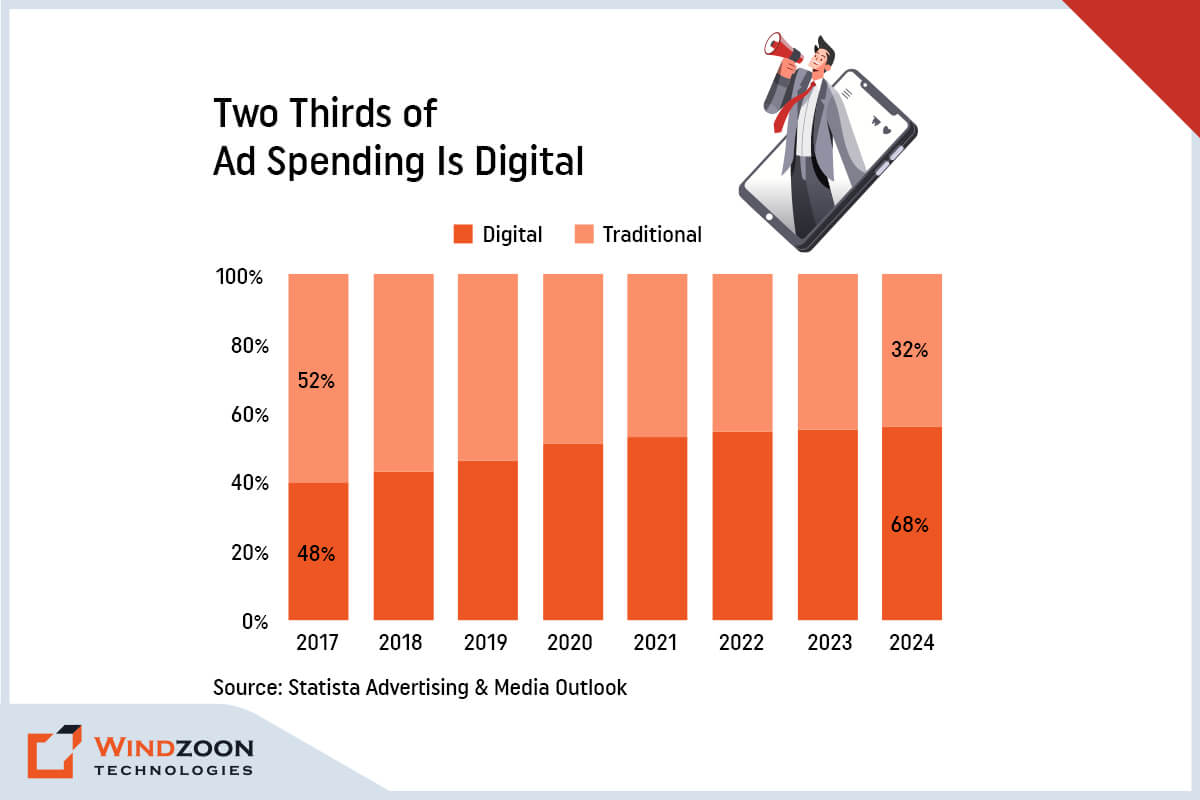
Two-Thirds of Ad Spending Is Digital
However, both marketing strategies have advantages and disadvantages and are beneficial in their own ways. But, before you adopt and apply any of the marketing strategies, it is always a good idea to comprehend the key differences between digital marketing and traditional marketing. Hence, in this blog, we’ll talk about the following things:
Any marketing strategy whether it is traditional or digital is built on the four pillars. And these four pillars are known as the four P’s of marketing. So, let’s get to know about these four P’s of marketing.
The Four P’s of Marketing
The 4 P’s of marketing is also known as the concept of the marketing mix. It summarizes the four basic pillars of any marketing strategy which include: Product, Price, Place, and Promotion.
By leveraging the four P’s of marketing, a business can increase its consumer base and sales.
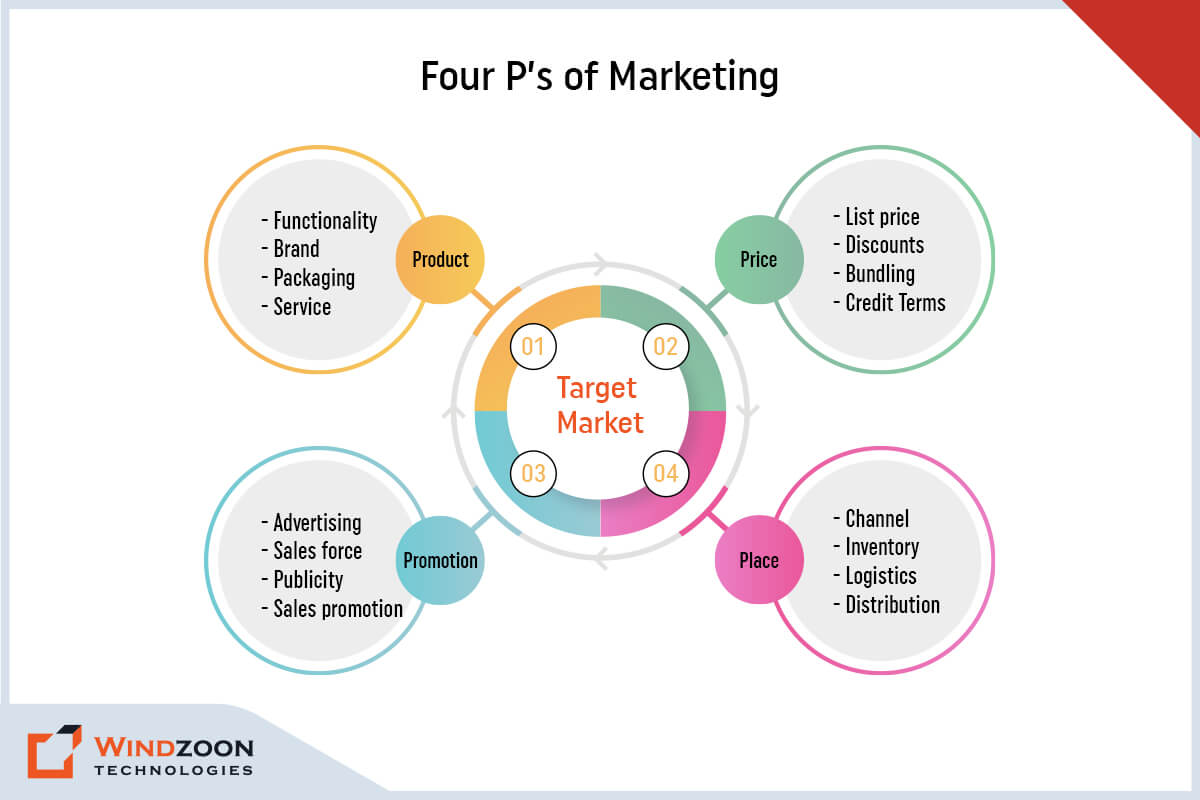
Four P’s of Marketing
Let’s take a quick look at each of the four P’s that drive any marketing strategy:
Product
A solid understanding of your own product is the foundation of effective marketing. A product could be a non-tangible good or service that meets the requirements of a specific target audience.
Price
The entire cost of the product is determined by how well you know about it. Price is always the deciding factor in matters of supply, demand, profit margin, etc.
Promotion
How you spread the word about your product and advertise it to your target market is called promotion. Promotion includes any strategy that increases awareness of the product, whether it be through billboard advertising or the creation of a Facebook ad campaign.
Place
Product marketing largely depends on getting your product in front of your target customer at the appropriate time and place. Because it helps businesses to convert their potential buyer into consumers or clients.
Now, let’s move forward to get to know about traditional marketing, its types, and its pros & cons.
What is Traditional Marketing?
Traditional marketing refers to marketing tactics that do not rely on the internet. For decades before the arrival of the internet in the 1990s, only this form of marketing was used.
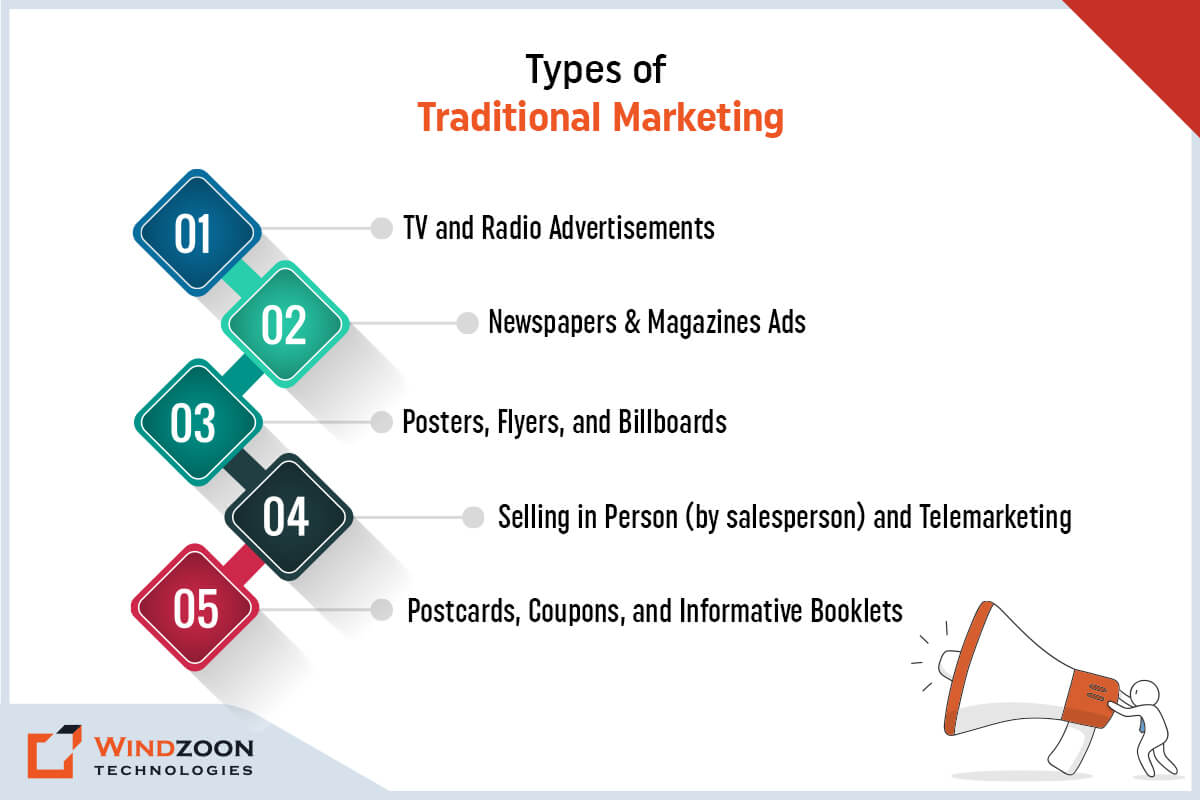
Types of Traditional Marketing
Types of Digital Marketing
– TV and Radio Advertisements
– Newspapers & Magazines Ads
– Posters, Flyers, and Billboards
– Selling in Person (by salesperson) and Telemarketing
– Postcards, Coupons, and Informative Booklets
Advantages of Traditional Marketing
– It gives you easy access to reach more consumers of the local market
– Traditional marketing has a high possibility of word-of-mouth advertising
– It can be advantageous in places without the internet and in developing nations.
– Physical copies of product and service information function as lasting marketing resources.
– TV & Radio commercials are more memorable and accessible to potential customers
– Traditional marketing can effectively covers senior citizens in the local market
Disadvantages of Traditional Marketing
– It wouldn’t give you the benefits of promoting your brand on a global level
– It is costly without a consistent Return on Investment (ROI)
– It’s not a good marketing approach to use one-way communication.
– Since audiences are from local marketplaces, businesses wouldn’t be able to sell more products & services.
– It takes a lot more time to show results.
– It can not keep track of client attitudes, tastes, and preferences
– It doesn’t provide any efficient instruments for analyzing a business’s progress.
– There is no assurance that advertisements for goods or services will reach prospective clients.
– After learning about traditional marketing, let’s know about digital marketing, its types, and its pros & cons.
Read More: Differences Between SEO and PPC and How They Affect Your Business
What is Digital Marketing?
Digital marketing strategies have evolved with the advancement of innovations & technologies. It advertises products and services on the internet through a diverse range of digital mediums. Though digital marketing isn’t as old as traditional marketing. Yet, it does have a powerful effect.
Types of Digital Marketing
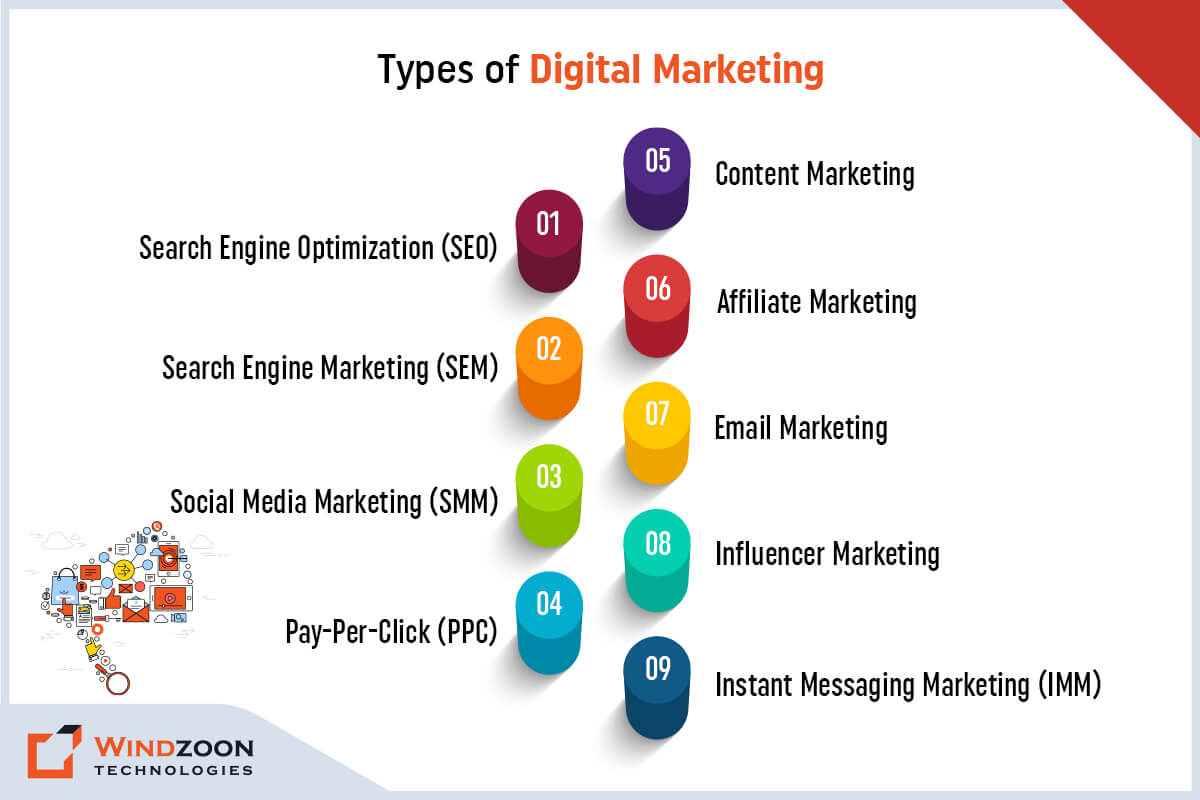
Types of Digital Marketing
– Search Engine Optimization (SEO)
– Search Engine Marketing (SEM)
– Social Media Marketing (SMM)
– Pay-Per-Click (PPC)
– Content Marketing
– Affiliate Marketing
– Email Marketing
– Influencer Marketing
– Instant Messaging Marketing (IMM)
Advantages of Digital Marketing
– It provides platforms for the creative and engaging marketing of product and service information.
– Digital marketing strategies are cost-effective.
– It offers significant returns on investment.
– It provides diverse businesses with equal access to the online marketplace to market and sells their goods and services.
– It offers a high and consistent rate of user conversion into lead generation.
– It enables businesses to connect with customers through their products and services, and customers can also provide feedback and reviews.
– It is simple to promote brand awareness using digital marketing.
– It enables businesses to track and measure the effectiveness of their digital marketing efforts.
– It allows easy personalization and targeting of the appropriate customers.
– It offers quick and easy access to international markets.
– It provides businesses with a high level of consumer engagement.
Disadvantages of Digital Marketing
– Digital marketing has a global reach, which means there is a global competition to deal with. And to stand out from the crowd; your product/service, and communication, must be very unique & engaging.
– It takes a lot of effort to train marketing executives and create digital marketing initiatives.
– Being up to date with marketing trends and technologies is crucial since they change quickly.
– CRM (customer relationship management) can be quite difficult to implement. As negative user comments would be visible to all visitors to your website and could harm the reputation of your company. Managing it is also a challenge.
However, all of these disadvantages can be combated by joining hands with a competent & seasoned Digital Marketing Agency.
Read More: Key Difference Between SEO and SMO
Key Differences between Digital Marketing v/s Traditional Marketing
In this section, we’ll get to know about the differences between traditional and digital marketing. The key points are listed below:
[wpdatatable id=7 table_view=regular]
Now that you have learned the main differences between traditional & digital marketing, let’s find out which is best for your business.
Which Type of Marketing will Suit Your Business?
This question doesn’t have a definitive answer. The best option for the majority of firms is an effective blend of traditional marketing and digital marketing. When both of these are combined, the marketing process becomes even more efficient.
Both types of marketing have advantages and disadvantages, as we have seen. However, the ultimate choice is based on your understanding and requirements. And for that, you must take into account your budget, target market, and customers.
E.g. Traditional marketing would be necessary if your product or service is suited for an older demographic or a developing nation. At that point, your efforts in digital marketing can take a back seat.
Likewise, you should concentrate more on digital marketing if your product/service is appropriate for a younger audience or developed nations.
However, using digital marketing is fantastic for small businesses and new companies. Due to its low cost, wide audience, and high level of interaction, it aids in helping them establish their presence in the beginning.
Conclusion
We believe this blog has provided sufficient insight into both traditional and digital marketing. So that you can choose the best suitable option for your business among them.
However, before making any final decisions, be aware of the fact that we live in a digital age. Hence, a lot of activities are performed online. And digital marketing strategies are essential for keeping up with this development and using it to grow our business. It aids in the expansion of businesses regardless of their industry & size.
Windzoon is a well-known Digital Marketing Agency that assists businesses in developing effective digital marketing strategies. To leverage our result-driven Digital Marketing Services, please visit wzadmin.windzoon.in/ and get a quote.
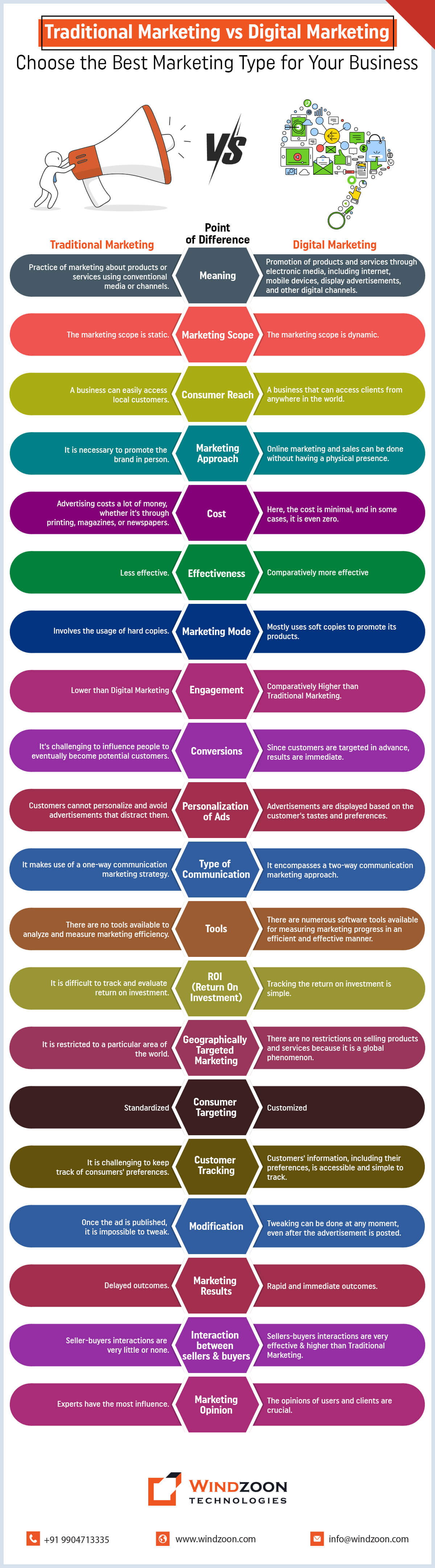
Traditional Marketing vs Digital Marketing – Choose the Best Marketing Type for Your Business